




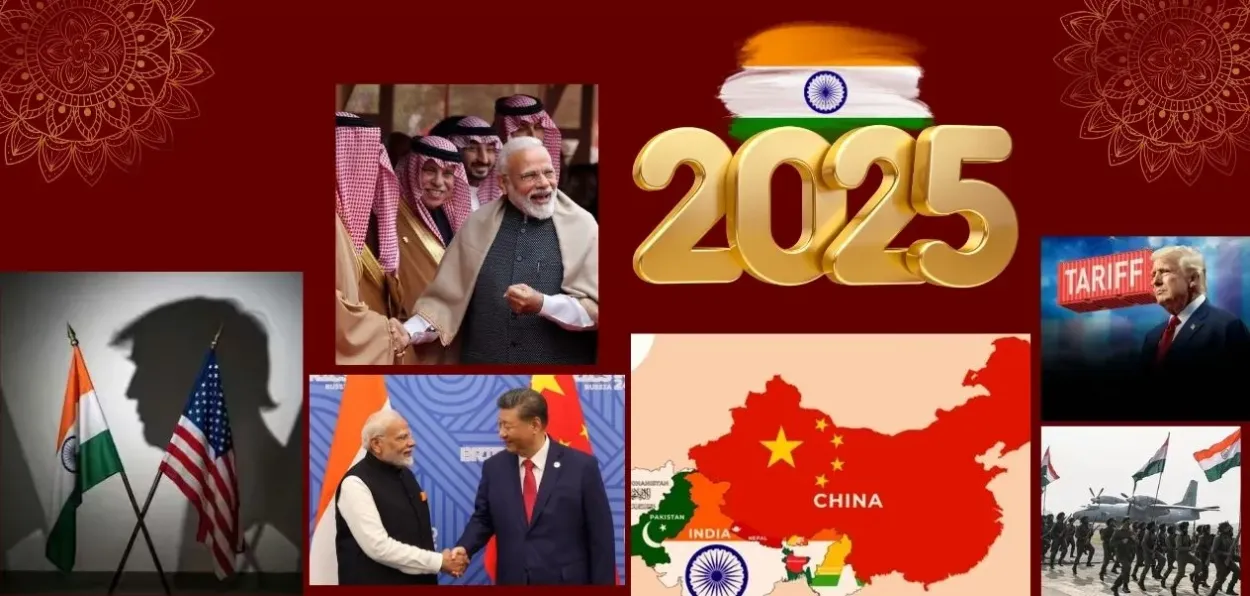
In 2025, India’s foreign policy focused on balancing relations with major powers like the United States, China, and Russia, strengthening its presence in South Asia, and improving ties with the ‘Global South.’
With Vladimir Putin’s visit to New Delhi, which amplified India’s non-binary foreign policy, India demonstrated pragmatism by patiently laying the groundwork for a trade agreement with the United States.
Although India did not openly criticise Russia in the Ukraine war, it did not delay sending a subtle message that "this is not a time for wars." Putin’s visit to be followed by the visit of the Ukrainian President reflects this balance. This year, relations with China also saw a thaw.
While balancing global politics, India emphasised hard diplomacy, economic flexibility, and increasing strategic power. In 2025, India became the world’s fourth-largest economy.
India has been actively pushing the agenda of the ‘Global South’ and advocating reforms in international institutions such as the United Nations Security Council. To enhance its global standing, India has utilised platforms like the G20, BRICS, and SCO.
Strategic Strength
Considering the coordinated dual threat from Pakistan and China, India focused on redefining its military strategy. Efforts were also made to achieve self-reliance in defence and to make significant strides in defence exports.
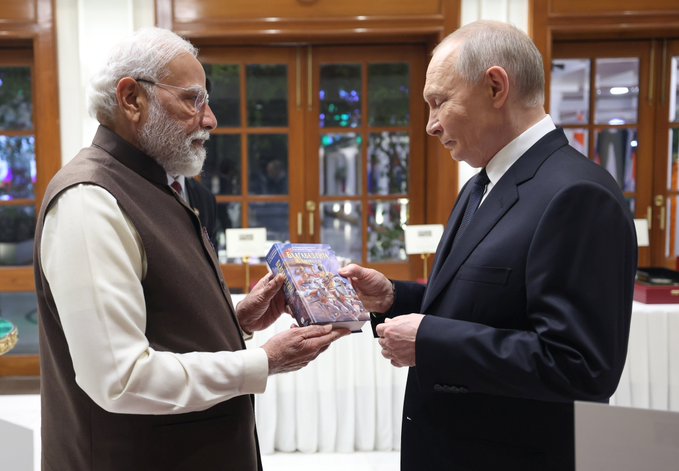 Prime Minister Narendra Modi gifting Bhagwad Gita to President Vladimir Putin
According to the 2025 edition of the Asia Power Index by the Australian think tank Lowy Institute, India ranks as Asia’s third ‘major power’ after the US and China. Although India had achieved the third position last year as well, it is recognised as a ‘major power’ for the first time.
The year 2025 alone shook the entire world and laid the foundation for the next 75 years. The year presented India with challenges as significant as those faced globally. Politically, strategically, economically, and technologically, 2025 brought numerous achievements. At the end of 2024, India’s economic rise as a new powerhouse was already becoming evident.
Trump’s Shock
However, the year began with a shock from US President Donald Trump’s ‘Make America Great Again’ proclamation. Since assuming office on January 20, he has been aggressive.
After Prime Minister Narendra Modi’s US visit in February, signs emerged that India-US relations were set for changes. During this visit, a new initiative was announced: the US-India Compact for the 21st century, focusing on military partnership, enhanced trade, and technology cooperation.
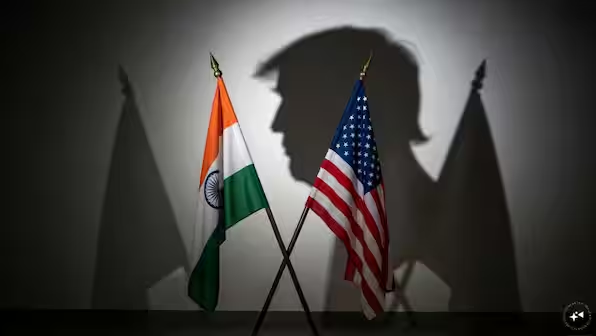 Flags of India and USA
Under this initiative, both countries aim to boost their trade to $500 billion by 2030. An interim trade agreement, likely to be achieved by the end of the year, is almost in the final stage.
In March, while addressing a joint session of the US Congress, Trump said that India charged 100 percent tariff and that it was unfair and unjust.
The story that followed centers on the tariff issue, with India’s purchase of Russian oil as a key irritant. If Trump’s tariff statements had remained limited, it would not have caused discomfort. But in May, following ‘Operation Sindoor,’ his statements suggested a shift in US policy. The extent and direction of this shift remain unclear.
The India-US relationship, however, remains strong. While India was preparing for ‘Operation Sindoor,’ on May 6, India and the UK signed a historic Free Trade Agreement (FTA), which Prime Minister Modi called a historic milestone. This agreement will allow India zero tariffs on all industrial goods. Meanwhile, India and the European Union are also preparing for a free trade agreement.
US President Trump aims to reestablish US global dominance. He believes that developing countries and groups like the G20 and BRICS challenge this goal. BRICS includes Russia, China, India, Brazil, and South Africa, along with countries such as Indonesia, Iran, and Turkey.
In recent years, Russia and China have challenged US supremacy. India remains unaligned but has seen disruptions in its engagement with the US over the past two decades. A recent outcome of this was Russian President Vladimir Putin’s visit.
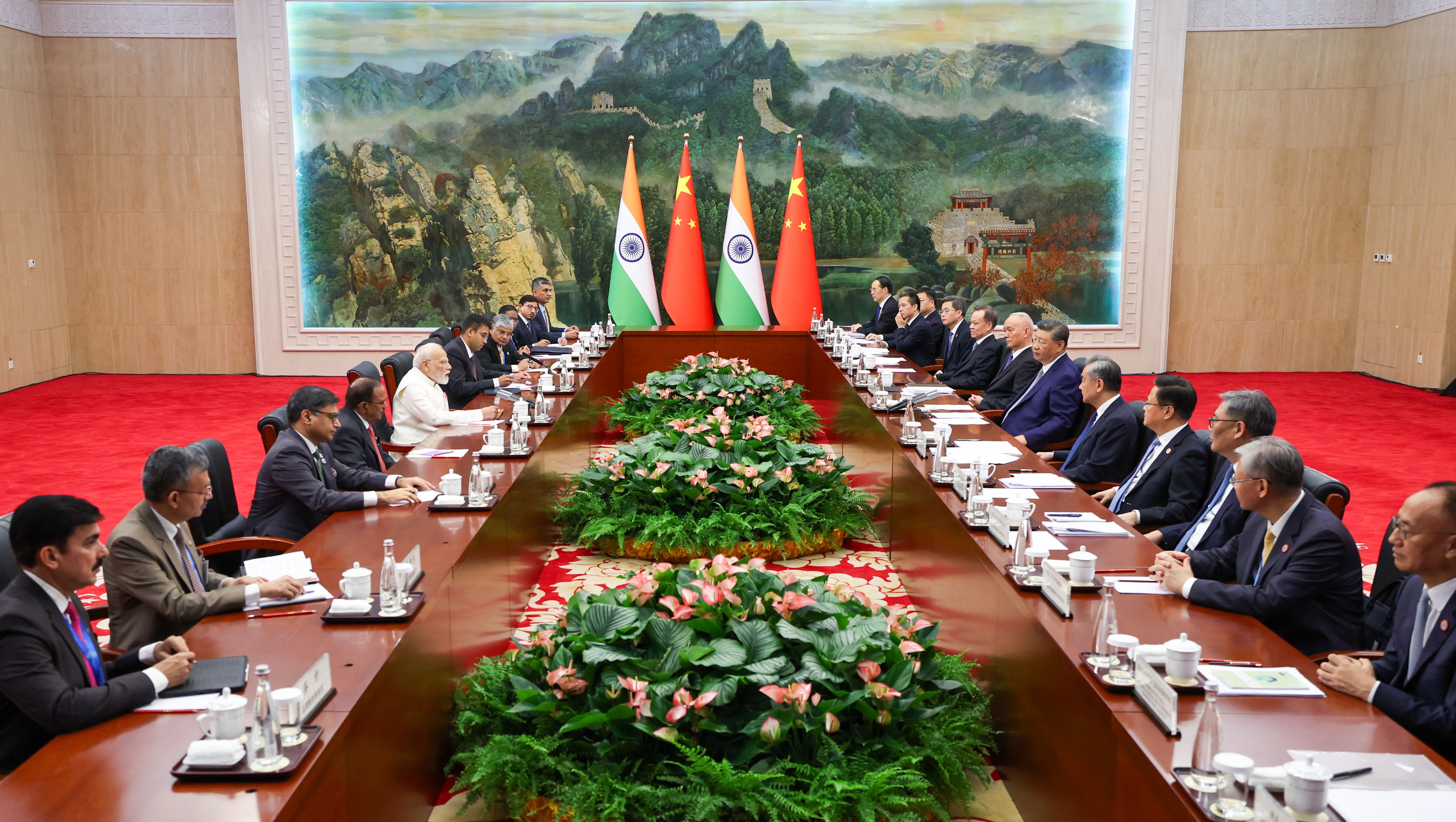 Prime Minister Narendra Modi and Chinese President Xi Jinping holding delegation-level talks in Kazan
By the end of the year, the QUAD summit was proposed to be held in India, with President Trump expected to attend. However, the summit and his visit were postponed. Putin’s visit and the postponement of Trump’s visit send a political message that was interpreted lightly.
Last year, on October 21, India and China reached an agreement on patrolling arrangements at two points along the LAC: the Depsang plains and Demchok. It appears that the situation there reverted to what it was before April 2020.Later, Prime Minister Narendra Modi met Chinese President Xi Jinping on the sidelines of the BRICS summit in Kazan, Russia. In August, Modi attended the SCO summit in Tianjin, China, which was a positive development.
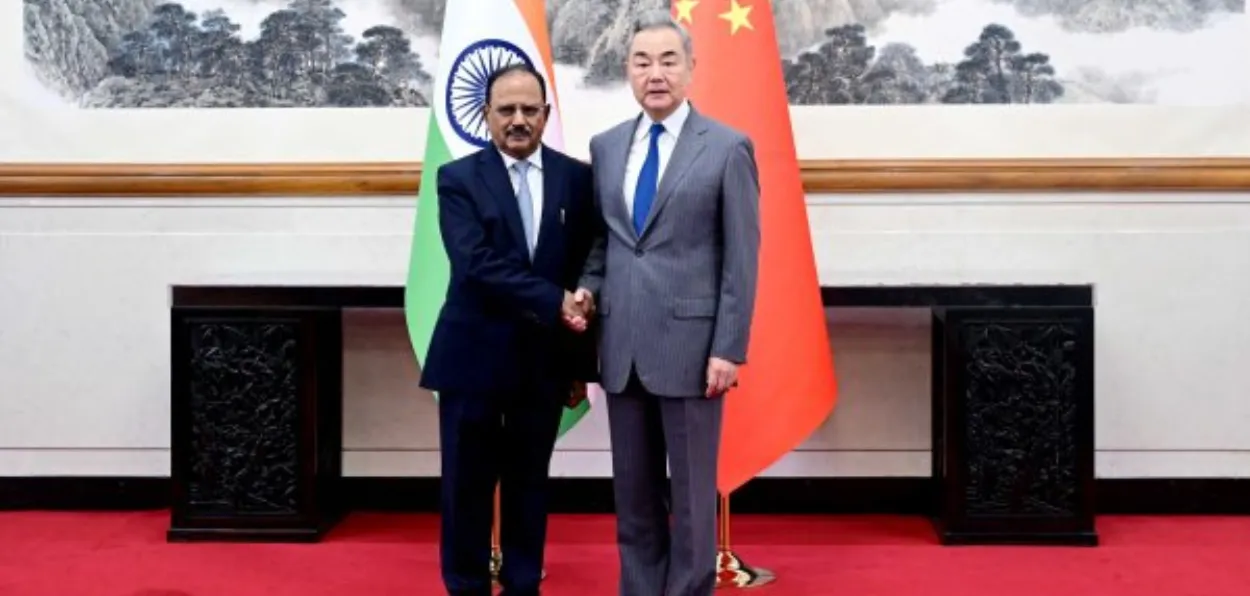
National Security Advisor Ajit Doval met Chinese Foreign Minister Wang Yi in Beijing on December 18, 2024. The meeting indicates that both countries have agreed to explore new avenues of cooperation to resolve the four-year-old deadlock. This was the 23rd formal meeting of special representatives to address the longstanding India-China border dispute, a process initiated in 2003.
During this period, air services between India and China resumed, and economic activities gained momentum.
Muslim Countries
For India, West Asia remains a challenging region, where relations with Arab countries, Iran, and Israel are sensitive and require careful handling. This year, after a security agreement between Saudi Arabia and Pakistan, there was some uncertainty about its implications. The announcement came barely a week after Israel attacked Qatar.
Attention also remains on Afghanistan, where the US wants the Taliban to provide access to Bagram Airbase. Currently, Pakistan and Afghanistan are engaged in a de facto conflict. This year, India established informal diplomatic ties with Afghanistan.
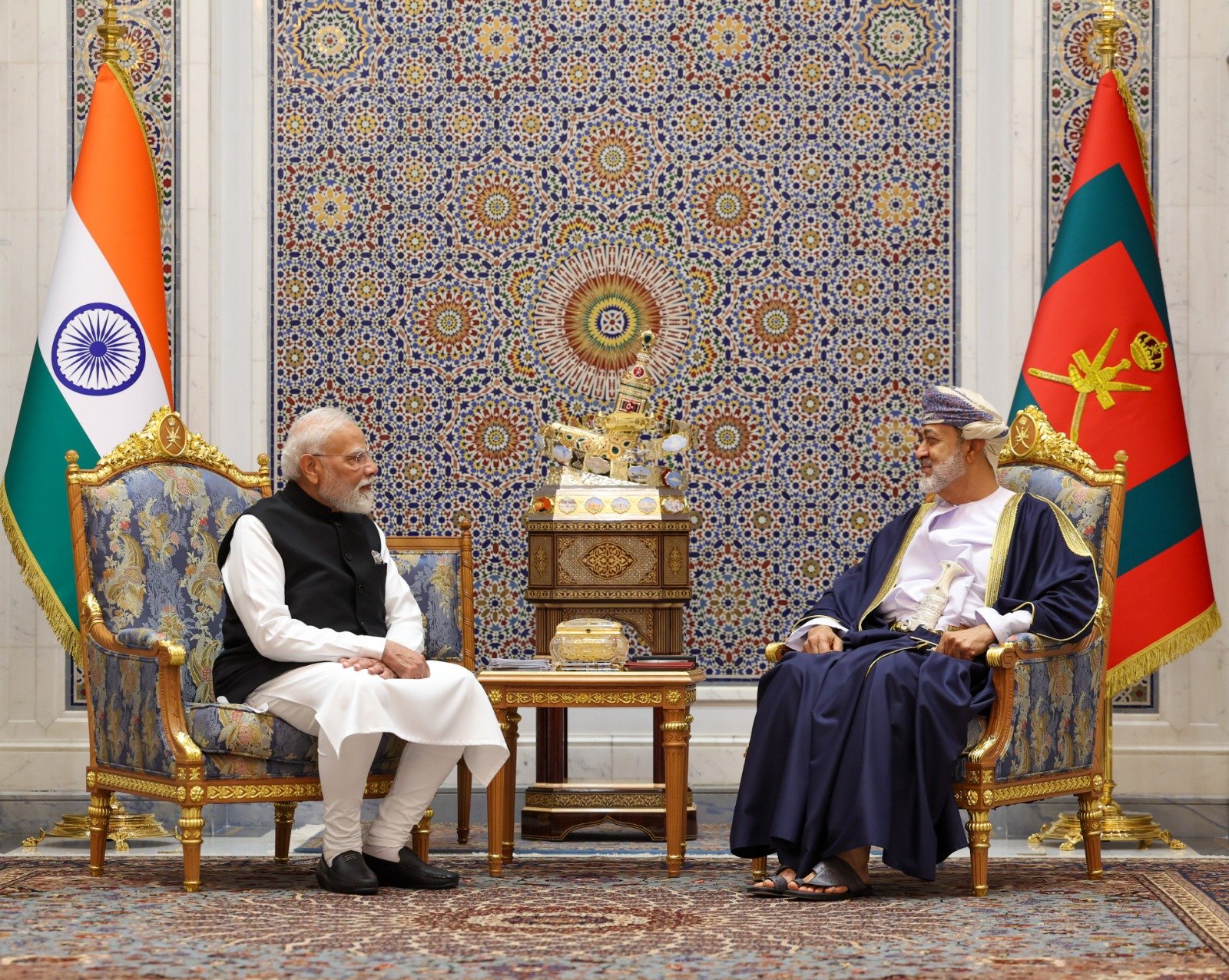 Prime Minister Narendra Modi with Oman's ruler Sultan Haitham bin Tariq Al A’zām
Saudi Arabia and the UAE invested billions of dollars in India, with potential for further investments in the future. These countries understand India’s security priorities. Saudi Arabia is India’s second-largest trade partner, while it ranks fifth in overall trade. On April 22, during the Pahalgam attack, Prime Minister Modi was in Saudi Arabia, and the Saudi authorities immediately condemned the attack.
The Gulf region hosts 9.7 million Indians. In 2024, India received $4.7 billion in foreign exchange from Gulf countries. India aims, with US assistance, to establish a corridor to Europe via Saudi Arabia and the UAE, but the Gaza conflict has disrupted this plan.
At the end of the year, Prime Minister Modi visited Oman and Jordan, where India signed a free trade agreement with Oman. Oman is an important friend in the region, providing facilities for the Indian Air Force and Navy.
Neighboring Countries
Most importantly, India’s neighbourhood remains highly conflicted, making cooperation difficult. India-Pakistan relations saw no positive developments this year. Since August 2019, their High Commissions have been operating under interim arrangements.
Late last year, Pakistan’s Finance Minister Muhammad Aurangzeb, at a press conference in Washington, remarked that not trading with neighbours was unwise. While this comment reflected his country’s political understanding, he is well aware that Pakistan’s civilian government has no say on India policy.
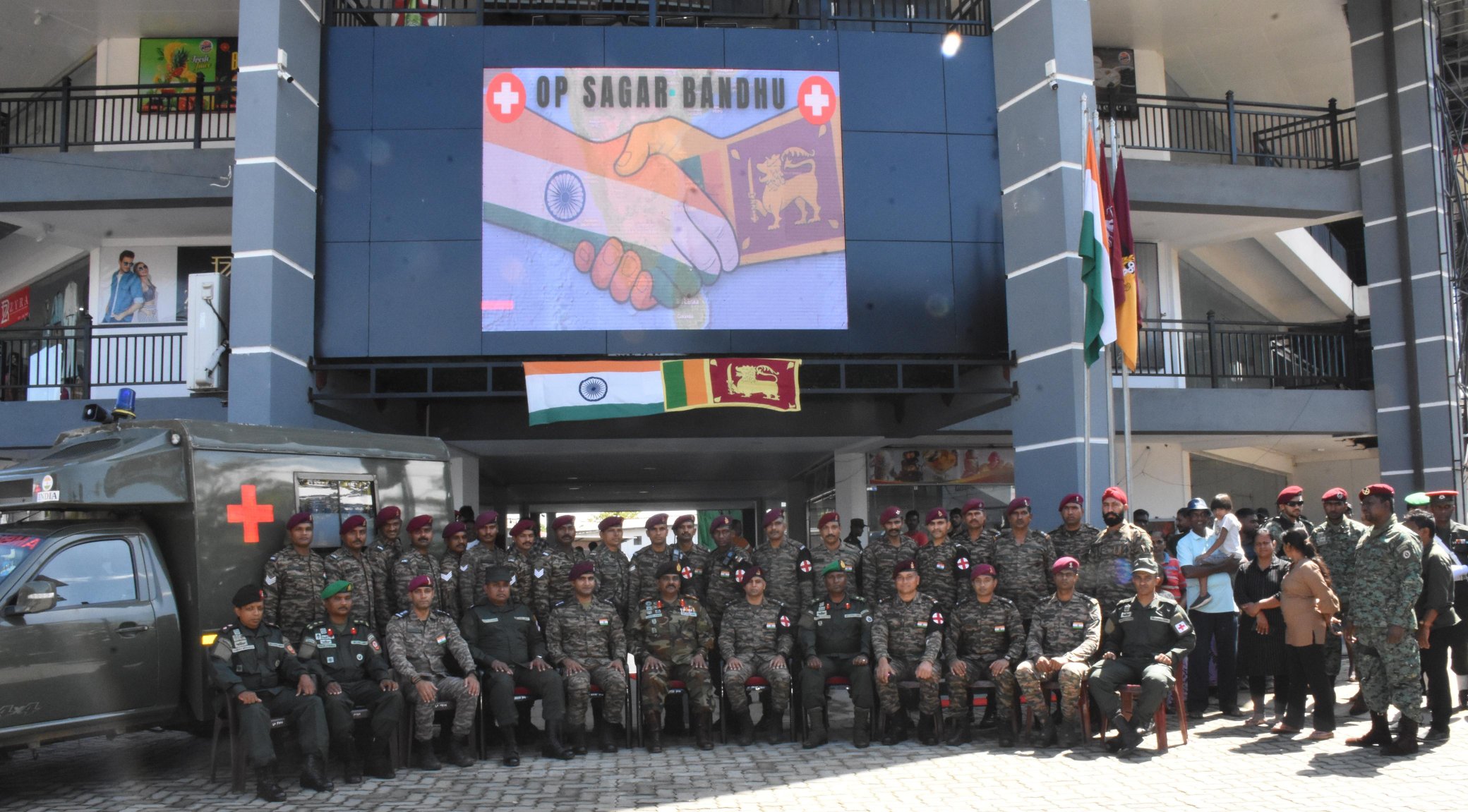 Indian Army serving people of Sri Lanka after a devastating cyclone
Bangladesh is another key South Asian neighbour. Since August last year, after the interim takeover following Prime Minister Sheikh Hasina’s tenure, the situation has indirectly worked against India. Elections in Bangladesh in February 2026 will clarify the future of India-Bangladesh relations. Nepal will also hold elections in March next year, after political upheaval involving Gen-Z. India maintains good relations with Nepal’s interim government.
India's relations with other South Asian neighbours -- Bhutan, Sri Lanka, and the Maldives -- are steady. In July, Prime Minister Modi's visit to the Maldives buried the remnants of tension that had briefly surfaced.
The author is a former Editor of Dainik Hindustan

_(1)_(1).webp "Khanqah Emadia Qalandaria, Patna, Bihar")






.webp)

.webp)