Dubai
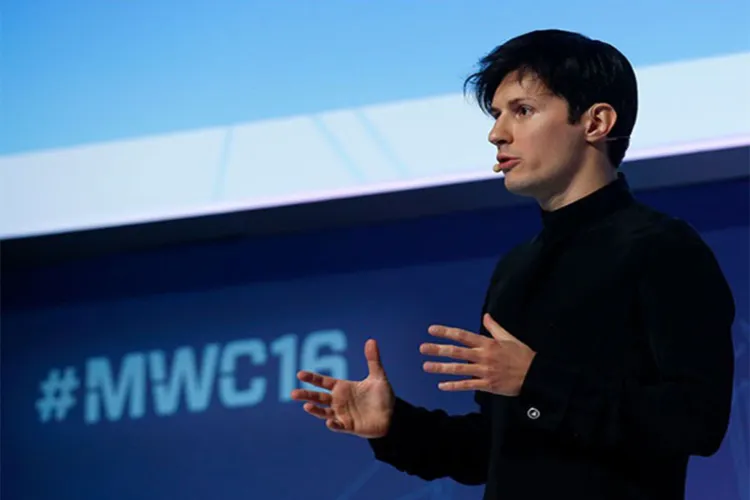
Telegram founder and chief executive Pavel Durov on Tuesday criticised the Indian government's temporary restrictions on the messaging platform ahead of the rescheduled NEET-UG examination, arguing that the move unfairly penalises millions of legitimate users while doing little to curb the circulation of leaked exam material.
Responding to a statement issued by the Internet Freedom Foundation (IFF), Durov said on social media platform X that the week-long restriction on Telegram was imposed because leaked examination questions had allegedly been shared through some accounts on the platform.
According to Durov, the decision adversely affected more than 150 million users in India who rely on Telegram for communication and educational purposes, while those responsible for leaking the examination content simply shifted their activities to other platforms.
The National Testing Agency (NTA) is scheduled to conduct the rescheduled NEET-UG examination on June 21.
The controversy emerged after the Internet Freedom Foundation criticised measures announced by the NTA concerning Telegram. The digital rights organisation stated that, acting on the NTA's recommendation, the Ministry of Electronics and Information Technology (MeitY) had invoked provisions of Section 69A of the Information Technology Act, 2000, to restrict access to Telegram across India until June 22. It further claimed that Telegram had been directed to disable its message-editing feature for Indian users until June 30.
The IFF argued that Section 69A and the accompanying Information Technology (Procedure and Safeguards for Blocking for Access of Information by Public) Rules, 2009, empower the government to block access to specific content rather than impose restrictions on an entire platform.
The organisation questioned the legal basis for ordering the suspension of Telegram's message-editing feature, asserting that such a directive effectively compels a platform to alter its product design without a clearly identified statutory provision.
The foundation also maintained that a blanket restriction on Telegram is unlikely to address the root causes of examination paper leaks. It argued that such incidents typically originate from vulnerabilities within the examination system itself and that shutting down a communication platform merely diverts attention from those underlying issues.
Highlighting the timing of the restrictions, the IFF noted that many students preparing for NEET-UG use Telegram for study groups, academic discussions, and sharing educational resources. The organisation contended that the move could inconvenience thousands of candidates in the crucial days leading up to the examination.
The digital rights body called on the government to make public the orders issued under Section 69A and the recommendations submitted by the NTA, including the reasons behind the restrictions. It also sought clarification on whether Telegram had been granted an opportunity to present its case under the procedures laid down in the blocking rules.
READ MORE: Asra Anjum revived Dakni deserts to preserve culinary heritage
The foundation further urged authorities to reconsider and withdraw the platform-wide restrictions, arguing that targeted action against specific offenders would be more effective than imposing broad curbs affecting millions of users.

.webp "Rocks bearing inscription in ancient Arabic excavated in Saudi Arabia's Madina region")









.webp "Representational image")
.webp "Representational image")