New Delhi
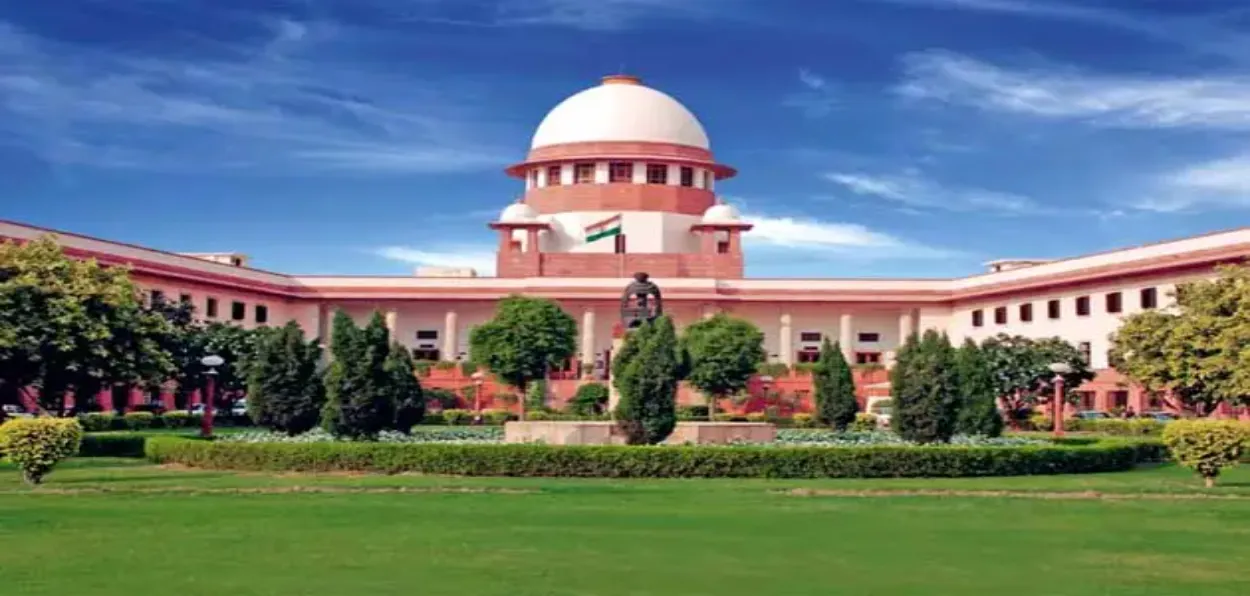
Observing that the material placed on record by the prosecution indicates key involvement of Jawaharlal Nehru University students Umar Khalid and Sharjeel Imam to plan, mobilise and strategically direct the alleged 2020 Delhi riots conspiracy, beyond isolated or localised acts, the Supreme Court on Monday refused to grant the accused bail, while upholding the constitutional validity of their prolonged detention.
A bench of Justices Aravind Kumar and N V Anjaria said that the material against the two men primarily accused in the conspiracy case, considered on face value as required at this stage, does not justify their enlargement on bail.
"This Court is satisfied that the prosecution material, taken at face value as required at this stage, discloses a prima facie attribution of a central and formative role by the appellants in appeals arising out of SLP...Umar Khalid and Sharjeel Imam are in the alleged conspiracy. The material suggests involvement at the level of planning, mobilisation, and strategic direction, extending beyond episodic or localised acts.
"The statutory threshold under Section 43D (5) of the Unlawful Activities (Prevention) Act, 1967, therefore stands attracted qua these appellants. While the period of incarceration undergone by these appellants is substantial and has been duly considered, the Court is not persuaded that, on the present record, continued detention has crossed the threshold of constitutional impermissibility so as to override the statutory embargo," the Court noted.
The Court was pronouncing its ruling on the bail pleas of seven people accused under the Unlawful Activities Prevention Act (UAPA) in the 2020 Delhi riots case. The tragic event shook the national capital by killing 53 people and leaving more than 900 injured.
As regards the other five persons, Gulfisha Fatima, Meeran Haider, Shifa Ur Rehman, Mohammad Saleem Khan and Shadab Ahmed, accused in the conspiracy, the Supreme Court granted them liberty by observing that their continued incarceration, considering their roles as per the material on record, is not essential for the conduct of a fair trial, provided strict conditions are imposed upon their release.
However, the Court clarified that the grant of bail to these does not dilute the gravity of the allegations nor amount to any finding on guilt, rather, "it represents a calibrated exercise of constitutional discretion, structured to preserve both liberty of the individual and security of the nation."
Taking into account national security, public order, and the integrity of the trial process, the Court has imposed numerous conditions on their bail, including the furnishing of personal bonds of Rs 2 lakh each, with two local sureties, to the satisfaction of the Trial Court.
Additionally, the five accused persons shall remain within the NCT of Delhi and shall not leave without prior court permission. The Court has further directed them to surrender their passports (or file an affidavit if none exists) and furnish updated residential and contact details, with prior intimation for any change.
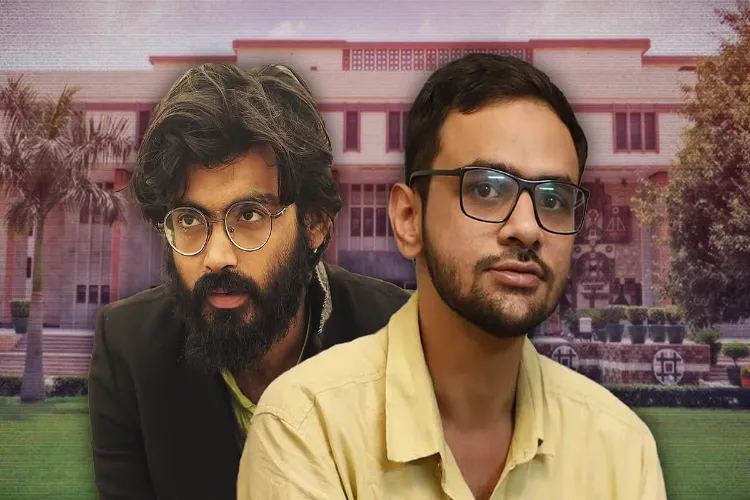
Sharjeel Imam and Umar Khalid
"Each of the appellants, namely Gulfisha Fatima, Meeran Haider, Shifa-ur-Rehman, Mohd. Saleem Khan and Shadab Ahmed shall personally appear twice a week, that is on Monday and Thursday, between 10:00 a.m. and 12:00 noon, before the Station House Officer, Police Station Crime Branch, Delhi Police, Office of the Commissioner of Police, Police Headquarters, Jai Singh Marg, New Delhi - 110001, and mark their attendance. The Station House Officer shall maintain a separate register of attendance in respect of each of these appellants and shall furnish a monthly compliance report to the Trial Court, which shall be placed on the main record of the case", the Court noted.
The Court has directed the accused persons not to contact, influence or intimidate any witness or person connected with the proceedings, nor associate with any group or organisation linked to the case.
They must fully cooperate with the trial, appear on all dates of hearing unless exempted, avoid any conduct that delays proceedings and maintain peace and good behaviour, it added.
Moreover, the Court observed that any breach of these conditions or misuse of liberty would entitle the prosecution to seek cancellation of bail from the Trial Court after hearing the appellants.
While concluding its decision, the Court observed that though personal liberty is guaranteed under the Constitution, it cannot be conceived as an absolute entitlement, detached from the security of the society in which it operates. It further noted, "The sovereignty, integrity, and security of the nation, as well as the preservation of public order, are not abstract concerns rather, they are constitutional values which Parliament is entitled to protect through law".
When certain offences attack these constitutional foundations, despite a special law being in place to address them, the courts are duty-bound to give effect to that framework.
Explaining the different outcomes that ensued for the seven accused persons in their pleas seeking the same relief, the Court observed that criminal law does not mandate identical results merely because allegations arise from the same case.
It added that those alleged to have led the unlawful or terrorist activity stand on a different legal footing from those whose involvement is confined to participation at a different level.
"To disregard such distinctions would itself result in arbitrariness", it said.
In view of the nature of the case and the prolonged incarceration already undergone by the accused persons, the Supreme Court directed the Trial Court to conduct the trial expeditiously, particularly the examination of prosecution and protected witnesses.
It also directed the prosecution to ensure the presence of its witnesses on scheduled dates.
Further, it granted liberty to the Trial Court to regulate the trial proceedings to prevent any delay.
The Court had reserved its decision in the case on December 10 after hearing all the parties.
During the numerous hearings in the Supreme Court in the matter, the lawyers who appeared for all seven petitioners argued on the delay and the unlikelihood of the commencement of the trial in the case.
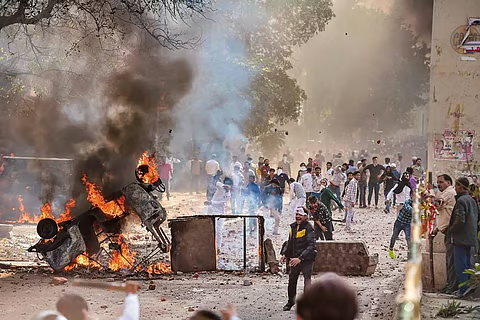
Delhi Riots 2020 (File)
It was contended on behalf of the petitioners that they have been in custody for more than five years in this case, with no assurance as to when their trial will take place. The contentions were also made that there is no proof of violence that instigated the riots, despite five years having passed since the Priti era had been accused.
On the other hand, Delhi Police objected to the bail pleas, saying the alleged offences involved a deliberate attempt to destabilise the state.
It argued that these were not spontaneous protests but a well-orchestrated "pan-India" conspiracy aiming at "regime change" and "economic strangulation".
Delhi police also stated that the conspiracy was pre-planned to be executed at the time when the US president was to make an official visit to India, and thus was done so as to draw the attention of international media and to make the issue of CAA a global issue. The issue of CAA was carefully chosen as to serve as a "radicalising catalyst" camouflaged in the name of "peaceful protest", it had said.
The prosecution further stated that the "deep-rooted, premeditated and pre-planned conspiracy" hatched by the petitioners resulted in the death of 53 persons, large-scale damage to public property, leading to the registration of 753 FIRS in Delhi alone. Evidence on record suggests that the instant conspiracy was sought to be replicated and executed pan India, the Delhi police said.
It referred to the various WhatsApp groups, Delhi Protest Support Group (DPSG), Jamia Awareness Campaign Team, which were being used to hatch a conspiracy for the riots. It was also argued that the delays are attributable to the petitioners and that, if they cooperate, the trial will be concluded within two years.
In one of the hearings, to counter an argument made on behalf of Sharjeel Imam that he is an intellectual, the Delhi Police argued that "intellectuals involved in terrorism are more dangerous than those operating on the ground."
Additional Solicitor General (ASG) SV Raju, appearing for the Delhi Police, mentioned that the Red Fort blast, which killed 15 people and injured many, was "another demonstration of a terrorist attack alleged to have been carried out by doctors."
The Delhi High Court on September 2 denied bail to Imam, Khalid and seven others - Mohd Saleem Khan, Shifa Ur Rehman, Athar Khan, Meeran Haider, Shadab Ahmed, Abdul Khalid Saifi and Gulfisha Fatima.
On September 2, the bail plea of another accused, Tasleem Ahmed, was rejected by a different High Court bench.
The High Court had observed that, prima facie, the role of Imam and Khalid in the entire conspiracy was "grave", having delivered inflammatory speeches on communal lines to "instigate mass mobilisation of members of the Muslim community."
Thus, seven petitioners moved the apex court seeking bail in the larger conspiracy case under the stringent provisions of the Unlawful Activities (Prevention) Act (UAPA) in the Delhi riots case.
In 2020, the Delhi police arrested Imam under the UAPA and named him as the main conspirator behind the Delhi riots case.
The violence had erupted during the protests against the then-proposed Citizenship Amendment Act (CAA) and National Register of Citizens (NRC).
















.webp "Prime Minister Narendra Modi")