New Delhi
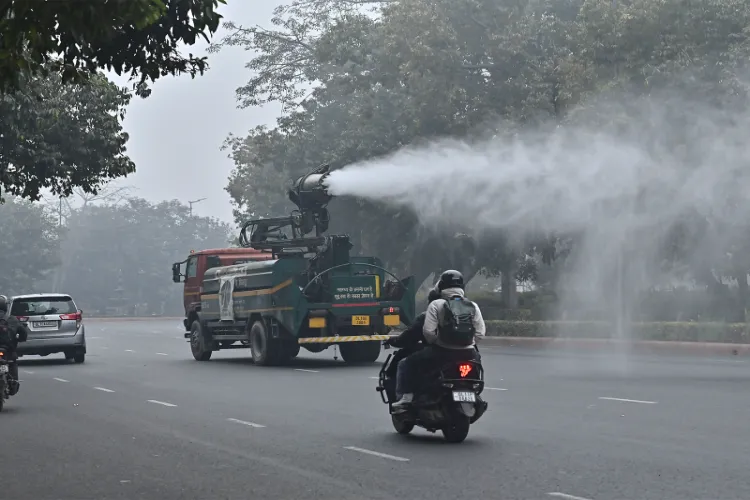
The Commission for Air Quality Management (CAQM) in National Capital Region and adjoining areas on Monday revoked Stage-I actions under the Graded Response Action Plan (GRAP) with immediate effect after a noticeable improvement in air quality.
According to an official release, Delhi’s Air Quality Index (AQI) was recorded at 119 at 4 pm on Monday, which falls in the ‘moderate’ category. Forecasts by the India Meteorological Department (IMD) and Indian Institute of Tropical Meteorology (IITM) indicate that similar air quality conditions are likely to persist over the coming days.
Despite the revocation of Stage-I restrictions, CAQM urged agencies of the state governments and the Government of the National Capital Territory of Delhi (GNCTD) to continue implementing statutory guidelines and dust mitigation measures to sustain the improvement and prevent air quality from slipping back into the ‘poor’ category.
According to the Ministry of Environment, Forest and Climate Change, GRAP is an emergency response mechanism for the entire NCR that is activated based on average AQI levels and meteorological forecasts in Delhi. It brings together multiple stakeholders, implementing agencies and authorities in the region to respond to deteriorating air quality.
The plan for the NCR has been formulated after careful analysis of scientific data, stakeholder consultations, expert recommendations and field experience gathered over the past several years.
Earlier this month, the Commission also issued a framework directing NCR states and the GNCTD to launch targeted Information, Education and Communication (IEC) campaigns to address region-specific sources of air pollution.
The initiative aims to institutionalise sustained public engagement as a core pillar of pollution control strategy across Delhi-NCR, shifting the focus from seasonal emergency responses to year-round awareness and behavioural change.
In its advisory, the Commission said, “The Commission advises all NCR States and GNCTD to direct the concerned agencies in the region to plan, implement and intensify targeted IEC campaign, aligned with the dominant sources of air pollution.”
The outreach efforts are expected to focus on major contributors to pollution such as vehicular emissions, construction dust, biomass burning and industrial activities.
The CAQM also recommended adopting a multi-channel approach for awareness campaigns, including print, electronic and digital media, as well as social media platforms and community-level programmes.
READ MORE: An officer can't afford to go wrong, says top cop Ajeetha Begum
Engagement with Resident Welfare Associations, farmers’ groups, transport unions, market associations and other stakeholders has also been suggested to ensure broader participation in efforts to curb air pollution across the region.