Gautam Buddha Nagar (Uttar Pradesh)
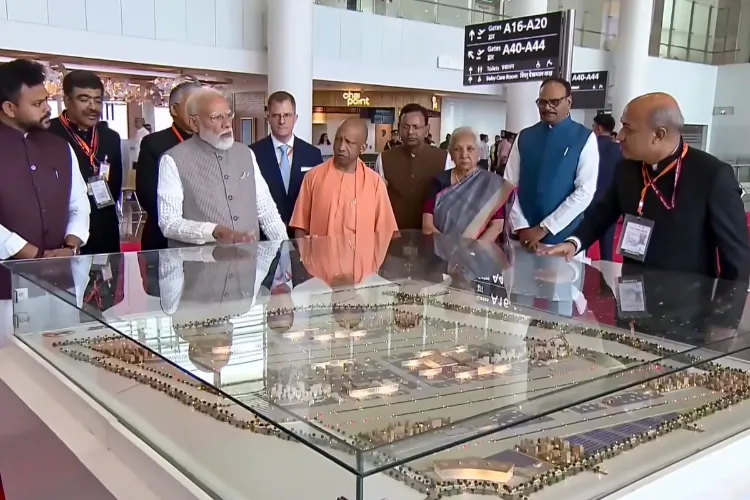
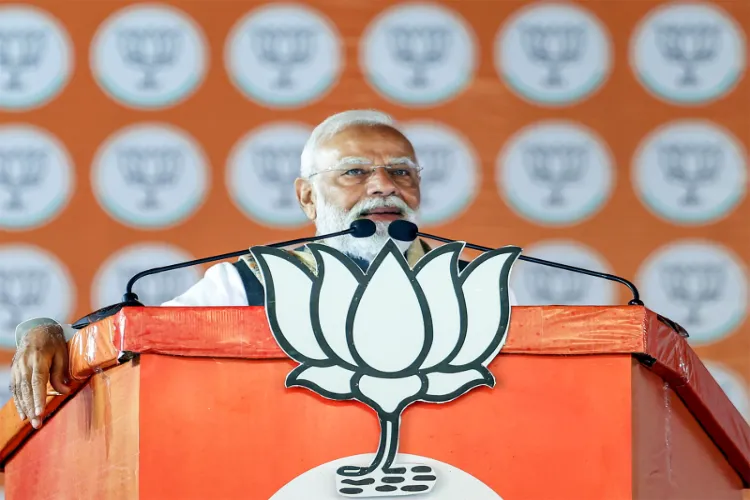
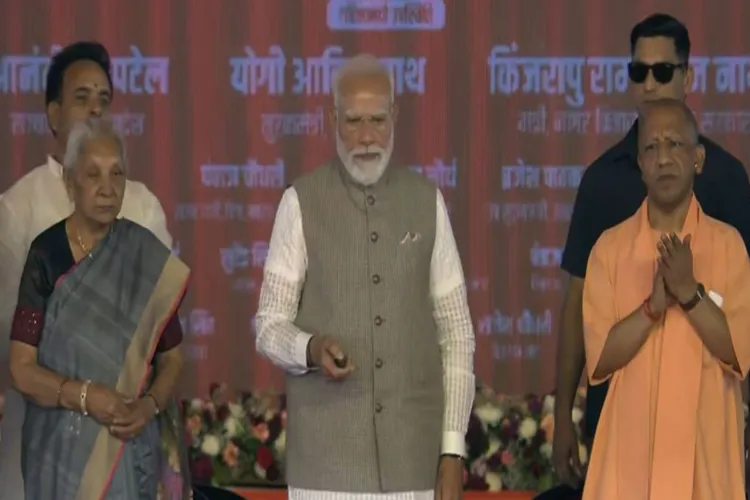
Prime Minister Narendra Modi on Saturday inaugurated Phase I of the Noida International Airport in Jewar, Uttar Pradesh.
The inauguration of Phase-I of Noida International Airport marks a major step in Uttar Pradesh’s growth story and India’s aviation future. https://t.co/8OLduHTZU8
— Narendra Modi (@narendramodi) March 28, 2026
Civil Aviation Minister Kinjarapu Ram Mohan Naidu, Uttara Pradesh Governor Anandiben Patel and Chief Minister Yogi Adityanath were also present on the occasion.
A sacred artefact of Lord Buddha was also presented to PM Narendra Modi.
Phase I of the airport has been developed at a total investment of around Rs 11,200 crore under the Public-Private Partnership (PPP) model.
According to the PMO, the airport, envisioned as a major international gateway for the National Capital Region (NCR), represents a major step in strengthening the country's airport infrastructure and enhancing regional and international connectivity.
Noida International Airport has been developed as the second international airport for the Delhi NCR region, complementing Indira Gandhi International Airport. Together, the two airports will function as an integrated aviation system, easing congestion, expanding passenger capacity, and positioning Delhi NCR among leading global aviation hubs.
Noida International Airport is among the largest greenfield airport projects in India. The airport will initially have a passenger handling capacity of 12 million passengers per annum (MPPA), with scalability up to 70 MPPA upon full development. It features a 3,900-meter runway capable of handling wide-body aircraft, along with modern navigation systems including Instrument Landing System (ILS) and advanced airfield lighting to support efficient, all-weather, round-the-clock operations.
READ MORE: How a Madrasa student discovered shared legacy of Ram at Ayodhya
The airport also incorporates a robust cargo ecosystem, including a Multi-Modal Cargo Hub, featuring an Integrated Cargo Terminal and logistics zones. The cargo facility is designed to handle over 2.5 lakh metric tonnes annually, expandable to around 18 lakh metric tonnes, and includes a dedicated 40-acre Maintenance, Repair, and Overhaul (MRO) facility, the press release by the PMO stated.
Designed as a sustainable and future-ready infrastructure project, Noida International Airport aims to operate as a net-zero emissions facility, integrating energy-efficient systems and environmentally responsible practices. Its architectural design draws inspiration from Indian heritage, incorporating elements reminiscent of traditional ghats and havelis, thereby blending cultural aesthetics with modern infrastructure, the press release stated.
.gif)








_(1).webp "Leema Rose Martin")