Chandigarh
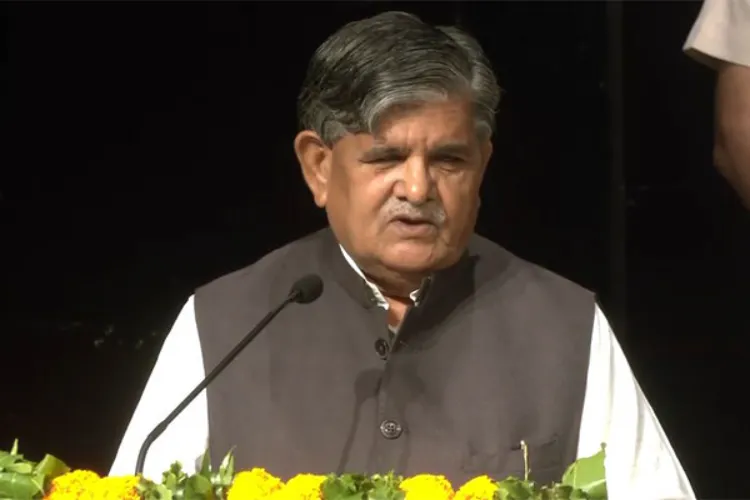
Punjab Governor Gulab Chand Kataria on Friday stressed the importance of technological self-reliance and indigenous defence production.
He also drew attention to drug and arms trafficking as serious security challenges, describing their wider implications in the context of asymmetric warfare.
Expressing concern over Punjab's drug menace, he highlighted the need to understand and confront the larger forces and international networks sustaining this challenge.
Declaring the three-day 10th Military Literature Festival (MLF) open, the governor, who is also the Union Territory (UT) Chandigarh Administrator, stressed the importance of technological self-reliance and indigenous defence production, observing that the character of warfare is rapidly evolving with the emergence of artificial intelligence (AI), drones and other advanced technologies.
The MLF commenced with a series of deliberations on contemporary warfare, global geopolitics, India's defence preparedness and the rich military heritage of the country.
The inaugural session opened with the screening of a short film, followed by an address by the festival chairman Lt Gen Tajinder Singh Shergill (retd).
Addressing the gathering, Chandigarh MP Manish Tewari highlighted four defining dimensions of the changing global security environment: the growing significance of asymmetric and drone warfare, lessons emerging from the Russia-Ukraine and US-Iran conflicts, the strategic importance of dual-use frontier technologies, and the widening defence expenditure gap between major global powers.
He observed that the existing world order was undergoing profound disruption, with far-reaching implications for international security.
Governor Kataria underscored Chandigarh's unique connection with the armed forces, given the significant presence of serving and retired defence personnel in the city.
Highlighting India's military history and the wars fought since Independence, he paid tribute to the courage, sacrifice and professionalism of Indian soldiers.
Kataria emphasised that national security requires both strength and a commitment to peace, particularly in an increasingly unpredictable geopolitical environment.
The occasion also witnessed the release of the MLF magazine and a book.
The governor congratulated the organisers for bringing together military literature, history, strategic thought and public engagement through the festival, including its weapons display and exhibitions.
According to a statement, a strategic session examined the Iran-Israel conflict and its implications for the wider West Asian region and global security.
Lt Gen K J Singh (retd) presented a historical and geopolitical perspective on Iran-Israel relations, tracing their evolution from a period of cooperation between 1948 and 1978 to the subsequent transformation following the Iranian Revolution.
He examined the Syrian civil war, the emergence of direct confrontation and the role of the regional Axis of Resistance involving Iran, Iraq and Lebanon.
Israeli strategic commentator Shay Gal discussed the ongoing conflict, US global interests and the centrality of Jerusalem to the Israeli people.
He also touched upon US-Pakistan strategic relations and distinguished between a change of government and a fundamental change of political regime.
Brig Arun Sehgal (retd) identified four critical dimensions of the conflict: Iran's nuclear capabilities, its capacity for retaliation, the expanding role of drones and the involvement of non-state actors, including Hamas and the Houthis.
His analysis also covered the Strait of Hormuz, strategic shelters and the implications of possible escalation involving tactical nuclear weapons.
During the deliberations, one of the panel members brought together distinguished military and intelligence veterans to examine Jammu and Kashmir's evolving situation, particularly developments since 2019, the continuing security challenge and the need for sustainable peace and social integration.
Lt Gen J S Cheema (retd) examined public sentiment, the debate surrounding the restoration of statehood and Article 370, and the continuing security implications of the Pahalgam terrorist attack in April 2025.
He discussed the subsequent launch of Operation Sindoor and the renewed questions surrounding the region's path to normalcy.
A S Dulat, former chief of the Research and Analysis Wing (RAW), emphasised the importance of dialogue and political engagement. His observations covered Article 370, the Kashmiri Pandit community and the need to address the deeper social and emotional dimensions of integration.
He stressed that the challenge extends beyond security to rebuilding trust and a sense of belonging.
Lt Gen D S Hooda (retd), former Northern Army commander, assessed developments since 2019 across constitutional, security and economic dimensions.
He observed a substantial decline in terrorism-related violence, stone-pelting and public protests, alongside infrastructure development and investment. However, he cautioned that unemployment, continuing security concerns and the vulnerability of tourism remain significant challenges.
Lt Gen Satish Dua (retd) traced Pakistan's proxy-war strategy through successive conflicts, its alleged role in militancy in Punjab and subsequent developments in J-K.
He also highlighted the changing role of social media in radicalisation, propaganda and mobilisation, while acknowledging the need for stronger de-radicalisation initiatives.
Lt Gen Dua noted visible changes in public expressions of national identity, including the display of the national flag at Lal Chowk.
The broader discussion highlighted that sustainable peace in J-K requires more than security gains.
READ MORE: Imam's responsibilities are beyond leading prayers
Political engagement, economic opportunity, social and emotional integration, counter-radicalisation and public confidence remain essential to the long-term stability of the region.