.webp "Supreme Court of India")
New Delhi
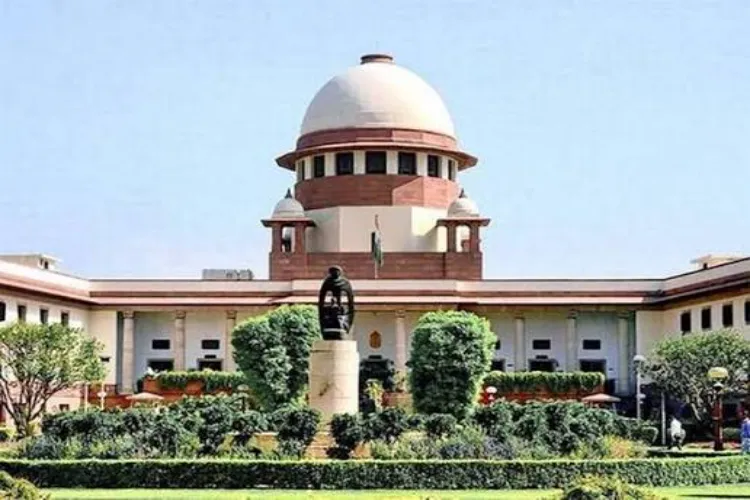
The Supreme Court on Tuesday sought responses from the Centre, all states and Union Territories on a petition alleging that Aadhaar cards are being misused as proof of citizenship, domicile and residential status, despite legal provisions limiting their purpose to identity verification.
A bench comprising Chief Justice Surya Kant and Justice V. Mohana issued notices to the Union government and state authorities after hearing a plea filed by advocate Ashwini Kumar Upadhyay. The court also directed that the matter be tagged with other similar petitions already pending before it.
The petition seeks directions to ensure that Aadhaar, issued by the Unique Identification Authority of India (UIDAI), is used solely as a means of establishing identity and not as evidence of citizenship, domicile, residence or date of birth.
Filed through advocate Ashwani Dubey, the plea also challenges the use of Aadhaar in voter registration procedures.
It urges the court to declare the use of Aadhaar as proof of age and residence in Form-6, used for enrolling new voters, as inconsistent with the provisions of the Aadhaar Act, 2016, the Representation of the People Act, 1950, and Article 14 of the Constitution, which guarantees equality before the law.
The petition argues that Section 9 of the Aadhaar Act explicitly states that Aadhaar cannot serve as proof of citizenship or domicile.
It further refers to a UIDAI notification issued on August 22, 2023, which clarified that Aadhaar is intended only as proof of identity and not as evidence of citizenship, address or date of birth.
Despite these safeguards, the plea claims Aadhaar is routinely accepted as proof of age, residence and citizenship in a variety of contexts.
According to the petitioner, Aadhaar is allegedly being used for school admissions, property transactions, obtaining birth certificates, ration cards and driving licences, as well as for voter registration.
The plea contends that this practice creates loopholes that could potentially allow infiltrators and illegal immigrants to obtain official documentation and gain entry into electoral rolls.
It further argues that the current verification mechanism employed under Form-6 is insufficient to prevent the inclusion of individuals lacking adequate supporting documentation.
Seeking broader reforms, the petition calls for a comprehensive review and strengthening of the verification process used during voter registration.
Among its recommendations is the constitution of a high-powered monitoring committee, headed by a retired Supreme Court judge and comprising experts in cyber security and forensic investigation.
The proposed body, according to the plea, would oversee reforms aimed at enhancing the integrity of identity verification and safeguarding electoral processes.
READ MORE: Asra Anjum revived Dakni deserts to preserve culinary heritage
The Supreme Court's decision to issue notices means the Centre, states and Union Territories will now have to place their positions on record before the court proceeds to examine the legal and constitutional questions raised in the petition.

.webp "Rocks bearing inscription in ancient Arabic excavated in Saudi Arabia's Madina region")