Patalganga
The Securities and Exchange Board of India (SEBI) is placing strong emphasis on lowering compliance burdens and regulatory costs to strengthen the competitiveness of India’s securities market, while continuing to safeguard its core regulatory objectives.
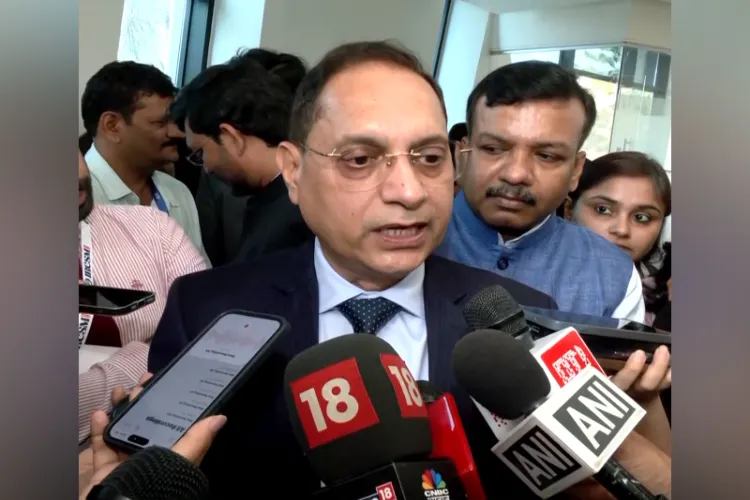
Speaking to mediapersons on the sidelines of the Sixth Annual International Research Conference on the Securities Market (2025–26), organised by SEBI and the National Institute of Securities Markets (NISM) in association with IIM Mumbai, Maharashtra National Law University, Mumbai and the National Stock Exchange (NSE), SEBI Chairman Tuhin Kanta Pandey underlined the economic impact of regulatory overheads.
Pandey said excessive compliance requirements can adversely affect competitiveness. “Efficiency and cost-effectiveness of regulatory measures are crucial. If the compliance burden in terms of cost and time becomes too high, it inevitably reduces overall competitiveness,” he noted.
While acknowledging that it is difficult to precisely measure the potential contribution of such reforms to GDP growth, the SEBI Chairman said that lowering the cost of capital remains a central objective of the regulator.
He added that SEBI is in the process of developing a regulatory impact assessment framework, an initiative earlier highlighted by the Finance Minister in Budget announcements. A committee led by the Chief Economic Advisor will provide direction on this exercise.
To further strengthen research and policy evaluation, SEBI is also setting up a Centre for Regulatory Studies. “It will be a high-level, permanent centre that will support ongoing research,” Pandey said, adding that it will enable collaboration with policy institutions and academic bodies to study the costs and effects of regulation on markets.
Highlighting the integrated nature of the financial ecosystem, Pandey said such matters are deliberated at the Financial Stability and Development Council (FSDC) level. “Through FSDC, inter-regulatory coordination is in place to collect data, promote research and generate ideas to improve access to finance and reduce its cost,” he explained.
On the recent technical issues at the National Securities Depository Limited (NSDL), Pandey said the system is now operating smoothly. He stated that a glitch in the inter-depository transfer mechanism had led to settlement delays, which were resolved by the weekend.
SEBI is currently awaiting a detailed root cause analysis, which will be placed before the Technical Advisory Committee. “Legacy systems can occasionally face issues as markets expand, and these need to be identified and upgraded accordingly,” he said.
READ MORE: Muslim couple arrange wedding of their adopted Hindu son
The SEBI Chairman also noted that efforts are underway to eventually enable investors to view a consolidated statement of their financial assets across regulators, including insurance and pension holdings, subject to investor consent.











.webp "Union Home Minister Amit Shah")
.webp "Union Minister of Parliamentary Affairs Kiren Rijiju")



_(1).webp)