New Delhi
The Union Public Service Commission (UPSC) has successfully rolled out a face-authentication mechanism for its examinations, marking a significant step towards enhancing the security and credibility of the civil services recruitment process.
The technology was deployed during the recently conducted Civil Services and Indian Forest Service (Preliminary) Examination, 2026, to verify the identity of candidates appearing for the tests.
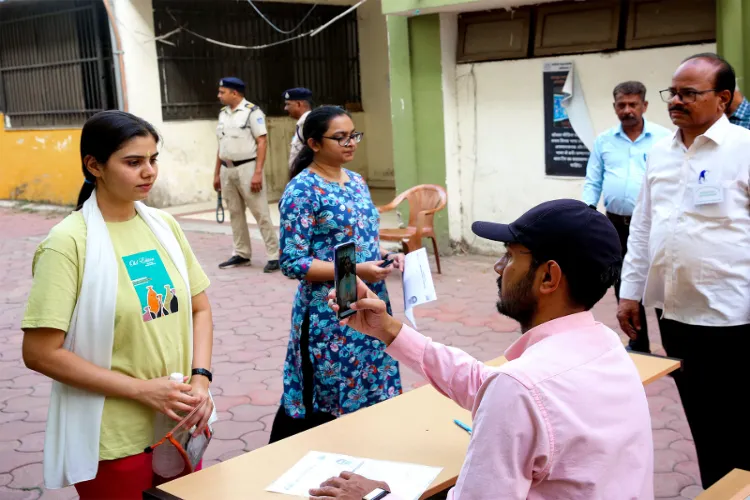
According to the UPSC, the system matches the photograph uploaded by an applicant during the registration process with the individual appearing at the examination centre, thereby preventing impersonation and other forms of malpractice.
The commission carried out the real-time authentication exercise across 2,072 examination centres nationwide. Invigilators used a mobile-based application to verify candidates on the spot before allowing them entry into examination halls.
The face-authentication solution was developed by the UPSC with technical assistance from the National e-Governance Division (NeGD) under the Ministry of Electronics and Information Technology.
As part of the new protocol, every candidate was required to undergo identity verification through facial recognition before entering the examination venue. To facilitate smooth implementation, the UPSC prepared a detailed Standard Operating Procedure (SOP), which was circulated among state authorities, district administrations and examination centres.
The commission also organised multiple rounds of training for invigilators to ensure effective execution of the system.
One of the key advantages of the solution is that it does not require specialised or expensive equipment. The application functions on standard Android smartphones, enabling invigilators to use their personal devices and reducing logistical and hardware costs.
The authentication process was designed to be quick and efficient, taking approximately six to eight seconds per candidate. This helped maintain a smooth flow of entrants and prevented long queues at examination centres.
The system also demonstrated significant scalability. More than 7,000 invigilators reportedly used the application simultaneously, while the platform handled nearly 12,000 candidate authentications per minute during peak hours.
UPSC Chairman Ajay Kumar described the initiative as an important measure to ensure examinations remain free from impersonation. He said the technology was developed in-house with support from NeGD and highlighted the challenge of implementing the system across thousands of centres and training a large workforce within a limited timeframe.
The successful adoption of real-time facial authentication, he added, reflects the commission's commitment to maintaining transparency, fairness and technological innovation in the conduct of public examinations.
READ MORE: 5 Muslim youth showered with praises for saving lives in Delhi hotel fire
The Civil Services Preliminary Examination 2026 was conducted for nearly 5.5 lakh candidates at more than 2,000 venues across the country.












.webp "Representational image")

.webp "Prime Minister Narendra Modi")

.webp)