




Srinagar
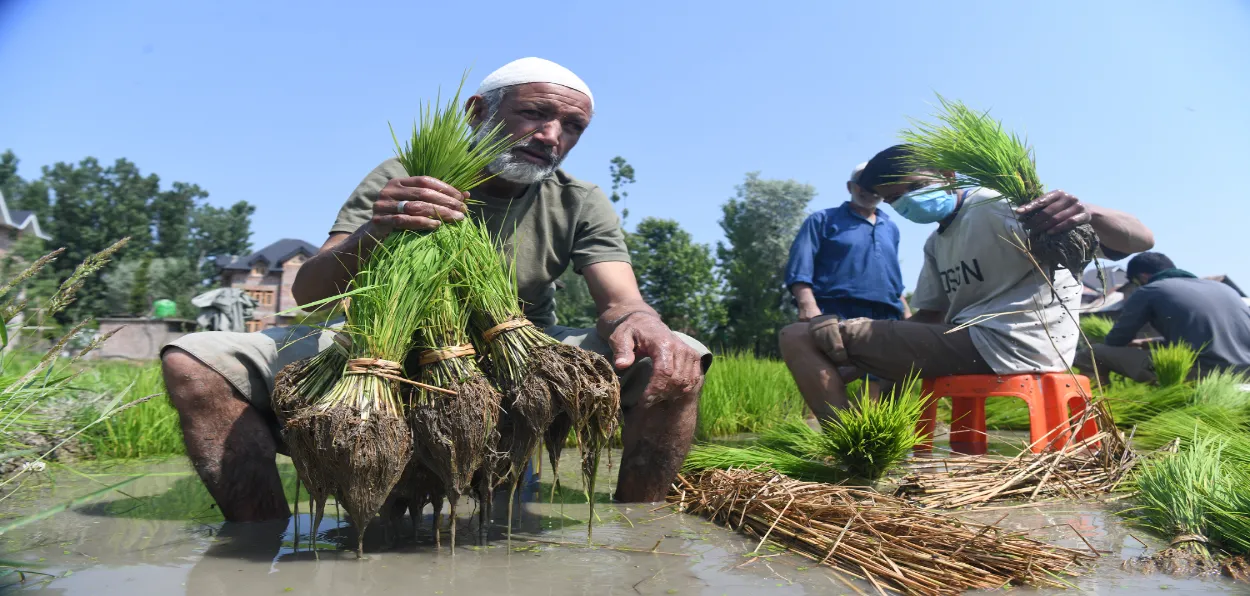
The paddy sowing season has gathered pace across the Kashmir Valley, with farmers working tirelessly in waterlogged fields to complete transplantation ahead of the peak season.
From the fertile plains of Budgam and Pulwama to the paddy-growing belts of Anantnag and Bandipora, vast stretches of agricultural land have turned green as cultivators begin one of the most important farming activities of the year.
Agriculture remains the backbone of Kashmir's rural economy, and paddy cultivation plays a crucial role in ensuring food security for thousands of households.
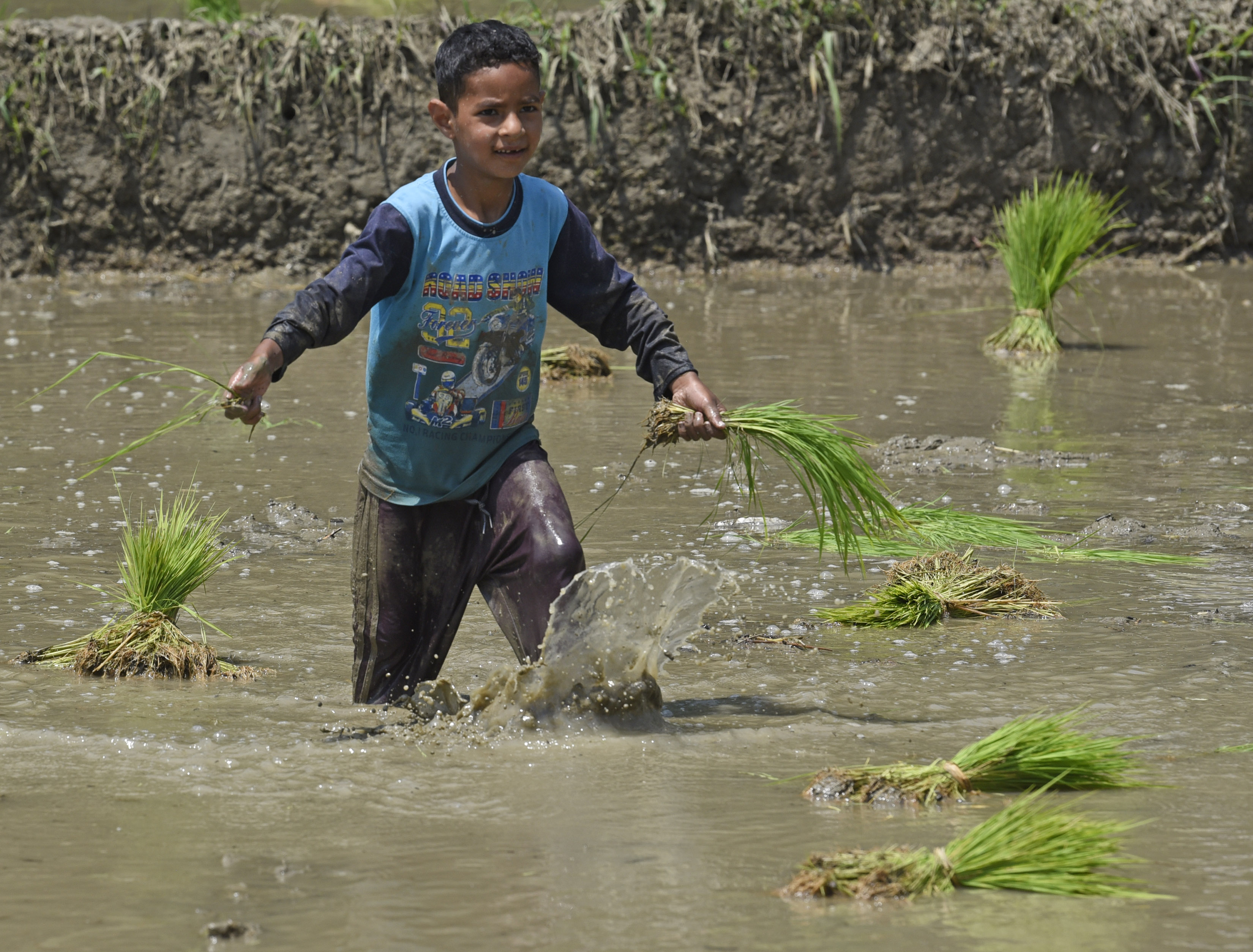 A Child helps his family in transplanting paddy seedlings in Budgam
Farmers have expressed optimism this season due to favourable weather conditions and adequate water availability in irrigation canals and streams.
In the village of Wathoora in Budgam district, groups of farmers could be seen transplanting young rice seedlings into flooded fields from early morning. Many families, including women and elderly members, joined the seasonal activity that has been a part of Kashmir's agricultural tradition for generations.
"We started transplantation last week, and the weather has been supportive so far," said farmer Abdul Rashid. "The water level is sufficient, and we hope for a good yield if conditions remain stable in the coming months."
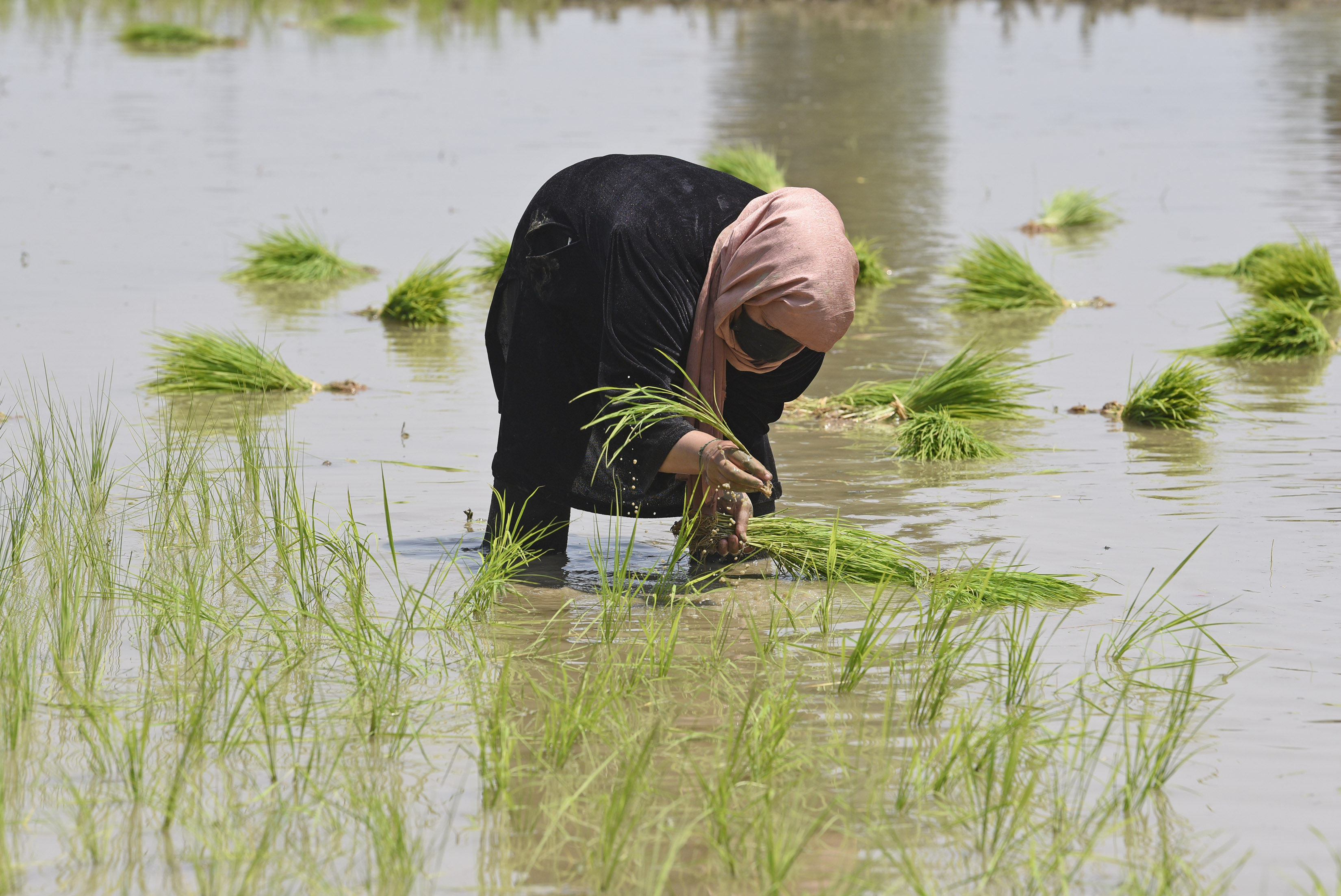
A woman doing the backbreaking job of transplanting paddy
Officials from the Agriculture Department said paddy transplantation is progressing smoothly across most districts. They have advised farmers to adopt modern cultivation techniques and use high-yield seed varieties to improve productivity.
"We are monitoring the sowing process closely and providing technical assistance to farmers wherever required," said an Agriculture Department official. "The department has distributed quality seeds and is encouraging scientific farming practices to increase production."
In Pulwama district, another farmer, Ghulam Mohammad, said rising input costs continue to be a challenge despite positive expectations for the crop.
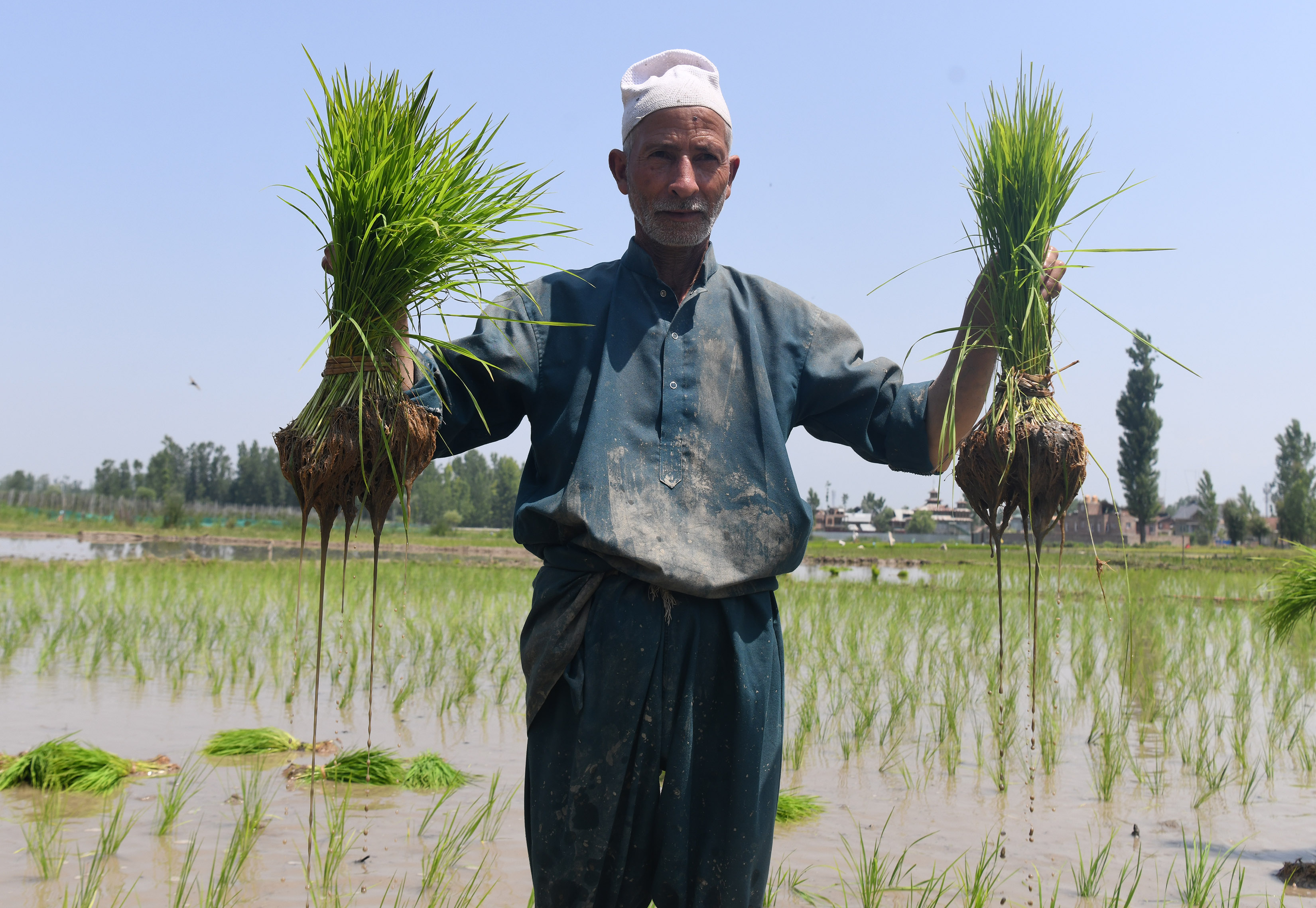 A proud farmer showing off bundles of paddy seedlings
"The prices of fertilisers, labour, and machinery have increased over the years," he said. "Even then, paddy cultivation remains our primary source of livelihood, and we are hopeful of a successful season."
Agricultural experts believe timely transplantation is essential for achieving better yields and minimising the risk of crop diseases. They have urged farmers to maintain proper water management and follow recommended agricultural practices throughout the growing season.
Season of rice transplantation begins in Kashmir pic.twitter.com/0Ey5jKlS8B
— Basit Zargar (باسط) (@basiitzargar) May 31, 2026
Meanwhile, local markets have witnessed increased demand for farming equipment, fertilisers, and agricultural supplies as cultivation activities intensify across the Valley.
Rural areas have also seen heightened economic activity with seasonal labourers finding employment during the transplantation period.
According to officials, paddy cultivation covers thousands of hectares across Kashmir every year and contributes significantly to the region's agricultural output. The crop is expected to reach maturity later in the year, with harvesting likely to begin in autumn.
ALSO READ: Dr Adeela Abdulla IAS: The officer behind systems that touch everyday lives
As farmers continue working in their fields under the summer sun, hopes remain high for a productive harvest. For many rural families, the success of the paddy season will determine their income and food security for the year ahead, making the ongoing sowing period one of the most crucial phases in Kashmir's agricultural calendar.

.jpg "Gujarat’s women entrepreneurs bring their craftsmanship to life during Navratri")










.jpg "Representational image")

.webp)