Pallab Bhattacharyya
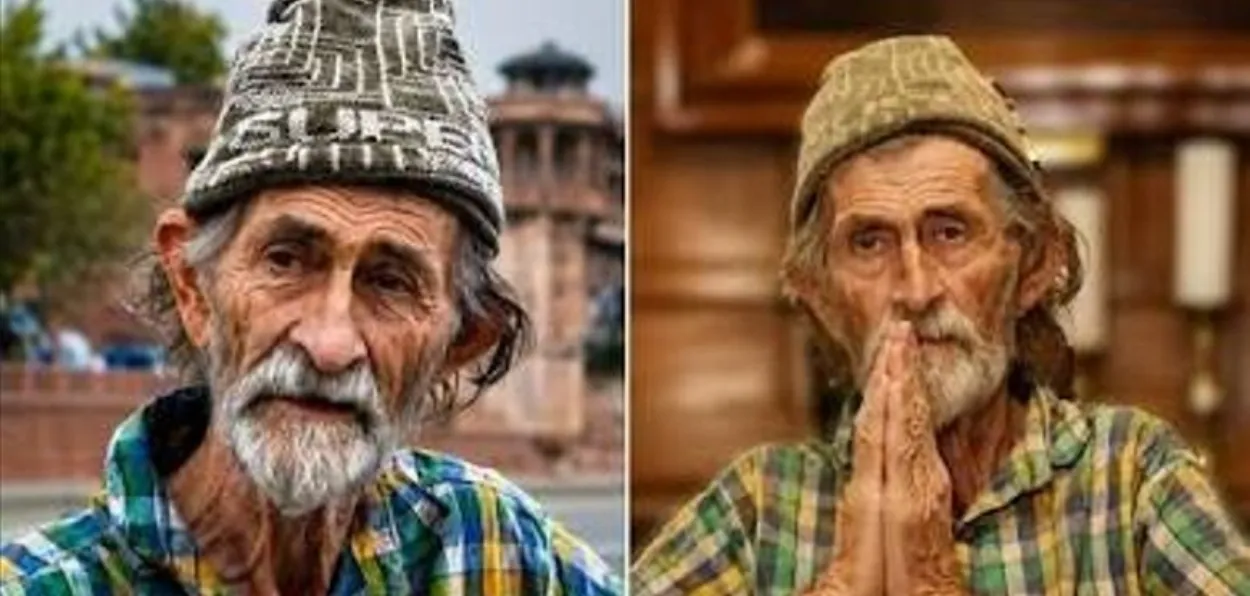
He first came to India on a personal mission—to walk through the landscapes that had once lived in his mother’s memories. Caron Rawnsley, an Irishman, believed his journey would end after retracing the places she had loved during her childhood in Kashmir and among relatives in Jodhpur. Instead, destiny quietly rewrote his story.
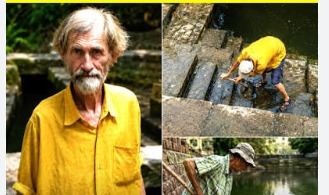
The traveller searching for his mother’s footprints discovered a greater purpose beneath the sandstone streets of Rajasthan, where centuries-old stepwells lay buried under neglect, garbage and fading memories. More than a decade later, the octogenarian still walks through the narrow lanes of Jodhpur with a wooden stick in hand, descending into ancient baoris and jhalras to clean, restore, and inspire others to reclaim them. He often says, with remarkable serenity, that he hopes to spend the rest of his life—and even breathe his last—in India. Few journeys of the modern world illustrate more beautifully that home is not always where one is born, but where one chooses to serve.
The transformation of Caron Rawnsley from an Irish visitor into Jodhpur’s beloved “Aquaman” is far more than the story of environmental conservation. It is an extraordinary testimony to human resilience, cooperation and the universal capacity to belong beyond the artificial boundaries of nationality, religion, caste, language or race. At a time when the world appears increasingly fractured by conflict, identity politics and suspicion of outsiders, his life quietly reminds us that humanity remains our greatest shared identity.

When Rawnsley first encountered Jodhpur’s neglected stepwells, he saw not merely abandoned monuments but forgotten reservoirs of life. For centuries these magnificent structures had harvested rainwater, replenished groundwater, moderated desert temperatures and served as vibrant community spaces where people gathered irrespective of social distinctions. Modern piped water systems gradually rendered them obsolete, while urban neglect converted many into dumping grounds. Appeals to civic authorities produced little change. Instead of waiting endlessly for others to act, Rawnsley chose the oldest and perhaps the noblest form of activism—leading by example. Armed with nothing more than determination, a broom and a shovel, he began removing plastic waste, sludge and debris with his own hands.
Initially, the people of Jodhpur regarded him with amusement. They affectionately called him “Paagal Saab”—the crazy foreigner who spent his retirement cleaning filthy wells beneath the blazing Rajasthan sun. Yet perseverance possesses a language understood across every culture. As weeks turned into years, ridicule transformed into admiration. Residents, women from nearby neighbourhoods, schoolchildren, artisans, volunteers, conservationists and heritage organisations gradually joined him. His solitary mission evolved into a collective movement where people from different faiths, castes, languages and economic backgrounds worked shoulder to shoulder, united by a common purpose rather than divided by inherited identities.
Perhaps this is Rawnsley’s greatest achievement. He did not merely restore stone structures; he restored community ownership. Every cleaned stepwell became a meeting place where cooperation replaced indifference. Local women, many observing traditional customs, emerged as leaders in restoration campaigns. Skilled masons revived forgotten techniques for repairing sandstone. Young volunteers discovered pride in protecting their heritage. Visitors contributed labour alongside residents. The restored wells began attracting birds, fish and returning groundwater, proving that ecological recovery and social harmony often flourish together.
The symbolism of these revived stepwells reaches far beyond Rajasthan. Around the world, climate change threatens water security, intensifies heat waves and challenges conventional models of urban development. Ironically, many traditional systems abandoned in the pursuit of modernity may hold valuable lessons for the future.
Jodhpur’s ancient stepwells demonstrate how indigenous engineering combined beauty with sustainability, storing precious rainwater while naturally cooling their surroundings. By reviving these forgotten marvels, Rawnsley reminds us that climate resilience does not always require billion-dollar technologies. Sometimes the wisest solutions lie buried beneath our own feet, awaiting rediscovery through patience, community participation and respect for traditional knowledge.
Equally inspiring is Rawnsley’s own personal resilience. Advancing age has not diminished his commitment. A broken leg forces him to walk with difficulty. Rajasthan’s unforgiving summers leave painful rashes on his skin. Volunteers come and go, financial support remains uncertain and institutional responses are often inconsistent. Yet every morning he continues his quiet pilgrimage into the depths of forgotten wells. His determination demonstrates that resilience is not measured by dramatic moments of heroism but by the willingness to repeat small acts of goodness every single day despite hardship. History itself is often transformed not by spectacular events but by ordinary individuals refusing to abandon extraordinary commitments.
His remarkable journey also carries a profound philosophical lesson about belonging. Modern societies frequently define identity through birthplace, citizenship, ethnicity or ancestry. Rawnsley’s life gently challenges these assumptions. He came seeking memories inherited from his mother but found an emotional homeland created through service. India did not become meaningful because of bloodlines or legal documents. It became meaningful because he invested his labour, affection and remaining years into improving the lives of strangers who eventually became neighbours. Belonging, his story suggests, is ultimately an act of love expressed through responsibility.
In an age increasingly dominated by polarisation, his example deserves careful reflection. Across continents, societies struggle with religious intolerance, ethnic conflicts, racial prejudice, linguistic divisions and political extremism. Yet beneath these visible fault lines lie universal human needs—for clean water, healthy environments, dignity, compassion and peaceful coexistence. The stepwell restoration movement in Jodhpur quietly illustrates that shared challenges often dissolve artificial barriers. When people work together to preserve a common resource, differences become secondary to shared aspirations. Water recognises neither religion nor nationality. Climate change respects no political border. Environmental stewardship therefore becomes one of humanity’s greatest opportunities to rediscover collective purpose.
There is another subtle beauty in Rawnsley’s story. Unlike many narratives centred on individual heroes, he consistently redirects praise towards local communities. He acknowledges the contributions of neighbourhood women, volunteers, craftsmen, institutions and countless ordinary citizens whose combined efforts have restored several historic water bodies. His humility transforms the story from one of foreign intervention into one of mutual partnership. It affirms that lasting change emerges not through charity but through cooperation, mutual respect and shared ownership.
As he reflects upon the twilight years of his life, Caron Rawnsley speaks without regret. The journey that began as a son’s tribute to his mother’s cherished memories has become his own enduring legacy. In choosing India as the land where he hopes to spend his final days, he offers the world a timeless message: that humanity flourishes whenever compassion triumphs over division, whenever service transcends identity, and whenever strangers become fellow custodians of a shared future.
READ MORE: Ladakhi women singers win hearts for Kargil Vijay Diwas performance
The restored stepwells of Jodhpur today hold much more than water. They preserve an enduring truth—that resilience grows through perseverance, peace grows through cooperation, and civilisation itself survives when ordinary people, irrespective of faith, caste, language, region or nationality, choose to care for one another and for the common gifts of nature. In the quiet reflection shimmering upon the waters of those ancient wells lives the legacy of an Irishman who came searching for memories and ended up teaching the world the true meaning of home.
The Author is a former Director General of Assam Police

.webp "Union Home Minister Amit Shah")