These days, news space is saturated with news about controversies on the examination systems – from cancellation of National Eligibility cum Entrance Test-Undergraduate (NEET-UG) 2026 to disruptions in Common University Entrance Test (CUET-UG) 2026 to glitches in the post-examination services portal of Central Board of Secondary Education (CBSE).
Not only have they captured the space of private household conversations, but even a wide spectrum of our public institutions – the Supreme Court, investigative agencies, governments and political parties – are seized of the matter.
Undoubtedly, these are challenging times for our students. In India, board examinations and entrance tests carry a lot of emotional quotient because they shoulder the aspirations of our students and the expectations of their families. With this human angle, our response should be empathetic and followed by action to ensure their trust in the system is preserved.
Maintaining transparency and integrity
While the NEET-UG paper leak and glitches in the CUET and CBSE were unfortunate and should not have happened, the swift and coordinated response by our public institutions reassures the students that the nation stands by them in distress and their future is a primary concern.
To begin with, maintaining transparency and exercising disclosure are critical for confidence-building. A day after the NEET-UG episode, when the confirmation of the leak was received on May 11, the government announced the scrapping of the exam and handed the investigation to the CBI. The swift action demonstrated that no smokescreen was deployed. No doubt the existing framework requires more robust safeguards, but the trust deficit in the system is not eroded if it upholds transparency.
Then, the integrity of the examinations ought to be preserved from the ‘paper leak mafia’ who have been feeding off the loose ends in the system for decades. While the scrapping of the NEET-UG test has caused distress to the students, it was the only viable option of ensuring that no deserving student’s future is vitiated. If the examination had been allowed to stand, it would have further perpetuated the ‘paper leak economy’ by allowing the meritorious students to become victims of irregularities.
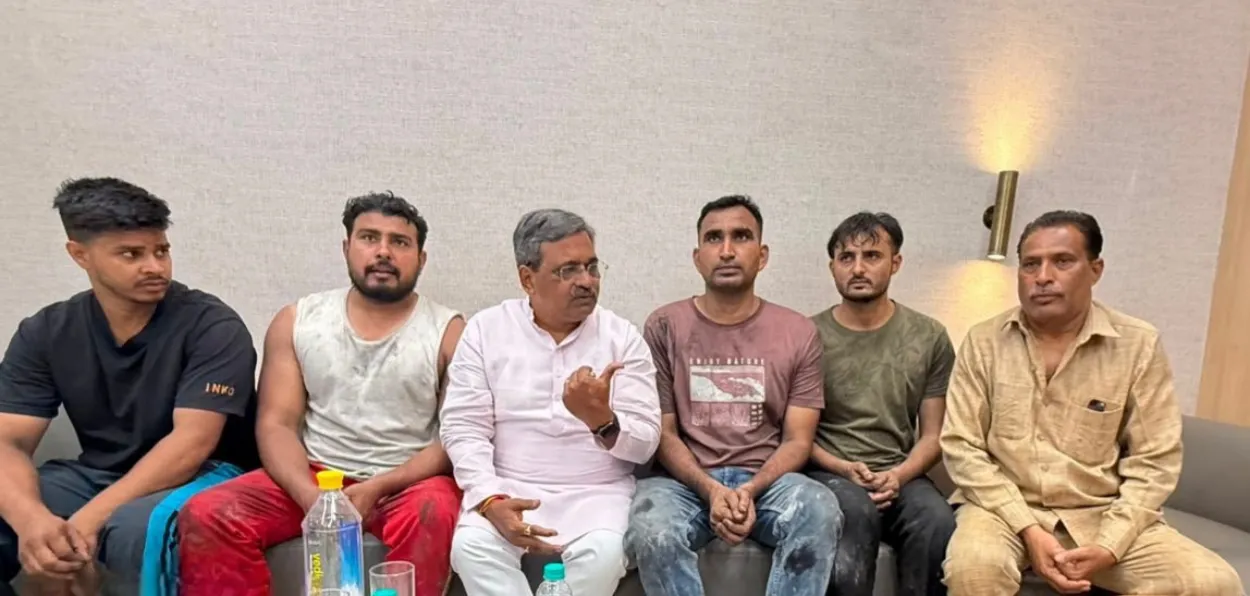
 An accused in the NEET paper leak being arrested by Police
Strengthening Institutions
A section of the political voices has also argued for abandoning the NTA and reverting to the pre-NEET era. We should reflect on the practical aphorism – ‘never abandon the good for the ideal’. The present structure and mechanisms may not be ideal, but they are definitely an improvement over the previous system of multiple, non-standardised, and fragmented medical exams, which was a gateway for examination mafia and other forms of corruption, such as high capitation fees.
Further, the present NEET-UG episode should not lead us to conclude that every NTA exam is unreliable. The suggestion for scrapping the NTA amounts to ‘throwing the baby out with the bathwater’. Since its establishment in 2017, the NTA has been successfully conducting large-scale exams for NEET, JEE Mains, UGC-NET and CUET.
What NTA requires is the strengthening of its institutional capacity and oversight mechanisms. The Ministry of Education has recently undertaken a series of measures to augment NTA’s capacity through the deployment of AI and analytics-based controls, audit frameworks, professionalisation of cadre and citizenry interface.
The shifting of NEET UG to computer-based tests (CBT) mode from next year is also a key step. It is estimated that the CBT test will eliminate up to 95% vulnerabilities by delivering encrypted question papers through confidential servers at the testing centres. Presently, the NEET-UG in pen-paper mode has deeply decentralised and localised dimensions. It is held across thousands of exam centres spread across a multitude of cities, catering to lakhs of candidates. The setting, printing, sealing, coding, transportation and distribution of question papers involves a multi-layered complex process wherein every layer carries the risk of leak.
#WATCH | Patna, Bihar: Educator Khan Sir says, "...thousands and lakhs of students prepare for exams, but the papers get leaked. The dreams of so many poor, middle-class children are shattered. The Air Force will deliver the NEET exam paper. Typhoid injections don't work for… pic.twitter.com/l0dDxkEp5w
— ANI (@ANI) June 1, 2026
We should also not lose sight of the practical reality that no matter how robust our systems may be, their efficacy would eventually be dependent on a human variable. Even in the present NEET-UG episode, it was the ‘paper leak’ human syndicate that perverted the system.
Politics of criticism
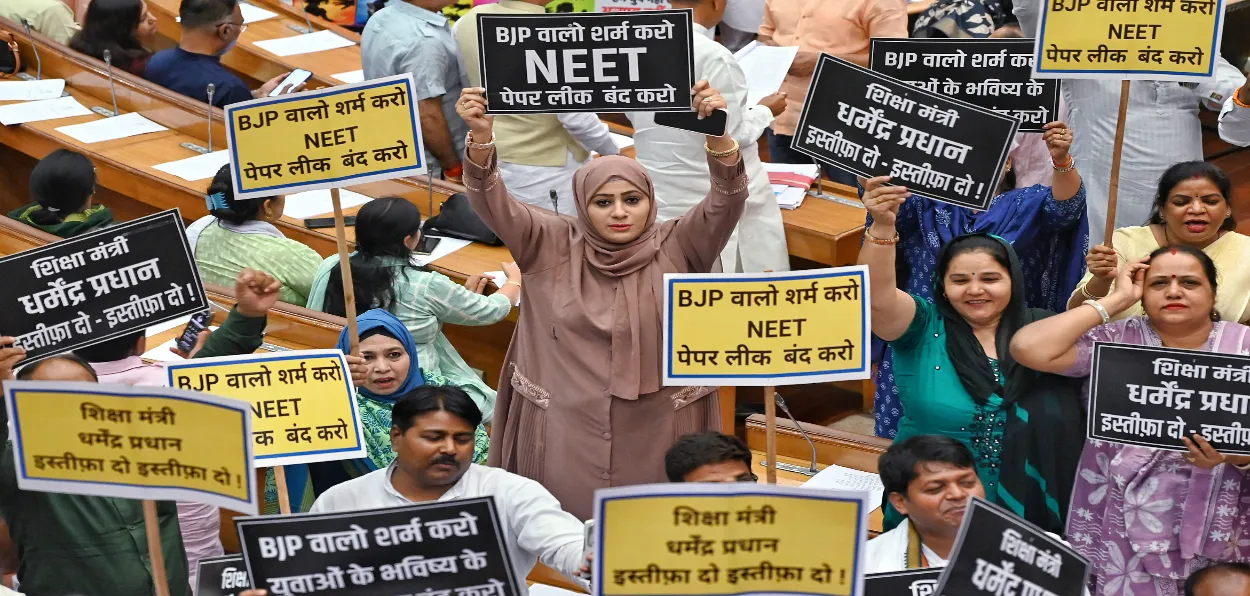
Just when our public institutions are taking steps to restore trust in the testing process, the response of the opposition parties, like Congress and the Aam Aadmi Party, is disappointing. The cynical portrayal of our public institutions and the ad hominem attack on the Prime Minister and Union Education Minister do not meaningfully contribute to deliberations on an important national issue. Even specific allegations appear to be selective and purely political in nature.
For instance, the Congress has questioned why contracts were awarded to Coempt Eduteck Pvt. Ltd., an on-screen marking (OSM) service provider contracted by CBSE, after vulnerabilities were found in the online system used for evaluating Class 12 answer sheets. While the CBSE have initiated steps to penalise and hold the company accountable for the glitches, the Congress has provided no clarification on why state universities in Congress-ruled states of Telangana and Karnataka have repeatedly engaged the same company for multiple projects.
ALSO READ: Chabina Hassan's work helped in securing World Heritage status for the Charaideo Maidam
The opposition's designs appear to be aimed at leveraging the existing anxieties of students to discredit our institutions. Criticism of the government is a legitimate function of any opposition. But criticism as a sole grammar of politics reflects that it lacks the vision and imagination to formulate an alternative agenda.
(The writer is a former Vice Chancellor, Aligarh Muslim University and a nominated member of Uttar Pradesh Legislative Council)












.webp)