 Malick Asghar Hashmi
Some memories have no expiry date. One such memory is from my days as the News Editor of Amar Ujala, a vernacular newspaper in Aligarh, Uttar Pradesh. I lived in Aligarh, while my wife and two sons stayed at Gurugram, Haryana. Being in charge of an edition in a happening city meant that my life was all about news. My work stretched into the wee hours. Even after closing the pages, the news of the day lingered on in my mind. I often left my office at 3 am.
Unforgettable experiences
One night, while I was finalising headlines of the next day's newspaper, my phone rang. It was about 2.30 am and quite unusual for my wife to call me at that time. She was in panic; the tone of her voice disturbed me. Breathing hard, she said that the police had taken away our elder son to the Sector 5 police station.
Mayank Tiwari, a former colleague, was a brilliant crime reporter in Gurugram. This name gave me some strength. I took a deep breath and calmly asked her, "What happened to Salik? Why did the police take him away?"
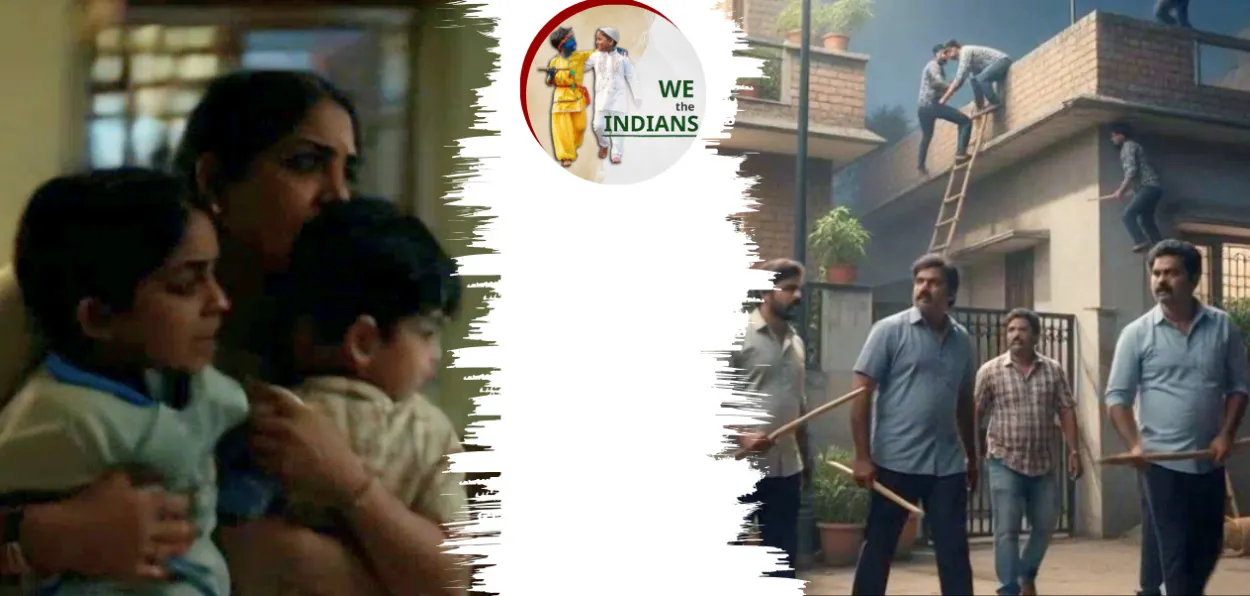
 AI-generated image of the incident
My wife slowly recounted the entire scene of that night over the phone. She and our boys were sleeping. Two houses away from ours lived a young man who worked at a call centre. He had returned from work late and was relaxing on the terrace when he noticed a shitthoute jumping the wall into the terrace of my house.
He immediately realised that it was an intruder, and surely he was not there with noble intentions. He immediately informed his landlord, Phoolchand Ji. Phoolchand Ji and almost everyone in the lane knew that I was in Aligarh for work, and that my wife and two young boys were alone.
Phoolchand ji's eyes lit up with a resolve to protect my family. He immediately woke up all the male members of his family; everyone picked up lathis. They woke up the other neighbours too.
About ten or 12 people brandishing sticks were standing outside my house when my wife woke up to the call of the doorbell. She thought that I had come home from Aligarh. But when she looked out from the first-floor balcony to check, she was stunned.
On seeing an army of people with lathis in front of the main gate of our house, she almost missed a heartbeat. She was speechless. In those days, incidents of communal tensions were not so uncommon. She imagined the worst-case scenarios. She had heard about a dispute turning violent over street prayers, a man who was wearing a skullcap beaten for refusing to chant "Jai Shri Ram." These thoughts filled her mind with a deep disbelief. He felt it was the turn of our family; the Hindu neighbours were going to attack us!
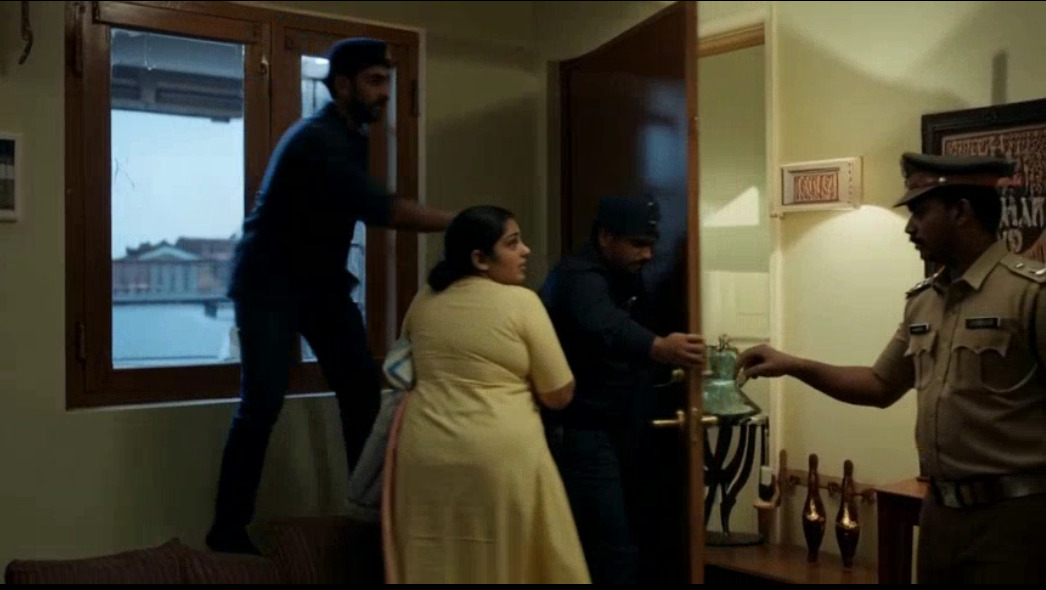
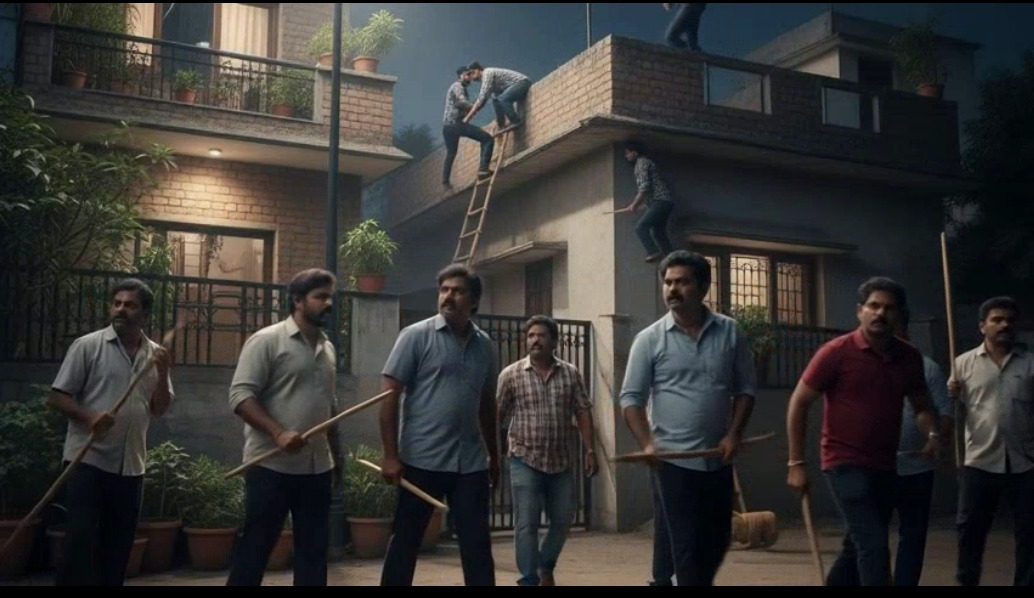 AI-generated image of the incident
And at that very moment, Phoolchand ji's firm and loud voice pierced the darkness and reached her ears: "Bhabhi ji, open the door quickly. There is a thief on the roof of your house."
Hearing this, she emerged from her imaginary world and ran downstairs to open the door. In no time, the ground floor of the house was full of neighbours. Some of them climbed onto the roof, and indeed, a stranger was found curled up against the wall, probably trying to hide from the mob.
The mob dragged him down to the street and beat him. Soon, the police arrived and took away the thief and asked my son, Salik, to come to the police station as an eyewitness.
I called my friend Mayank Tiwari, who was an influential crime reporter in Gurugram and told him about the incident. Mayank assured me, "Asghar Bhai, don't worry. I am just leaving for the police station right away in my car."
A short while later, his wife called again. Her voice was relaxed. She told him that Mayank Tiwari had dropped Salik off at home. By then, it was a quarter to five. It was summer, and the glow of twilight spread across the horizon.
Today, when I see Hindus and Muslims bickering over issues and sometimes notice the growing distrust, I'm instantly reminded of that moment. That morning's crimson glow on the horizon was not just a celestial phenomenon but the radiance of my neighbours' unconditional love and goodwill.
In my absence, all the Hindus in my neighbourhood risked their lives to protect a Muslim family. That incident is more valuable to me than any book on communal harmony.
My neighbours had not only protected my family in my absence but also risked their own lives to catch the thief, who could have been armed.
The incident always reminds me of the innate love for fellow humans that fills our hearts. Hatred is not natural; it's cultivated. In a crisis, genuine human beings shed the cloak of religion to uphold the dharma of neighbourliness.
I am sharing this story to remind everyone about the difference between perception and reality.
Readers are welcome to share their experiences of communal harmony or interreligious friendship on [email protected] for publication - Editor.
"

.webp "Representational Image")









.webp)