Pallab Bhattacharyya
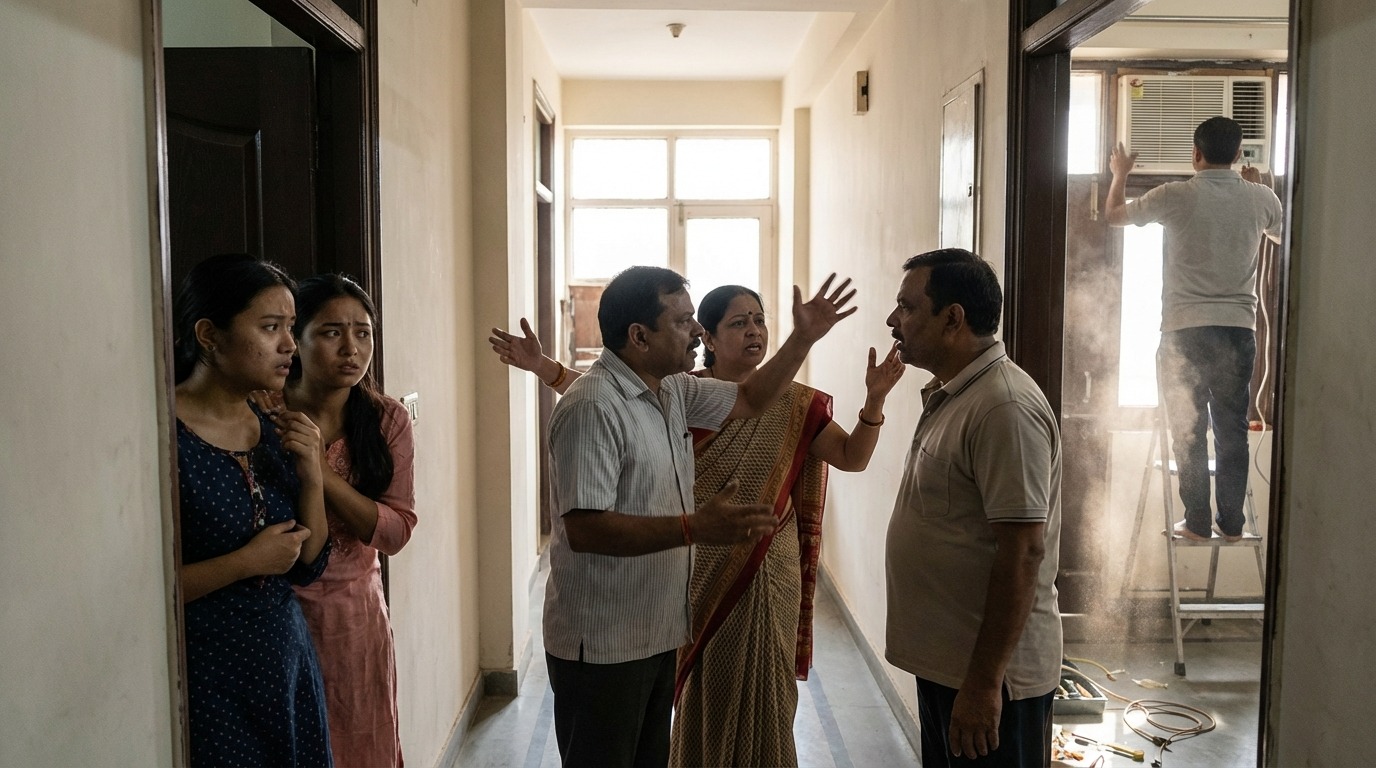
On 20 February 2026, in a modest apartment block in Delhi’s Malviya Nagar, a quarrel over dust from an air-conditioner repair spiralled into something far uglier. Three young women from Arunachal Pradesh, tenants in the building, found themselves bombarded with racial slurs and sexualised insults by neighbours who allegedly called them “momo” and worse, questioned their character, and threatened them with intimidation.
A video of the altercation travelled swiftly across social media, stirring outrage across the North East and prompting intervention by the police under provisions of the Bharatiya Nyaya Sanhita and the Scheduled Castes and Scheduled Tribes (Prevention of Atrocities) Act. The arrests that followed were welcome. Yet the episode was less an aberration than a reminder of a pattern that has haunted Northeastern Indians for decades: the uneasy experience of being treated as foreigners in their own country.
The Malviya Nagar incident joins a list of cases that have periodically jolted the national conscience. The murder of Nido Tania in Delhi in 2014, after he was mocked for his appearance, forced the Union government to constitute the M.P. Bezbaruah Committee to examine racism against people from the North East living in metropolitan India.
 AI-generated picture
A decade later, the alleged racist killing of Tripura student Anjel Chakma in Uttarakhand revived the same questions. Between these flashpoints lie hundreds of less visible stories of students denied housing, young professionals taunted in workplaces, women subjected to moral policing, and daily commuters mocked with slurs such as “chinki”, “Chinese” or “corona” during the pandemic years.
Data compiled around the time of the Bezbaruah Committee’s work showed that crimes against Northeasterners in Delhi had risen sharply in the early 2010s, and surveys suggested that a majority of Northeastern women in the capital had experienced harassment. While numbers fluctuate and are often under-reported, the qualitative picture remains strikingly consistent.
Harassment begins with words: comments on facial features, food habits, language, or clothing. It extends to discrimination in housing, where landlords impose restrictive clauses or refuse to rent on vague grounds of “culture”. In workplaces, especially in retail, hospitality and service sectors where many Northeastern migrants find employment, stereotypes about docility or moral laxity shape treatment. For women, racialisation and sexualisation converge; autonomy in dress or social life is read through a moral lens sharpened by patriarchal suspicion.
 AI-generated picture
Why does this hostility persist? Part of the answer lies in the historical racialisation of the North East. Colonial anthropology classified many communities of the region as “Mongoloid” tribes, administratively separated and governed through frontier policies that marked them as distinct from the so-called mainstream. Post-colonial nation-building did little to dismantle these inherited mental maps.
School textbooks and media narratives long centred the Gangetic heartland as the normative core of Indianness, leaving large swathes of the North East marginal in imagination if not in constitutional status. The result is a peculiar ignorance: many Indians outside the region cannot name its states, conflate citizens with foreigners, and interpret differences in physical appearance or language as evidence of alienness.
This process of racialisation produces what scholars call the “internal foreigner”. Northeastern Indians are Indian by passport and political identity, yet frequently treated as if they must prove belonging. In moments of national anxiety, such as during the COVID-19 pandemic, this latent prejudice surfaces starkly. Reports of Northeasterners being called “corona” or blamed for the virus illustrated how quickly racial stereotypes could be activated.
Yet racism against Northeasterners does not operate in a vacuum. It intersects with other hierarchies embedded in Indian society, most notably caste. The Constitution abolished untouchability in 1950 and created a framework of reservations and protective legislation for the Scheduled Castes and Scheduled Tribes. Despite this, caste discrimination remains a stubborn reality in many parts of the country, manifesting in social segregation, occupational stratification, and violence.
The parallels between casteism and racism are not exact, but they are instructive. Both systems rely on ascriptive identities assigned at birth. Both generate everyday practices of othering, jokes, slurs, and social distance that can escalate into discrimination and violence. And both survive despite legal prohibitions because they are sustained by social attitudes transmitted across generations. Racism against Northeasterners and casteism are parallel expressions of a broader malaise: the persistence of hierarchies that rank citizens unequally in imagination and practice.
The state’s response to overt episodes of racism has evolved. The Bezbaruah Committee, constituted after Nido Tania’s death, undertook extensive consultations and confirmed the pervasive sense of insecurity among Northeastern migrants. It recommended a mix of legal, administrative, and educational measures: criminalisation of racial slurs, special police units and helplines, greater representation of Northeastern personnel in metropolitan police forces, expansion of hostel facilities, and inclusion of Northeastern history and culture in school curricula.
 AI-generated picture
Some of these recommendations have been partially implemented. Delhi Police established a dedicated helpline1093, for Northeastern residents and created special units to liaise with the community. Recruitment drives brought more Northeastern youth into the force. Grievance cells were set up in state bhavans, and hostels were expanded in the capital. The University Grants Commission issued and updated anti-discrimination regulations requiring institutions to create mechanisms to address bias on grounds including race, place of birth and caste. Parliament was informed of proposals to amend the Indian Penal Code to explicitly criminalise racial discrimination, with suggested new sections addressing acts prejudicial to human dignity and insults directed at racial groups.
Yet a decade on, the persistence of incidents like Malviya Nagar suggests that these measures, while significant, have not fundamentally altered social attitudes. The proposed explicit anti-racism provisions were never fully operationalised before the transition from the Indian Penal Code to the Bharatiya Nyaya Sanhita. Existing hate-speech clauses can be invoked, and in some cases, the SC/ST (Prevention of Atrocities) Act applies where victims belong to the Scheduled Tribes, but India still lacks a comprehensive, clearly articulated anti-racism statute.
The deeper challenge is cultural. Laws can punish egregious acts, but they cannot alone rewire social imagination. To treat Northeastern Indians as equal citizens requires a sustained project of national self-education. Textbooks must integrate the histories of the Ahom kingdom, the Naga and Mizo political movements, and the region’s contributions to art, sport and public life as intrinsic to the Indian story. Universities must actively sensitise students to the realities of internal racism and its intersection with caste and gender. Media must move beyond tokenistic or exotic portrayals to normalise Northeastern's presence in diverse roles. Resident welfare associations and landlords must be held accountable for discriminatory practices, perhaps through clearer tenancy rules that prohibit exclusion on grounds of race or region.
At the legal level, India would benefit from a comprehensive anti-discrimination law that recognises race, ethnicity, region and language alongside caste and religion, providing both criminal sanctions for hate crimes and civil remedies for discrimination in housing, employment and education. Clear recognition of racial motivation as an aggravating factor in offences, systematic data collection by the National Crime Records Bureau, and regular public review of implementation of committee recommendations could strengthen accountability.
READ MORE: Anika’s battle for life: Muslims extend a helping hand
The women in Malviya Nagar were not asking for privilege. If India is to honour its plural foundations, it must confront not only the overt bigot but also the subtle everyday practices that mark some as insiders and others as strangers. Only then can the phrase “unity in diversity” move from slogan to lived reality, and only then can every Indian, regardless of face or accent, feel fully at home.