Malick Asghar Hashmi/New Delhi
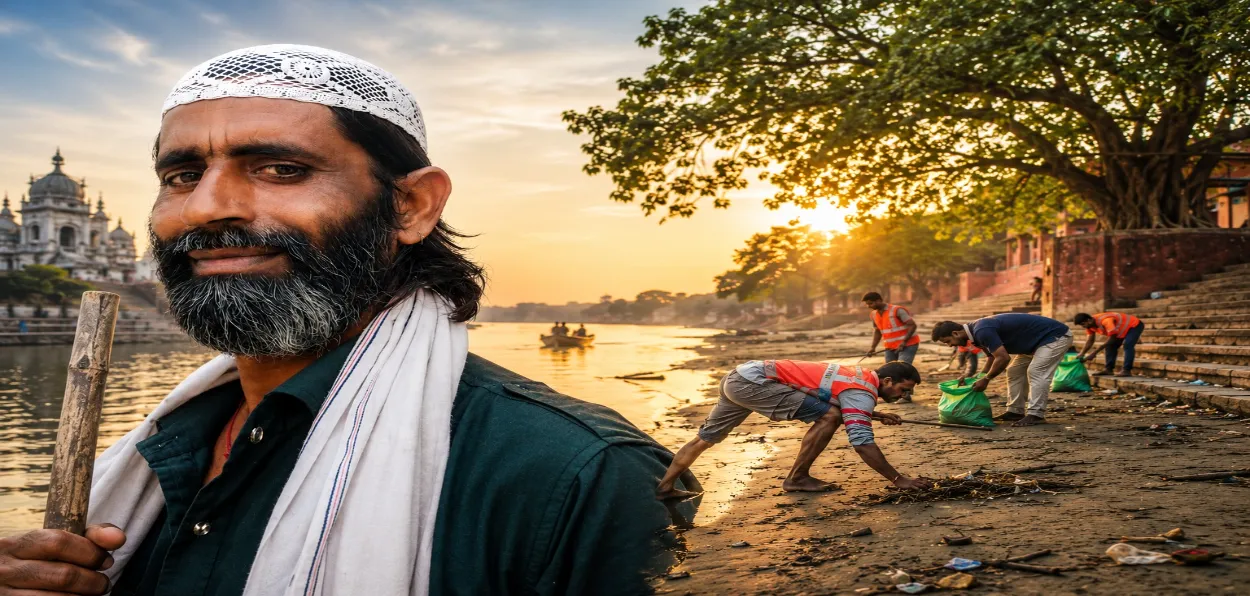
Every Sunday morning, a group of volunteers gathers on the banks of the Ganga in Bithoor, near Kanpur in Uttar Pradesh. Armed with bags and baskets, they pick up garbage, plastic waste, discarded offerings, and other debris from the river and its ghats.
Leading this weekly mission is Lal Mohammad Badshah, a man whose life has become synonymous with the protection of the sacred river. For the past 35 years, he has dedicated himself to keeping the Ganga clean. A Muslim by faith, Badshah gave up a well-paying government job, chose to remain unmarried, and devoted his life to serving the river he reveres as Mother Ganga. A few years ago, he even stopped wearing footwear as a mark of respect for the river.
Known locally as the "Guardian of the Ganga," Lal Mohammad Badshah has broken religious stereotypes and emerged as a symbol of environmental conservation and communal harmony.
Bithoor occupies a special place in Hindu tradition. According to Sanatan beliefs, it is the birthplace of Luv and Kush, the sons of Lord Ram. It is also believed that Maharshi Valmiki composed the Ramayana here. The shrine of Mata Sita Ki Rasoi (Mother Sita's Kitchen) continues to attract thousands of pilgrims and tourists from across the country.
The Ganga flows past 52 ghats in Bithoor, drawing a steady stream of devotees who come to take a holy dip in its waters. It is this sacred landscape that has become the centre of Lal Mohammad Badshah's devotion and life's work.
Sharing his journey with Awaz-The Voice, Badshah said, "I had a secure and well-paying job at a government fertiliser plant. Life was comfortable. But my attachment and reverence for Maa Ganga grew so strong that I decided to leave everything behind and dedicate my life to her service."
After resigning from his job, he committed himself fully to the cleanliness and protection of the river.
To carry forward his mission, Badshah formed the Ganga Suraksha Dal (Ganga Protection Squad), a group of eight to ten local volunteers. Every Sunday, members of the squad gather at the ghats and undertake extensive cleanliness drives.
As news of their efforts spread, people from neighbouring districts, including Unnao, began joining the campaign. What started as a small initiative has gradually evolved into a community movement.
The group's work extends beyond cleaning the river and its banks. Members also keep a vigil against poachers and work to protect fish and other aquatic life in the Ganga.
Despite the growing support, Lal Mohammad Badshah has never accepted donations for his mission.
A practising Muslim who is often seen wearing a skullcap, Badshah earns his livelihood by operating a small tourist boat on the Ganga. After leaving his government job, he turned to ferrying pilgrims and visitors along the river.
His boat, furnished with mattresses and cushions, offers tourists a comfortable ride while introducing them to the spiritual and historical significance of Bithoor. The modest income from these rides sustains both his personal needs and his environmental campaign.
Visitors are often surprised to hear him greet people with "Ganga Maiya Ki Jai" (Hail Mother Ganga).
When asked how fellow Muslims reacted to his devotion to the river, Badshah replied, "Faith and devotion are matters of personal conviction. I have a spiritual connection with the Ganga."
He recalls that in the beginning, some people from his community mocked him and questioned his actions. However, as they witnessed his sincerity, selflessness, and dedication, attitudes began to change.
"Today," he says, "people respect the work we are doing. Service to humanity and nature is above all divisions."
Over the years, Badshah's story has gained widespread attention on social media, where thousands of people have praised his commitment and spirit of service.
Among the many tributes, social media user F.S. Parmar described him as a "King of Kings." Manoj Kumar wrote that while water cleanses the body, truth purifies the mind, knowledge refines the intellect, and righteousness elevates the soul.
Ashish Sharma commented that true strength lies in devotion and service, while Rajendra Chauhan described Badshah as a "Badshah" (King) not only in name but also in character.
Another user, Rajat, offered a heartfelt prayer: "May Allah grant you a long life, and may Mother Ganga always keep you safe in her embrace."
आज के समय में जब समाज में नफरत और सांप्रदायिकता फैलाकर अपना उल्लू सीधा करने का खेल चरम पर है, तब उत्तर प्रदेश के कानपुर से एक ऐसी हकीकत सामने आई है जो इंसानियत का सिर गर्व से ऊंचा कर देती है। यह सच्ची कहानी किसी आम इंसान की नहीं बल्कि गंगा रक्षक लाल मोहम्मद बादशाह की है। उन्होंने… pic.twitter.com/79QiI6zGgn
— Awaz -The Voice हिन्दी (@AwazTheVoiceHin) June 10, 2026
Pankaj Thapliyal observed that the Ganga is not merely a religious symbol but a life-giving river for all humanity. Sunita Kumari compared Lal Mohammad Badshah to historical figures such as Raskhan and Rahim—Muslim poets who became celebrated devotees of Lord Krishna.
Today, the historic Rani Lakshmi Bai Ghat in Bithoor has become the Badshah's permanent base. He spends most of his day there, overseeing cleanliness efforts, meeting visitors, and sharing his message of environmental stewardship and communal harmony.
READ MORE: Prof Shabina Nishat Omar: A celebrity academician-administrator of West Bengal
For many who visit Bithoor, Lal Mohammad Badshah is no longer just a boatman or a volunteer. He has become a living example of how devotion, service, and love for nature can transcend religious boundaries and bring communities together.

.webp "Union Home Minister Amit Shah")
.webp "Ganapati idols being hander over to activists for Kashmir")