Dubai
The conflict involving Iran, Israel and the United States widened sharply on Monday, with Iranian-backed militias launching attacks across the region even as American and Israeli forces carried out sustained airstrikes on Iranian targets, leading to mounting casualties and fears of broader regional instability.
Missiles fired by Iran and allied groups struck parts of Israel and several Arab states, with one apparent hit reported inside the United States Embassy compound in Kuwait City. Around the same time, Kuwait’s Defence Ministry said multiple US military aircraft had crashed within the country, though it did not specify the cause. The pilots were hospitalised and reported to be in stable condition. Washington did not immediately comment.
The embassy incident followed a warning issued to American citizens in Kuwait to seek shelter. No immediate information was available on casualties or the extent of damage.
As US and Israeli strikes continued, senior Iranian official Ali Larijani declared on social media that Tehran would not engage in negotiations with Washington.
In Iraq, a pro-Iran militia claimed responsibility for a drone attack on US troops stationed near Baghdad International Airport, following an earlier strike on a US base in Irbil. Meanwhile, Cyprus reported that a drone caused limited damage at a British military base.
Israel and the US said they targeted Iranian missile installations and naval assets, claiming significant damage to Iran’s navy, including the destruction of several warships and its headquarters.
Hezbollah enters the conflict
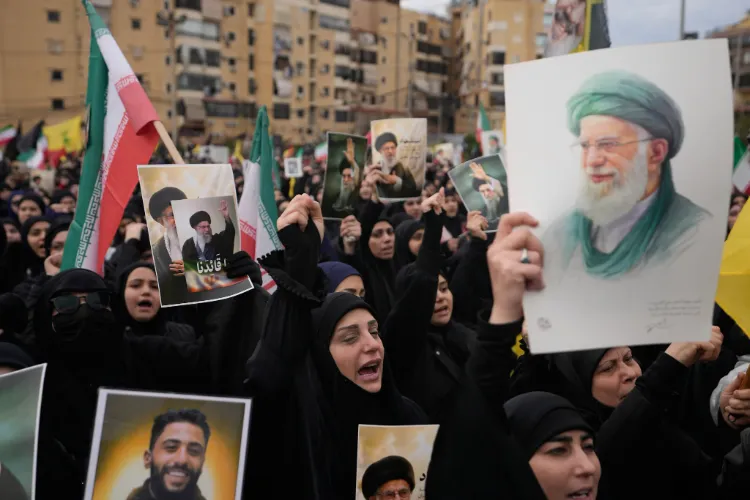
The Hezbollah said it fired missiles from Lebanon into Israel early Monday, citing the killing of Iranian Supreme Leader Ali Khamenei and ongoing Israeli attacks. Israel said most projectiles were intercepted or landed in open areas, causing no immediate casualties.
Israel responded with extensive strikes across Lebanon, killing at least 31 people and injuring nearly 150, according to Lebanon’s Health Ministry, with most fatalities reported in the south. The Lebanese government convened an emergency meeting following the escalation.
Iran has been launching missiles at Israel and neighbouring Arab states since the joint US-Israeli offensive over the weekend that killed Khamenei and several senior Iranian officials.
Rising toll and global concern
Gulf countries warned of possible retaliation after Iranian strikes killed civilians and hit key locations. US President Donald Trump said Washington would avenge the deaths of three American soldiers killed in Kuwait, while cautioning that further casualties were likely.
Trump said US operations would continue until their objectives were achieved and urged Iranians to challenge their leadership, even as he left open the possibility of dialogue with a future government in Tehran.
The US military confirmed that B-2 stealth bombers struck Iran’s ballistic missile facilities using heavy bunker-busting munitions. Trump claimed that multiple Iranian warships had been sunk.
European powers including United Kingdom, France and Germany said they were prepared to work with Washington to curb further Iranian attacks. In Cyprus, authorities confirmed a drone strike caused minor damage at a British base after Prime Minister Keir Starmer pledged support for the US.
The latest confrontation marks the second major US-Israel operation against Iran in eight months. Analysts warn that the death of Khamenei after more than three decades in power has left a leadership vacuum that could further destabilise the region.
Civilians caught in expanding war
Iranian-aligned groups in Iraq and Lebanon stepped up attacks, with Israeli officials saying Hezbollah had formally joined Iran’s campaign. Airstrikes rocked Beirut, shaking buildings and shattering windows, as Israeli warplanes flew overhead.
Iran’s retaliatory strikes also reached cities in the Persian Gulf, killing civilians in the United Arab Emirates, Bahrain and Kuwait. While many missiles and drones were intercepted, debris and successful strikes caused deaths and damage.
Iranian officials said more than 200 people have been killed in the country since the fighting began. Tehran has largely emptied as residents shelter from airstrikes, with security forces setting up checkpoints across the city.
In Israel, missile strikes hit multiple locations, including Jerusalem and a synagogue in Beit Shemesh, killing nine people there. Israel’s overall death toll rose to 11.
READ MORE: Darakhshan Andrabi - first woman to head Waqf Board proved her mettle
The World Health Organization urged all sides to protect civilians and medical facilities. “The protection of civilians and health care must be absolute,” said Hanan Balkhy, warning that continued escalation risks an even greater humanitarian crisis across the Middle East.

.webp "Representational Image")







.webp)