Washington DC (US)
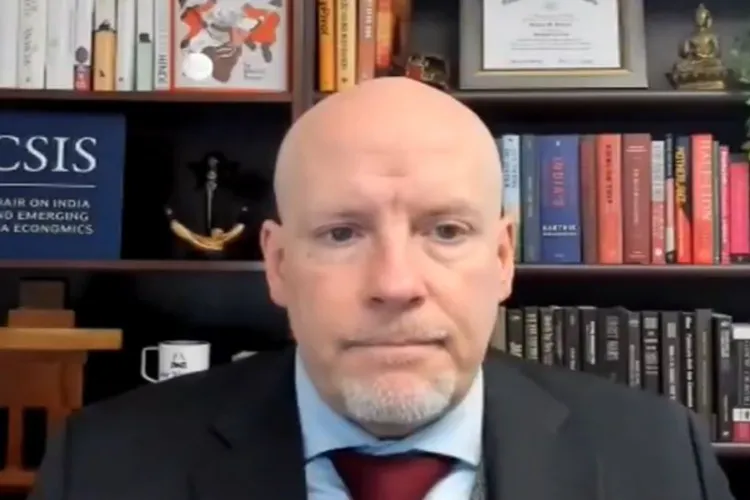
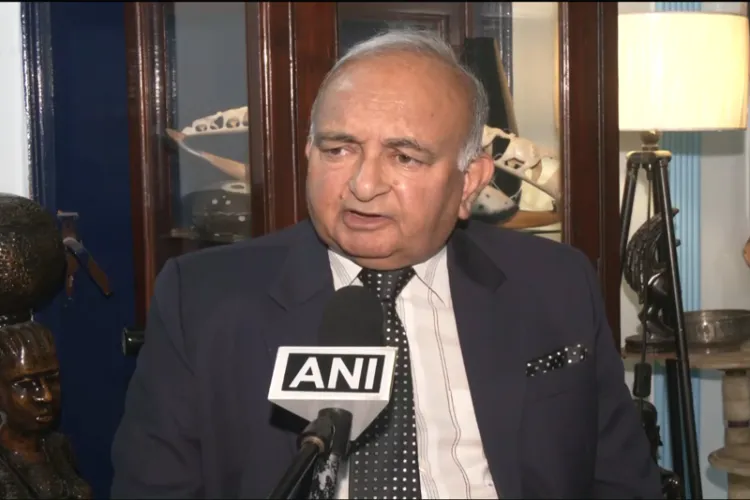
Senior Advisor at the Center for Strategic and International Studies (CSIS), Richard Rossow, on Wednesday said that the recent India-European Union trade and defence engagements demonstrate the ability of New Delhi and Brussels to separate security concerns from commercial cooperation, sending an important global signal, including to policymakers in Washington.
Speaking to ANI about the broader message conveyed by the India-EU Free Trade Agreement (FTA), Rossow said that, despite differing geopolitical priorities, both sides have shown pragmatism in advancing economic ties, even though Europe and India often do not feature prominently in each other's core security calculations.
He explained that India's primary security concerns revolve around China and Pakistan, while Europe tends to focus on Russia's invasion of Ukraine--areas where the two sides have traditionally been reluctant to intervene in each other's crises.
"To some extent, for both Brussels and Delhi, it shows the ability to differentiate security and commercial because when India thinks about its major security concerns, whether it's China or Pakistan, Europe tends not to weigh in very heavily when there's crises and similarly, to Europeans, they think of Russia's invasion of Ukraine and India certainly doesn't want to play in that game," Rossow stated.
"And that's been a sticky point in relationships in recent years. But this shows the ability to divorce those things," he added.
Rossow said the agreement has also prompted discussions in Washington about whether it could affect the India-US trade deal, which has been under negotiation for nearly a year.
"We're all wondering whether this will affect the US-India deal that's been under negotiation for almost a year now. Is that going to help it get across the finish line? ... But to me, the bigger signal, apart from what it means for the White House, is the fact that as India is thinking about shoring up new partnerships, when they don't look at the United States quite as stable as it was before, at least they continue to lean towards US friends and allies," he said.
Highlighting India's recent trade trajectory, Rossow pointed out that New Delhi's substantive commitments have largely been with countries such as Australia, New Zealand, the United Kingdom, Japan, and the European Union.
."I don't think it'll unstuck our (India-US) deal, but it is also good to see India shoring up with countries and blocs that are on our side of what would be a separated ecosystem at some point, perhaps in areas like tech," he added.
The remarks come a day after India and the EU signed a "milestone" deal, dubbed the "Mother of All Deals", by concluding their negotiations for a Free Trade Agreement (FTA) on Tuesday.
The deal is one of India's most strategic economic partnerships, designed as a modern, rules-based trade partnership, which responds to contemporary global challenges while enabling deeper market integration between the world's fourth- and second-largest economies.
Commenting separately on the security dimension of the India-EU partnership following the signing of the Security and Defence Partnership, Rossow said the agreement carries limited significance for deep strategic or military integration.
"I don't see a dramatic upside to the security partnership between the European Union as a whole and even most individual European countries and India," he said, explaining that the primary threats faced by both sides remain largely divergent.
Rossow noted that while India prioritises challenges from its immediate neighbourhood, particularly Pakistan and China, many European countries still view China as an economic partner and remain cautious about confronting Beijing. He added that Europe is unlikely to play a decisive role during potential India-China border crises.
Rossow said, adding that India similarly has little appetite to take a more aggressive stance against Russia, despite Europe facing sustained pressure from Moscow.
"I think it has limited significance. I don't see a dramatic upside to the security partnership between the European Union as a whole and even most individual European countries, and India. Because when you ask both about their security interests, for India, they think first and foremost about their next-door neighbours... Half of Europe still thinks of China as an economic partner, and they want to take what they can get," he said.
"They don't want to do that and stoke China because there's still a lot of interest in economic engagement entanglements with China. With Pakistan, it's kind of a non-issue for most of Europe. Similarly, they (Europe) think of Russia and are going to trigger India to take a more aggressive posture against Russia's expansionism? ... Every single day, they're (Russia) putting pressure on a range of European countries, and India has no interest in playing that game," Rossow added.
On Tuesday, India and the EU signed a landmark Security and Defence Partnership, marking the first overarching defence and security framework between the two sides, as leaders from both blocs agreed to significantly deepen cooperation across strategic, regional and global security domains.
With the signing of the deal, India becomes the third Asian country to have such a deal with the EU after Japan and South Korea.
Summing up, Rossow said that while economic and trade cooperation between India and the EU is strengthening, deep security integration remains constrained.
"The primary threats that drive both camps are so diffused that I don't see quite as much overlap," he added.








_(1).webp)