




Vidushi Gaur/ New Delhi
The war on the ground in West Asia may still be inconclusive, but the world already has a winner in the war of narrative -- Iran.
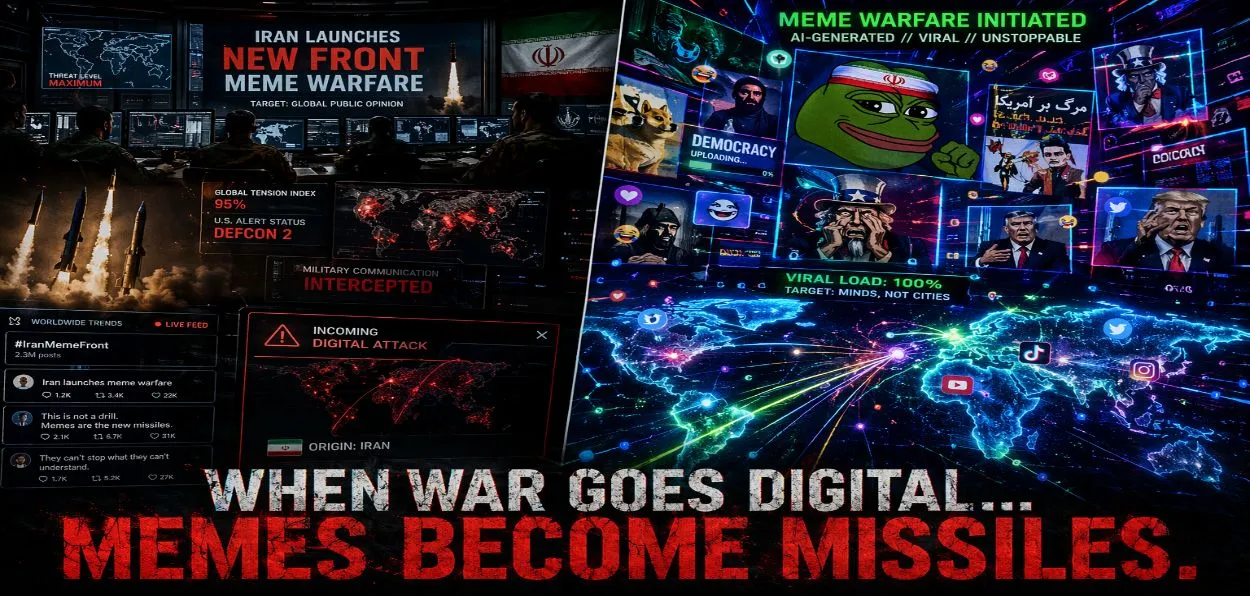
Iran's responses to rivals, particularly the US and its mercurial President Donald Trump, on social media were full of wit, sarcasm and humour. The war of narratives, also called psychological warfare in the technical parlanc, has been playing on smartphones, in timelines, and across meme pages of social media, bringing in cheer in the times of war and conflict.
Iran's embassies all over the world used memes, witty responses to Trump's rants against their country. They also used satire, AI-generated videos, Bollywood clips and internet humour to run down the US.
The strategy marks a striking evolution in psychological warfare during an actual war. Instead of relying only on official statements or state television, Iranian diplomatic accounts and affiliated social media handles increasingly used the viral meme culture as a weapon. Their posts are designed not just to entertain supporters, but to ridicule adversaries, energise sympathisers and seize narrative control in a rapidly changing media environment.
One of the most talked-about examples came from Iran’s embassy-linked accounts, where an AI-generated musical clip portrayed Trump pleading for ships to pass through a blockade. The post mockingly referred to it as the day’s “popular music,” turning geopolitical brinkmanship into a comedy sketch. The message was simple: Washington could flex military muscle, but Tehran could embarrass it online.
And today’s popular music: “blockade” by Trump. pic.twitter.com/7EYQ1nSTm7
— Iran Embassy SA (@IraninSA) April 13, 2026
Another post that gained traction in India used a scene from the Bollywood comedy Dhamaal. In the clip, a panicked character tries to hide behind a door with no walls while being chased. Iranian officials recast the fleeing man as the United States and the pursuers as Iran. The Consulate General of the Islamic Republic of Iran in Mumbai praised the creativity of Indian meme culture, calling Indian memes the “GOAT” — greatest of all time.
US blocking Strait of Hormuz that’s already blocked 🥶🤣 pic.twitter.com/wcYEBl3723
— HP_ClipStorm (@HINDUSTAN_PLUSE) April 13, 2026
Indian content creators had a field day using Trump as a subject of memes, and AI-generated fun videos:
This localisation of content reveals how carefully curated the campaign has become. Rather than broadcasting one standard message to the world, Iranian accounts appear to tailor memes to regional audiences. In India, Bollywood references are used. In Western spaces, AI-generated pop culture satire circulates. In other regions, images of warships, maps and nationalist slogans dominate. The goal is reach, relatability and resonance.
Analysts say humour can be more effective than hostility. A meme requires no lengthy explanation, crosses language barriers quickly and can travel globally within minutes. Where formal diplomacy often sounds rigid, satire feels immediate and shareable. That makes it an ideal tool in information warfare.
According to reports, some of the most polished anti-US videos have emerged from loosely connected pro-Iran digital creators producing Lego-style AI cartoons and animated skits mocking Trump’s statements on war and ceasefire negotiations. These clips often portray the US president as boastful, confused or retreating under pressure. Their style resembles ordinary internet entertainment, but their political intent is unmistakable.
Damn, they’re coming out with new LEGO videos every day, and they keep getting better and better.
— Jon Cooper 🇺🇸 (@joncoopertweets) April 13, 2026
Of course, they’re only effective because they contain a lot of truth about the Trump regime and its policies. pic.twitter.com/Y4kXsb0iAG
The campaign also reflects a larger shift in how states communicate during crises. Governments once relied on press conferences, newspaper interviews and official communiqués. Today, they must compete with influencers, meme pages and viral trends. Iran appears to understand that winning attention can sometimes matter almost as much as winning arguments.
That does not mean the meme war is trivial. Behind the jokes lies a serious contest over legitimacy. The United States has framed its actions as necessary pressure against Tehran. Iran, meanwhile, wants global audiences to see Washington as reckless, bullying and increasingly ineffective. Humour softens the delivery, but the political messaging remains sharp.
For Trump, who has long used social media theatrics himself, the irony is notable. A politician who mastered online trolling is now being trolled by a foreign state apparatus fluent in meme language. In several posts, Iranian accounts have labelled him everything from a failed strategist to a “miserable pirate of the Persian Gulf,” language intended to puncture strongman imagery with ridicule.
The miserable pirates of the Persian Gulf and the Strait of Hormuz. pic.twitter.com/bOzJy9K3Rb
— Iran Embassy SA (@IraninSA) April 13, 2026
There is also a domestic dimension. Such content boosts morale among supporters by presenting Iran as defiant rather than isolated. At a time of sanctions, military threats and economic stress, viral mockery can project confidence and national resilience. It can generate laughter, but not lower oil prices or end hostilities. Yet in a world where millions consume world events through reels, shorts and screenshots, ignoring this front would be a mistake.
READ MORE: Poet, educationist Iffat Faridi is Godmother to children of lesser God
The Middle East crisis has shown that wars are no longer fought only with jets, drones and ships. They are also fought with captions, edits and algorithms. And while missiles may dominate the headlines, memes are increasingly competing for the mindspace of the world.






.webp "US President Donald Trump")
_(1).jpg)
_(4).webp)