.webp "Dr. Sarvath Adil Khan, Founder, The Learning Point Foundation")
Saniya Anjum
Dr. Sarvath Adil Khan does not speak of charity. She speaks of dignity. She does not speak of rescue. She speaks of return. “Education,” she often says, “is not just about passing an exam. It is about reclaiming your place in the world.”
In the bustling lanes of Bengaluru, where opportunity and hardship coexist in uneasy proximity, Dr. Sarvath has quietly built a bridge for those who once believed their academic journey had ended forever. Through the Learning Point Foundation, established in 2018, she has transformed the lives of more than 1,500 former dropouts, offering them not just textbooks and classes, but hope, structure, and a renewed sense of self-worth.
Her mission is deeply personal. As a young woman, Dr. Sarvath had to pause her education after pre-university studies due to marriage. For years, academics seemed like a closed chapter. But she returned to complete her degrees, eventually earning a postgraduate qualification in Psychology and later a doctorate in Educational Psychology. That interruption shaped her understanding of those who fall out of the system. “When I resumed my studies,” she reflects, “I understood the emotional weight of a gap. I knew what self-doubt feels like. That is why I could not ignore those who were left behind.”
.jpg) Dr. Sarvath Adil Khan addressing students
Dr. Sarvath Adil Khan addressing students
What she witnessed in underserved communities was not a lack of intelligence, but a lack of access. Poverty, family responsibilities, early marriage, health challenges, and social pressure forced many children and adults to drop out of school. For madrasa students, widows, single mothers, and orphans, mainstream education often felt distant or unattainable.
Dr. Sarvath decided to change that narrative. The Learning Point Foundation was created with a clear focus: reintegrating dropouts and underprivileged individuals into formal education through the National Institute of Open Schooling system. By preparing students for their 10th and 12th standard examinations under NIOS, the foundation provides a recognised academic pathway for those who thought it was too late.
The results are striking. The foundation maintains a pass rate exceeding 90 percent in NIOS examinations. More importantly, these numbers represent human stories. A mother of three resumed her studies after 15 years of marriage. A young man who had abandoned school due to financial distress completed his 12th standard and secured employment. Several students from madrasa backgrounds successfully transitioned into mainstream academic and professional spaces.
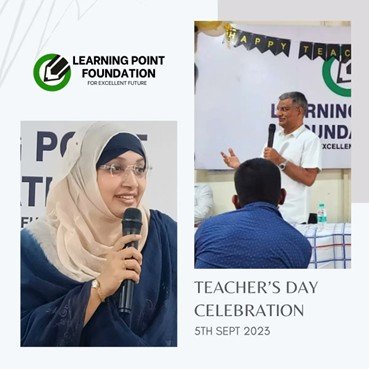
Poster of Dr. Sarvath Adil Khan's Foundation
“One certificate can change the direction of a family,” Dr. Sarvath says. “When one person studies, the entire household begins to believe again.”
But Learning Point Foundation goes beyond exam preparation. Dr. Sarvath recognised that academic knowledge alone is not enough in a competitive world. Students receive counseling, emotional support, and personality development training. Many arrive with fragile confidence and fear of failure. Through mentorship and structured guidance, they learn communication skills, time management, and self-discipline.“We teach them how to think, how to speak, and how to stand confidently,” she explains. “Education must build character, not just marks.”
Vocational training is another pillar of the foundation’s work. Courses in data entry, computer science, and digital literacy equip students with employable skills. Hundreds have secured jobs after completing these programs. For families struggling with income instability, this transformation is life-altering.
One former student says, “I had given up on studies. I thought I would only do small jobs forever. At Learning Point, they treated me with respect. I passed my exam and learned computer skills. Today I am employed, and my younger siblings are in school because of me.”
Facilities at the foundation include classrooms, science and computer labs, and a library. Scholarships are provided to deserving students so that financial hardship does not become a barrier again. Yet the organisation operates on a limited budget and relies heavily on donations and community support.
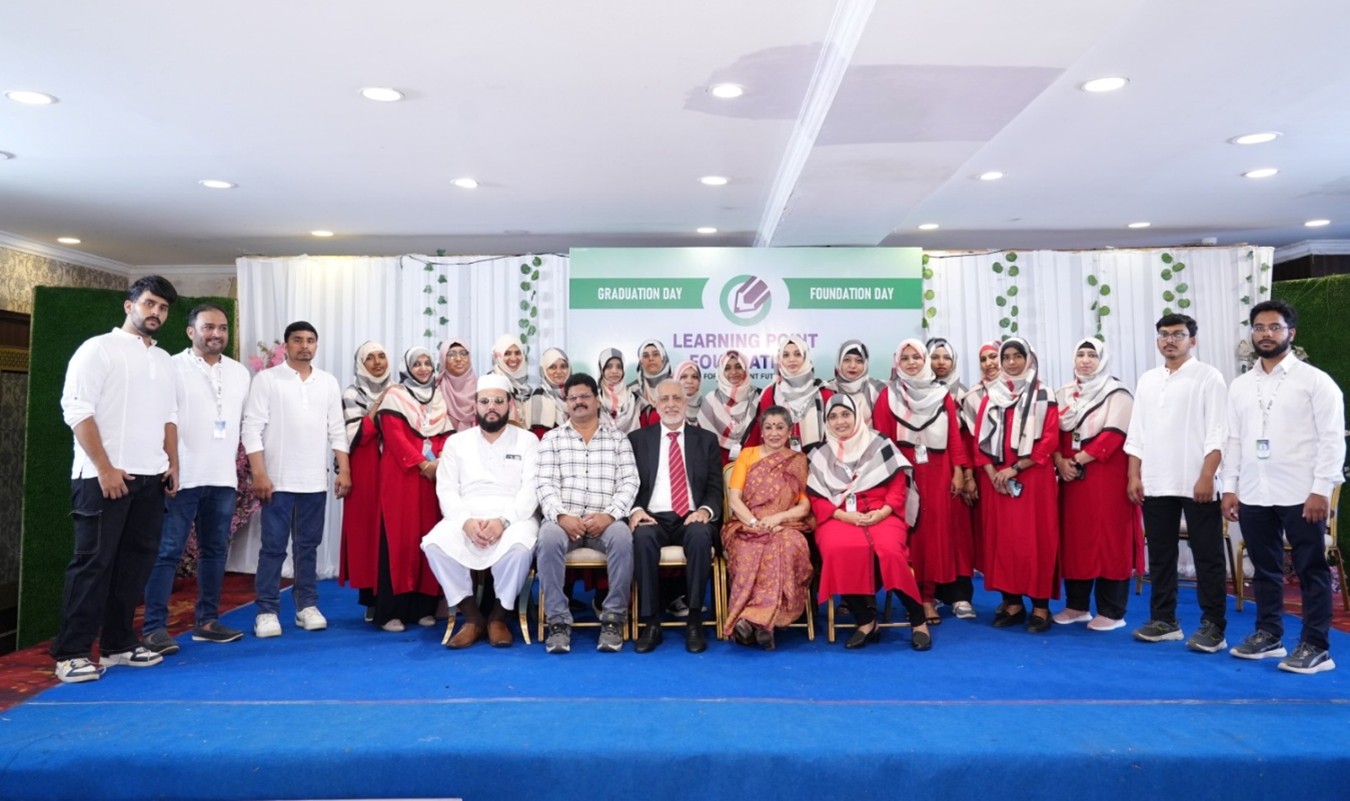 A programme at Dr. Sarvath Adil Khan's Foundation
Despite financial constraints, the impact continues to grow. From just a handful of students in its early days, the foundation now enrolls over 1,000 learners annually, with a vision to empower even more underprivileged youth in the coming years. Plans are underway to strengthen collaborations with madrasas, integrating religious and contemporary education in a balanced and meaningful way.
Dr. Sarvath believes that true empowerment respects identity while expanding opportunity. “We do not ask anyone to leave their roots,” she says. “We help them widen their horizons.”Her work has also influenced teachers and volunteers, many of whom describe the environment at Learning Point as disciplined yet compassionate. Students are not judged for their past. Instead, they are guided toward possibility.
Observers often describe Dr Sarvath as calm but determined. She prefers quiet impact over publicity. For her, each success story is more powerful than any headline. “When a student calls and says, ‘Madam, I got my result,’ that is my reward,” she says with a smile.
 Dr. Sarvath Adil Khan delivering a talk to teachers
The Learning Point Foundation stands today as more than an educational institution. It is a second-chance centre. It is a place where interrupted dreams are resumed. It is proof that structured support and sincere mentorship can alter the trajectory of entire communities.
In a society where dropout statistics are often discussed in numbers, Dr Sarvath sees faces. She sees potential waiting for permission. She sees resilience disguised as failure. As she looks toward the future, her vision remains steady. “No one should feel that education is closed to them,” she says. “As long as there is willingness, there must be a way.”
READ MORE: Poet, educationist Iffat Faridi is Godmother to children of lesser God
And in a modest building in Bengaluru, that way continues to be built, one determined learner at a time.

.webp "Union Home Minister Amit Shah")