Mansooruddin Faridi /New Delhi
At a time when incidents of communal discord often dominate headlines, Muslim families in the villages of Nemka and Bachhor in Haryana's Mewat region have set an inspiring example of communal harmony by opening their homes, schools, and resources to thousands of Hindu pilgrims participating in the Braj Chaurasi Kos Parikrama Yatra.
Their gesture not only won the hearts of the devotees but also highlighted the enduring bonds of mutual respect and coexistence that continue to thrive in many parts of India.
Thousands of devotees are taking part in the annual Braj Mandal Yatra, which passes through the Mewat region. Providing accommodation, food, drinking water, and other basic facilities for such a large number of pilgrims is a major challenge. Local residents stepped forward to share this responsibility, treating the pilgrims as honored guests.
The Braj Chaurasi Kos Parikrama is a sacred pilgrimage associated with the life and legends of Lord Krishna. Beginning from the Nalhar Temple in Nuh, the yatra passes through several religious sites before reaching the Singar region. The Vishwa Hindu Parishad is among its principal organizers.
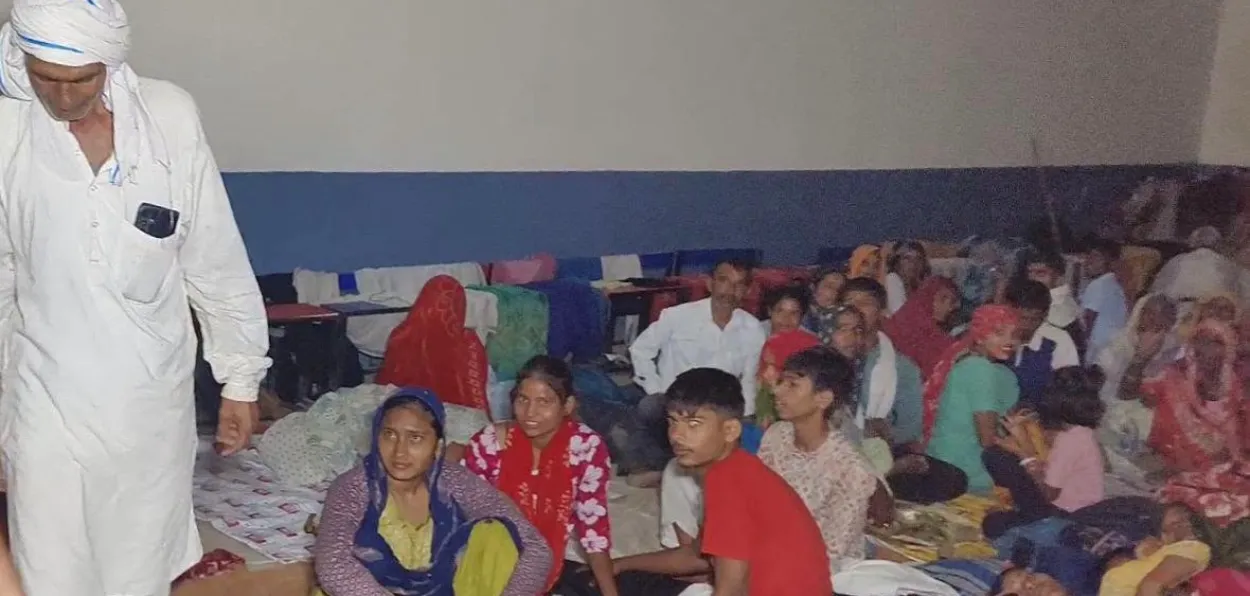
One of the most notable examples of hospitality came from Arif Khan of Nemka village, founder of DCM Public School. To accommodate the pilgrims, he opened all the rooms of his school and even vacated his own house, shifting with his family to another residence in the village.
Hundreds of pilgrims spent the night and rested on the school premises. The rooms were equipped with electricity, fans, drinking water, and other essential facilities to ensure their comfort.
Arif Khan said that many pilgrims arrive late at night during the journey, making it necessary to provide immediate shelter and support. His team remains available to arrange accommodation and other facilities whenever needed.
"Serving guests is one of humanity's greatest duties," he said.
The school kitchen was stocked with flour, milk, tea, and other essential provisions so that pilgrims could prepare their own meals. From mobile phone charging facilities to comfortable sleeping arrangements, every effort was made to meet their needs.
Pilgrims expressed deep appreciation for the hospitality extended to them. Many devotees from Madhya Pradesh, Rajasthan, Uttar Pradesh, and Haryana said they felt as though they were staying with family members rather than strangers.
One woman pilgrim remarked that humanity and love are the greatest religions. She said the warmth and affection shown by the villagers had transformed her perception of Mewat.
Another resident, Mushtaq Khan of Nemka village, also opened his home to pilgrims and moved elsewhere with his family to make space for the visitors.
Bedding was arranged on both floors of his house, where groups of women pilgrims were seen cooking together while others participated in various service activities. The atmosphere resembled a large family gathering more than a religious congregation.
Savita, a pilgrim from Sagar in Madhya Pradesh, said her 13-member group was provided complete accommodation and assistance in preparing meals.
"We never felt like outsiders," she said.
Another pilgrim, Neeraj Kumar Sharma, observed that without the cooperation of local Muslims, it would have been extremely difficult to arrange facilities for such a large number of devotees.
"This experience will remain one of the most memorable moments of my life," he said.
Meanwhile, Bachhor village witnessed another touching example of interfaith brotherhood. Before setting out on the pilgrimage, advocate Parshuram Gautam sought the blessings of Iqbal Zaildar, a respected elderly Muslim resident of the village, by touching his feet.
Gautam said Iqbal Zaildar was not merely a neighbour but also a mentor who had always showered him with fatherly affection.
Comparing him to Nanda Baba, the foster father of Lord Krishna, Gautam sought his blessings before embarking on the sacred journey. The emotional gesture moved Zaildar, who embraced him, presented him with a token amount of money, and prayed for the success of his pilgrimage.
Residents say that Mewat is more than just a geographical region. It is a land known for its shared culture, mutual respect, and social harmony, where Hindus and Muslims have long participated in each other's festivals, family celebrations, and community events.
READ MORE: Adeeba Anam's story of becoming first Muslim woman IAS from Maharashtra is inspirational
The scenes witnessed during this year's Braj Chaurasi Kos Parikrama serve as a reminder that beyond the noise of division, countless stories of goodwill, trust, and brotherhood continue to bind communities together.














.webp)