.webp "Shaista Amber, Founder President All India Muslim personal law board")
Arsala Khan
Lucknow-based Shaista Amber is first among the advocates of Muslim women's rights in India. She raised the voice for women at a time when even stepping out of the home was a major challenge for many. She dared to break the chains of social conservatism.
Shaista Amber not only challenged orthodox traditions but also introduced Muslim women to their genuine religious and constitutional rights. Today, as the founder-president of the All India Muslim Women Personal Law Board and a prominent social activist, she serves as an inspiration to millions across the country.
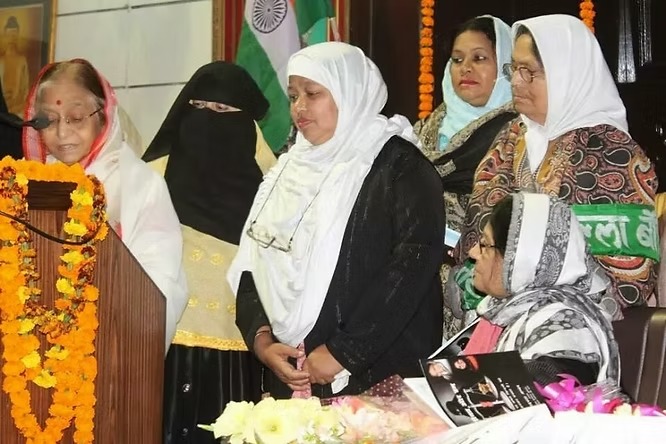 Shaista Amber with President Pratibha Patil
Shaista Amber was born in 1962 in Allahabad (now Prayagraj) into an educated and respected family. Her father worked as a railway guard, while her mother was a well-known Urdu poet.
Growing up in a household rich in literature and culture, Shaista was surrounded by books and intellectual discussions from an early age. Her family considered her exceptionally fortunate, and she excelled in academics. Even as a child, she began writing stories and articles for national and international magazines.
She married Mohammad Idris Amber, a distinguished civil servant and renowned Urdu poet. After her marriage she continued her passion for reading, writing, and observing society closely.
It was through these experiences that she became deeply aware of the discrimination faced by women, awakening within her the spirit of a social reformer.
Around 1997, while living in Lucknow, Shaista Amber became actively involved in social work. Every day, many Muslim women - victims of domestic violence, triple talaq, etc came to her with their pain. She realised that families were being torn apart by the practice of instant triple talaq—often pronounced in anger, under the influence of alcohol, or even over the phone.
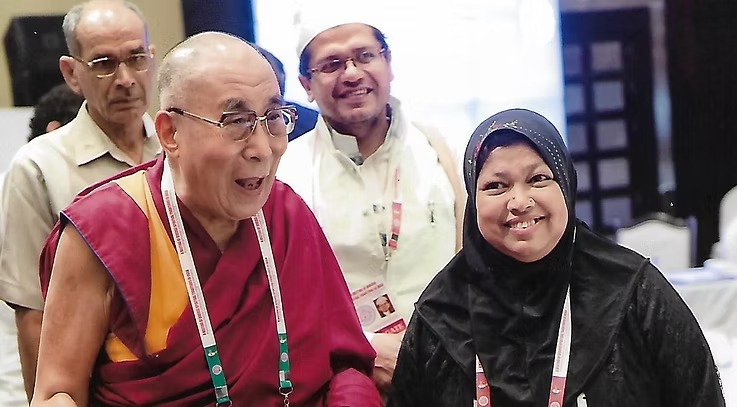 Shaista Amber with Dalai Lama
Determined to understand the issue, Shaista undertook an in-depth study of the Quran and Islamic jurisprudence. She concluded that practices such as instant triple talaq, halala, polygamy, and the denial of mehr payments were not intrinsic parts of Islam but social distortions that had evolved over time and were being used to exploit women.
She launched a long legal and social campaign against these practices. After years of research, she drafted a “Model Nikahnama” (marriage contract) that received widespread appreciation both in India and abroad. The document incorporated several important legal protections for women at the time of marriage.
Most major platforms addressing issues within the Muslim community were dominated by men, leaving little space for women to voice their concerns. To address this gap, Shaista Amber founded the All India Muslim Women Personal Law Board in 2005—a landmark step in Indian social history.
Through this organization, she provided Muslim women with a strong platform where they could openly discuss issues related to marriage, divorce, maintenance, education, and property rights without fear. She also led nationwide awareness campaigns. Shaista has consistently maintained that women should be informed not only about the Indian Constitution but also about the rights granted to them by their faith.
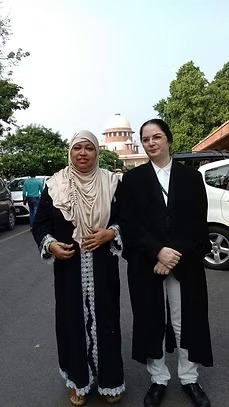
When the Supreme Court of India declared instant triple talaq unconstitutional, she welcomed the verdict wholeheartedly, describing it as a victory for half of India’s population.
The issue of women’s access to mosques has long been a subject of debate. Particularly in North India, arrangements for women to participate in congregational prayers have traditionally been limited.
To challenge this conservative practice, Shaista Amber established the Amber Mosque in Lucknow. It is regarded as India’s first mosque specifically designed with women’s convenience and participation in mind.
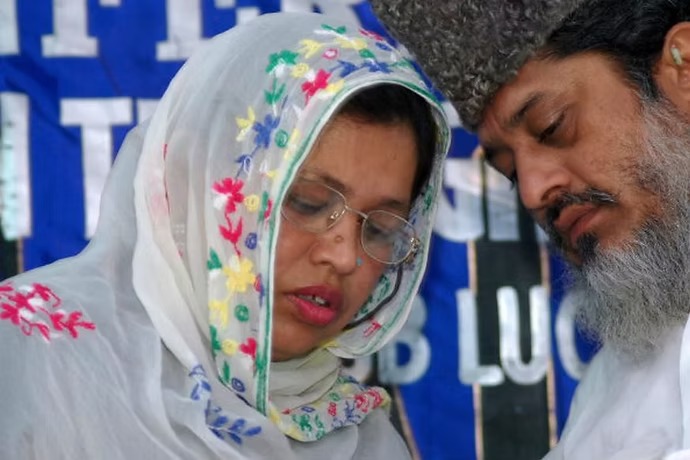
At Amber Mosque, both men and women can offer congregational prayers with dignity and equality, albeit in separate rows. Shaista argues that nowhere in Islam are women prohibited from attending mosques. Today, the mosque stands not only as a place of worship but also as a powerful symbol of gender equality and progressive social thinking.
Shaista Amber’s influence extends beyond India. In 2019, she was nominated by the U.S. Embassy in India and the U.S. State Department for the International Religious Freedom Award and the International Women of Courage Award. She has also been recognized among India’s most influential women.
One of her most widely viewed speeches was delivered at a TEDx event, where she offered a powerful message to Muslim women across the country:
“Indian Muslim women will walk with the Holy Quran in one hand and the Constitution of India in the other.”
.jpeg)
This statement encapsulates her philosophy. She believes there is no conflict between religious faith and the law of the land; rather, together they empower women and strengthen their position in society.
Shaista Amber firmly believes that no society can progress unless its daughters are educated. She has consistently advocated for modern education, technical skills, and vocational training for Muslim girls. According to her, an educated woman not only becomes self-reliant but also transforms the mindset of her entire family.
She has also been a strong supporter of reservations for women in Parliament and state legislatures. In her view, meaningful change in women’s safety and development can only occur when women have greater representation in policymaking institutions.
READ MORE: Sana Khan: Transforming lives through education and social service
Today, Shaista Amber lives in Lucknow with her son and two daughters. Her family takes immense pride in her fearless and revolutionary personality. Her life story teaches us that with determination and a noble purpose, even centuries-old social barriers can be dismantled. She has become the face of every Indian woman fighting for her rights, dignity, and equality.

_(1).jpg "Visitors gather at the Santosh Mitra Square Durga Puja pandal, themed on the 150th anniversary of Vande Mataram and its historic role in India's freedom movement, ahead of the festival, in Kolkata")
.jpg "Gujarat’s women entrepreneurs bring their craftsmanship to life during Navratri")








.webp)