New Delhi
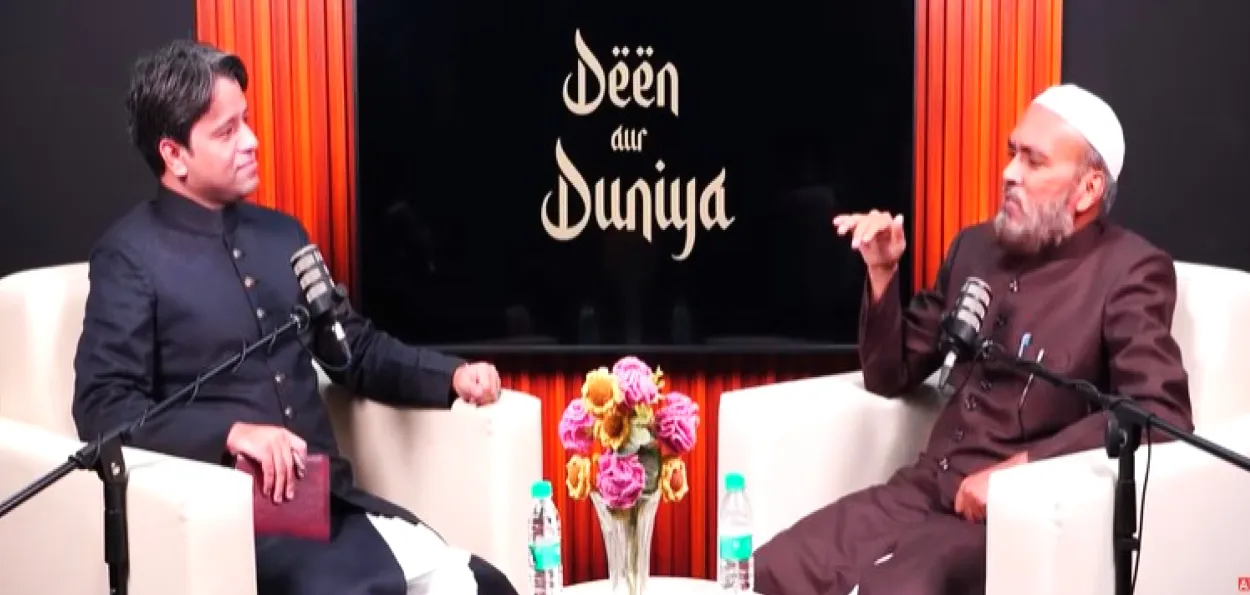
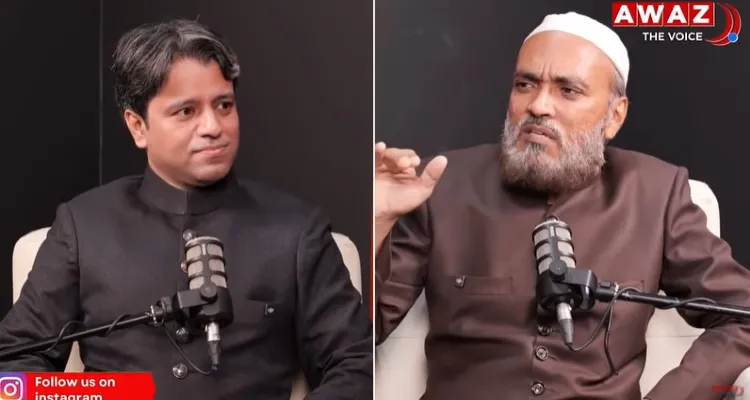
Dars Nizami, the multi-layer curriculum used in Islamic seminaries (madrasas) to train students to become scholars, imams, and Muftis has been a topic of debate for a long time. The question is whether the same curriculum is being taught in madrasas today that was compiled two or three centuries ago. Has there been no change in it despite the changing times? To find answers, Saquib Salim of Awaz-the Voice, spoke in detail to the renowned researcher and professor of the Department of Islamic Studies at Jamia Hamdard, Waris Mazhari, in his podcast Deen aur Duniya.
Here is an excerpt from the interview:
What is the most popular curriculum in madrasas in the subcontinent?
The largest and most famous group of madrasas in the subcontinent is the one where Dars Nizami is taught. This curriculum was compiled by Mulla Nizamuddin Sahalvi about 250 to 300 years ago and is called Dars Nizami after his name. About 95 percent of Deobandi and Barelvi madrasas follow this curriculum. This curriculum is also basically prevalent in Darul Uloom Deoband.
Do all the madrasas in the subcontinent teach Dars Nizami?
This is a common misconception. Many Nadwat Ulama schools. Several Ahle Hadith schools. Shia schools. Jamiat-ul-Islah. Jamiat-ul-Falah Azamgarh and many schools in South India are not directly related to Dars Nizami. They have their own separate curriculum and educational system.
How old is Dars Nizami and what are its main features?
Dars Nizami is about two and a half to three hundred years old. Most of the books included in it were written in the Middle Ages. They include books on logic, philosophy, principles of jurisprudence and other sciences. For this reason, this curriculum has also been criticized by some circles.
Why is Dars Nizami criticized?
Critics say that this curriculum was designed keeping in mind the needs of its time. At that time, the Mughal government was in power and there was a need to prepare individuals who could serve in the government administration and in the academic field. The curriculum was designed with this objective in mind.
Which subjects were given more importance in the curriculum during that time?
During this period, more importance was given to rational sciences in Dars Nizami . Many books on logic, philosophy, and other rational sciences were part of the curriculum. In comparison, the number of books on basic religious sciences such as Hadith, Tafsir, and Fiqh was relatively small.
What is meant by rational or rational sciences?
Reasonable subjects refer to those sciences that are based on reason and reasoning. For example, logic, philosophy, theology, and other subjects through which the intellectual and reasoning abilities of the student are strengthened.
What sciences were included in the initial Nizami curriculum?
Logic and philosophy were of exceptional importance in the early Dars Nizami. Several books on Greek logic and philosophy were part of the curriculum. In addition, subjects such as mathematics, astronomy, and medicine were also taught. During this period, along with religious studies, rational and scientific studies also had a prominent place in the curriculum.
Are these same subjects still taught in Dars Nizami today?
No. There were continuous changes in the curriculum with the passage of time. Many books related to logic, philosophy, mathematics, astronomy and medicine were gradually removed from the curriculum. There is a misconception among the general public that today's Dars Nizami is the same as it was three hundred years ago, while the fact is that many reforms and changes have been made to it from time to time. However, its basic structure is still intact. That is why it is still called Dars Nizami.
To what extent are mathematics, astronomy, and physics taught in today's madrassas?
The current Dars Nizami does not include subjects like mathematics, astronomy or physics. Before the formal teaching of Arabic begins, Persian, Urdu and some basic subjects are taught in the initial few grades. After that, in the seven or eight-year Dars Nizami curriculum prevalent in Deobandi and Barelvi madrasas, astronomy, physics or mathematics are not taught as regular subjects.
If these subjects were previously part of the curriculum, why were they removed?
If we talk about India only, then during the imperial and Mughal era, all these sciences were included in the curriculum of madrasas. Later, in view of various educational needs, they were gradually reduced and eventually most of the subjects were removed from the curriculum.
What changes were made to the curriculum when Darul Uloom Deoband was established?
When Darul Uloom Deoband was established in 1866 and its curriculum was compiled, some rational and scientific subjects were reduced or eliminated. Objections were also raised at that time. Some scholars said that the new curriculum was different from the ancient academic tradition that had been prevalent in the subcontinent for a long time and in which mathematics, astronomy, medicine and other rational subjects also had an important place.
What was the reason for separating modern sciences from the curriculum at the time of the establishment of Darul Uloom Deoband?
Maulana Muhammad Qasim Nanotvi’s position was that at that time the British government had severely damaged the religious education system. he realised that the greatest need was to strengthen the crumbling foundation of religious education. He would say that the wall of the religious education system was falling. First, it is necessary to support and strengthen this wall. After that, the inclusion of other sciences can be considered. But in later periods, this stage could not come to the fore in the form that was expected.
Was the need to reintroduce modern sciences into the madrasas later felt?
Yes. Over time, it was realized that subjects like mathematics, physics, modern science, computers and technology were also needed. Due to the influence of Darul Uloom Deoband, Deobandi-style madrasas were rapidly established all over India. After this, a section of scholars and intellectuals felt that although religious education had become strong, a gap was emerging in the field of modern education. During this time, the demand began to gain momentum that good schools and universities should be established so that the vast majority of the Muslim society could also receive modern education. At the same time, the opinion also emerged that such changes should be made in the curriculum of madrasas that would prepare scholars who could play an effective role in the mosque and madrasa as well as in the modern society.
What institutions came into existence as a result of this thinking?
Institutions like Nadwat al-Ulama were established based on this thought. A section of scholars felt that a curriculum should be developed that, on the one hand, was fully aligned with the Islamic scholarly tradition and, on the other hand, also met the requirements of the modern era.
What was Allama Shibli Nomani's view on this matter?
Allama Shibli Nomani wanted to establish a madrasa that would consist of one part of Eastern sciences and the other part of Western sciences. According to him, a combination of religious tradition and modern sciences was the best educational model. He made a great effort to adapt Nadwat Ulama to this concept.
Did Shibli Nomani succeed in his mission?
In later times, Shibli Nomani himself complained that Nadwat-ul-Ulama could not fully move forward in this direction. According to him, it is unfortunate that Nadwat-ul-Ulama also gradually started following the pattern of Deoband and the unique educational model that he was dreaming of could not be fully formed.
There have been many attempts to change the curriculum of madrassas, but why haven't they been more successful?
This is indeed an important question that needs to be seriously considered. Allama Shibli Nomani. Ubaidullah Sindhi. Maulana Wahiduddin Khan and several other scholars have from time to time emphasized the need for reforms in the curriculum of madrasas. Some institutions were also established, but the impact of these efforts could not be as widespread as that of the traditional madrasa system. A major reason for this was the extraordinary influence and popularity of the educational model of Darul Uloom Deoband, which left a deep impression throughout the subcontinent.
Did the founders of Darul Uloom Deoband have the idea that the curriculum would not change forever?
Absolutely not. The great men of Darul Uloom Deoband, especially Maulana Muhammad Qasim Nanotvi, did not have the idea that the curriculum that was being compiled at that time would remain in the same form until the Day of Judgment. According to them, it was a curriculum designed to meet the needs of their time.
ALSO READ: Sana Khan: Transforming lives through education and social service
They did not consider it something sacred or unchangeable. They believed that the curriculum could be changed according to the needs of ety. However, the spirit and basic objectives of religious education should be preserved.
..(To be continued)
Watvh the Full Interview:

_(1).jpg "Visitors gather at the Santosh Mitra Square Durga Puja pandal, themed on the 150th anniversary of Vande Mataram and its historic role in India's freedom movement, ahead of the festival, in Kolkata")
.jpg "Gujarat’s women entrepreneurs bring their craftsmanship to life during Navratri")






_(2).webp)