New Delhi
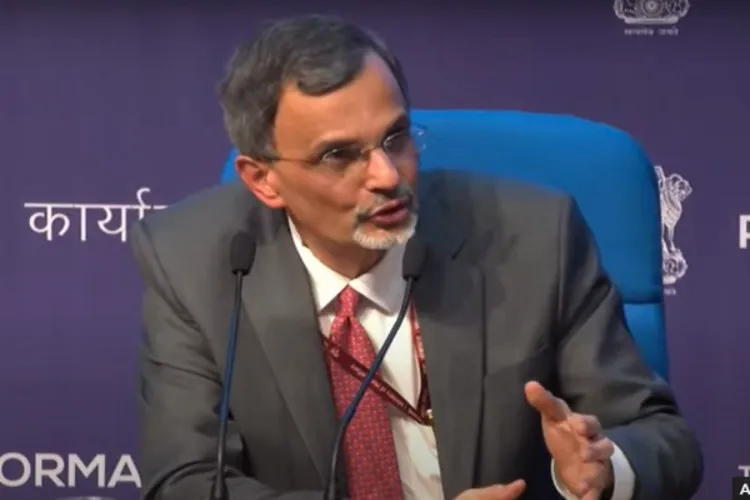
India's Chief Economic Adviser V. Anantha Nageswaran on Tuesday said that boosting the manufacturing sector is crucial for strengthening the rupee over the medium term and for bringing down the cost of capital in a meaningful manner. He noted that countries with strong and stable currencies have typically built competitive niches in manufacturing, which in turn supports currency stability and lower financing costs.
"From the medium term perspective, the way we address the rupee's value is through boosting manufacturing," Nageswaran said at the Confederation of Indian Industry's (CII) post-budget interactive session with the Ministry of Finance. "Manufacturing matters if you are looking at a long-term reputation as a currency for strength and stability."
He said the Union Budget 2026-27 should be seen not as a one-day event but as part of a longer reform process, with reforms continuing through the year. "Policymaking is a 365-day job," he said, adding that reforms were "not just confined to one day of the budget alone".
Nageswaran said the budget should be understood in the context of structural transformation, noting that the government's reform agenda had been advancing outside the budget cycle. "The Reform Express is well and truly running, and it will continue to run," he said.
He said the budget "scores well" because it was "a tidy no frills document" that deals with "the nuts and bolts of structural transformation", and plays what he called "the patient waiting game" meant for the long term.
On the rupee and external sector concerns, he said he had noted earlier that repeated public discussion of the currency had reached "the point of diminishing marginal utility, talking about the rupee in public". But he said the medium-term solution lay in strengthening manufacturing capabilities.
He cited international examples to underline the link between manufacturing strength and currency stability. Countries that come to mind when thinking of "a strong and stable currency", he said, are those that have made "a niche for themselves in manufacturing".
He named Germany, Singapore, the Netherlands, Switzerland, Japan, Korea, Taiwan and China. "So these are the countries you associate," he said. "Equally conversely, countries which have lost their manufacturing mojo have actually begun to experience slightly weaker currencies."
He added that manufacturing mattered for currency valuation even if a country performed well in services. "Even if you are good in services sector surpluses, it doesn't really give such a boost to currency valuations as manufacturing does," he said.
Nageswaran also linked manufacturing to a sustained reduction in borrowing costs and the cost of capital. While efforts to deepen the bond market and debt market could help, he said they were not sufficient on their own.
"They are useful. They are adjuncts. They are nice to have," he said. "But what brings the cost of capital down in a meaningful way is to be able to become a manufacturing powerhouse."
He cautioned that becoming a manufacturing powerhouse would take time. "It takes time. It's not going to happen overnight," he said, adding that other countries took "a generation or two or even longer" to achieve such outcomes.
READ MORE: Zahoor Lone-led Team India wins bronze in world snow sculpting championship
He said India's circumstances were "much more hostile or unfavourable", but argued that it was still essential to pursue the goal. "That doesn't mean that we shouldn't try. In fact, it only means we should try harder," he said.
Nageswaran stressed that achieving this transformation was not only the responsibility of the government. "That trying harder isn't only the responsibility or the prerogative of the government," he said. "It behoves both the private sector and the government to do whatever they can on both sides."


















_(1).webp)