New Delhi
The Cabinet Committee on Economic Affairs (CCEA) on Wednesday approved two major highway projects worth a combined Rs 14,114.81 crore, aimed at easing traffic in Uttar Pradesh and Delhi.
Both projects were announced on Wednesday, with construction timelines and funding models detailed by the government.
The Cabinet has approved the construction of a 117.7 km, 4/6 lane access-controlled Kanpur-Kabrai Greenfield Highway in Uttar Pradesh at a total capital cost of Rs 7,145.14 crore. The project will be implemented by NHAI on BOT (Toll) mode and forms a key segment of the Bhopal-Kanpur Economic Corridor under the NH(O) programme.
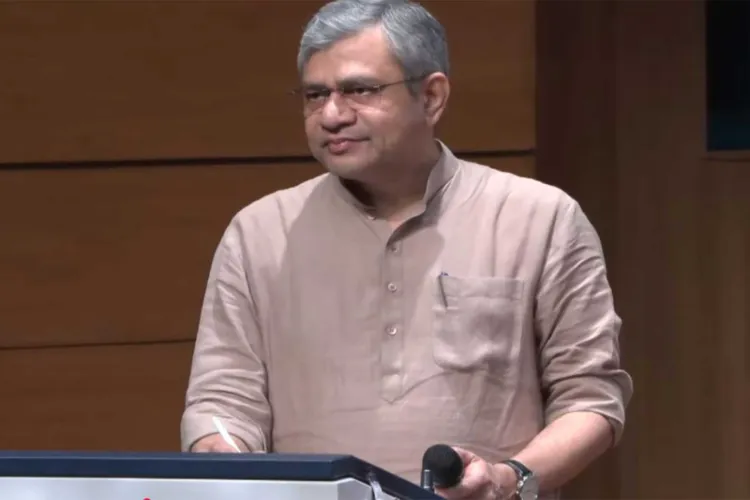
Addressing the media after the announcement, Railway Minister Ashwini Vaishnaw said the Kanpur-Kabrai lane is likely to take around 2.5 years to be finished.
Designed for speeds of 80-100 kmph, the corridor will cut travel time between Kanpur and Kabrai from 3.5 hours to 1.5 hours. The project is expected to generate close to 1.2 crore person-days of direct and indirect employment and carry an Annual Average Daily Traffic of about 18,069 PCUs by FY 2028.
The Cabinet also cleared a 6-lane road tunnel for NH-148AE connecting Dwarka Expressway with Nelson Mandela Marg, Vasant Kunj in Delhi. The total project length is 8.1 km and the capital cost is Rs 6,969.67 crore on Hybrid Annuity Mode (HAM) under the NH(O) scheme.
The project includes a 3.140 km twin-tube tunnel passing beneath the Southern Ridge, built using a Tunnel Boring Machine (TBM) to minimise surface disruption. It will provide faster connectivity between West and South Delhi and benefit traffic from Gurugram, Dwarka, and IGI Airport towards South Delhi.
Vaishnaw said the estimated timeline for the Dwarka Delhi tunnel project to be completed is around five years. The project will generate close to 7.54 lakh person-days of direct employment and 9.80 lakh person-days of indirect employment.
Together, the two projects entail Rs 14,114.81 crore in capital outlay. The Kanpur-Kabrai corridor will be on BOT (Toll), meaning private developers will build and operate it and recover costs through tolls. The Delhi tunnel will be on HAM, where the government pays 40% during construction and the rest as an annuity over the operations period.
READ MORE: Jamila Nishat: A poet, activist, and champion of women’s rights
Both projects are aligned with the PM GatiShakti National Master Plan and aim to improve logistics, reduce travel time, and boost employment in UP, MP and Delhi-NCR.

_(1).jpg "Visitors gather at the Santosh Mitra Square Durga Puja pandal, themed on the 150th anniversary of Vande Mataram and its historic role in India's freedom movement, ahead of the festival, in Kolkata")

.jpg "Gujarat’s women entrepreneurs bring their craftsmanship to life during Navratri")










.webp)