Aasha Khosa
What can bring together Kashmir's political arch-rivals—Dr. Farooq Abdullah, the former Chief Minister and National Conference leader, and Mirwaiz Moulvi Umar Farooq, the Hurriyat Conference chairman?
It takes a healer.
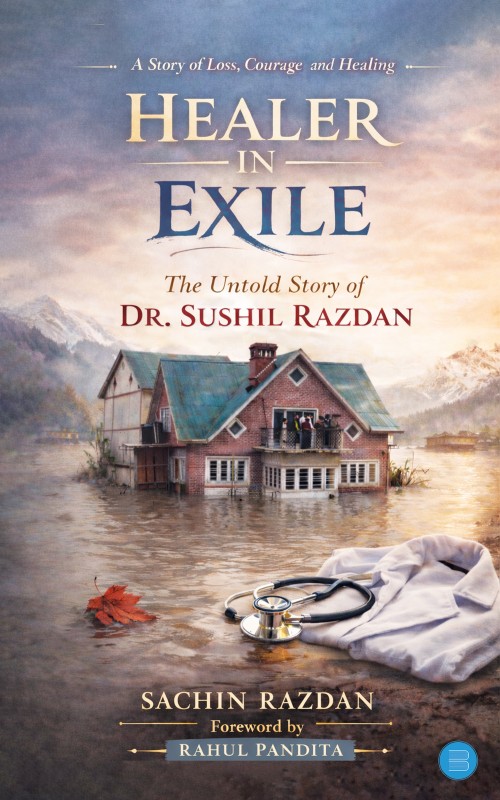
That healer was Dr. Sushil Razdan, Kashmir's pioneering neurologist, whose remarkable life was celebrated at the launch of Healer in Exile: The Untold Story of Dr. Sushil Razdan, written by his son, technocrat Sachin Razdan, in Srinagar this May.
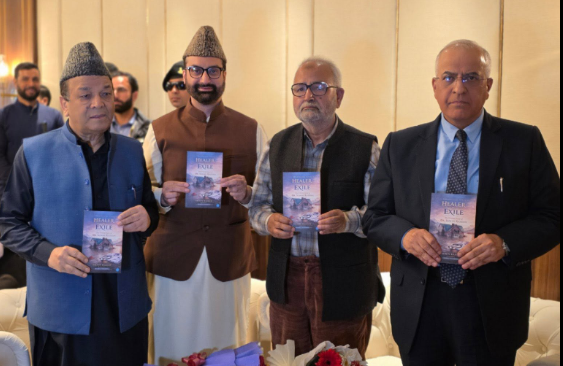 (L-R) Rahim Rather, (NC) Umer Farooq (Hurriyat) Naeem Akhtar (PDP) and Sushil Razdan at the book launch
The gathering itself was extraordinary. Leaders from opposing political camps rose above their differences to pay tribute to a physician whose compassion had transcended politics and religion, keeping alive the hope of humanity during one of the darkest chapters in Kashmir's history.
Reading the book, and recalling countless stories I have heard about Dr. Razdan over the years, I realized that he is more than a celebrated doctor—he is a cult figure in Kashmir. For three turbulent decades marked by violence, displacement and political upheaval, he healed not just damaged brains and nervous systems but broken spirits. His life demonstrates how a single dedicated professional can profoundly influence an entire society.
As I read the book around National Doctors' Day, I was struck by how faithfully Dr. Razdan embodied the Hippocratic Oath. He never abandoned his patients when they needed him most, even when his own life had been upended.
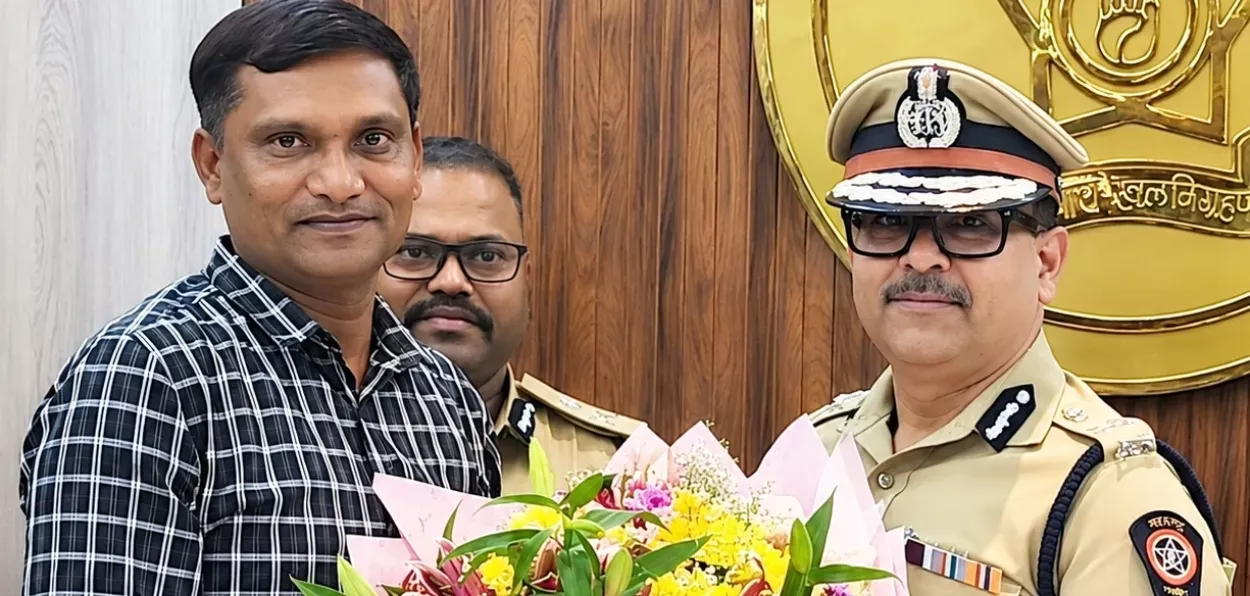
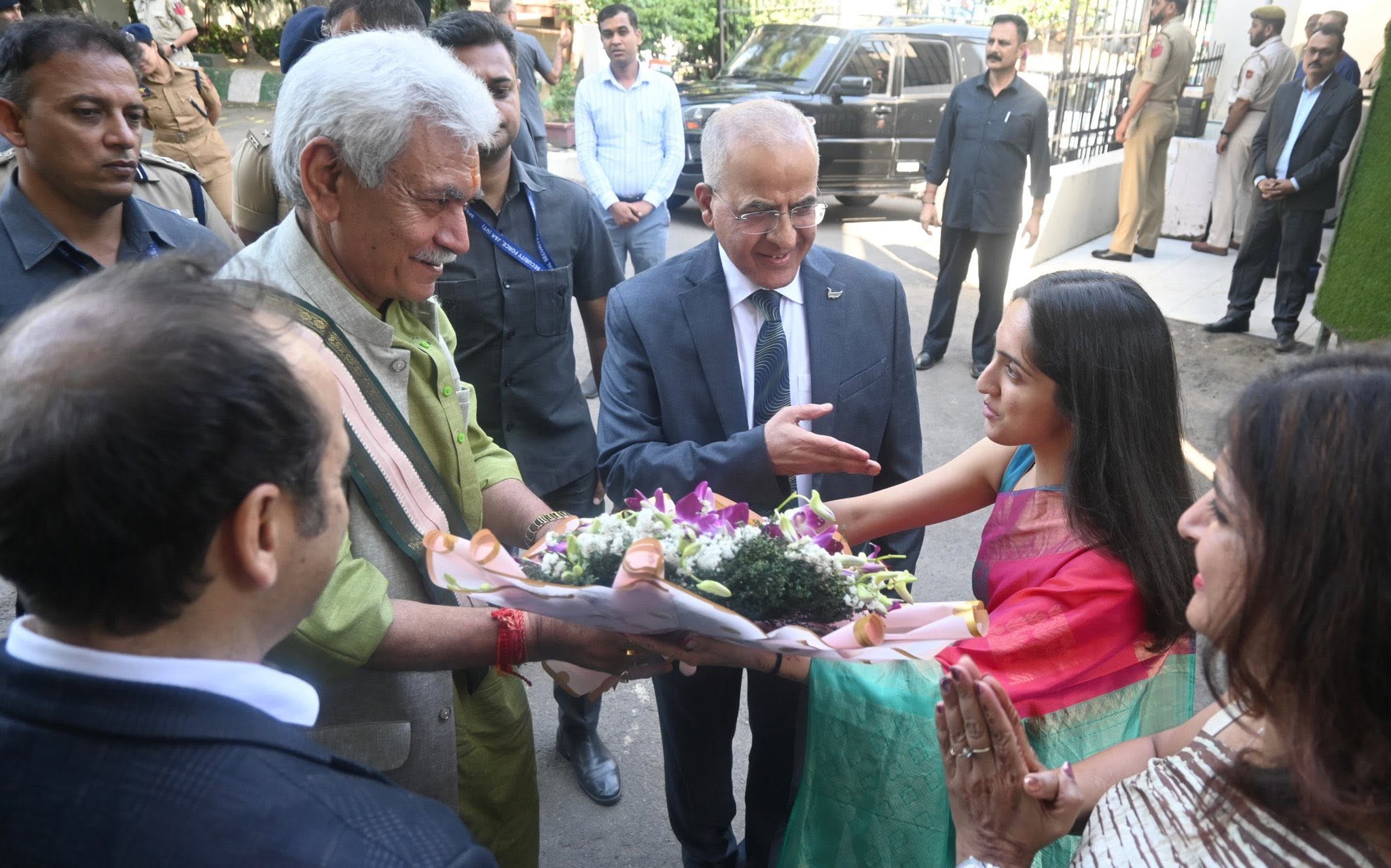 Sushil Razdan with LG Manoj Sinha at the Book launch
The first neurologist in Kashmir, Dr. Razdan had already become a household name long before Pakistan-sponsored terrorism engulfed the Valley in the late 1980s. His reputation rested not merely on clinical excellence but on an uncommon ability to simplify complex neurological disorders for ordinary patients. Gentle, soft-spoken and deeply empathetic, he avoided intimidating medical jargon and treated every patient with dignity. It was this humanity, more than his medical brilliance, something that endeared a Hindu doctor to an overwhelmingly Muslim society.
Like thousands of Kashmiri Pandits, however, Dr. Razdan was forced to leave his home in the early 1990s. He abandoned a flourishing practice, his ancestral home, and the legacy of his father, the legendary educator associated with Srinagar's iconic Biscoe School, to begin life afresh in Jammu with his wife and two young children.
Exile, however, did not diminish his commitment.
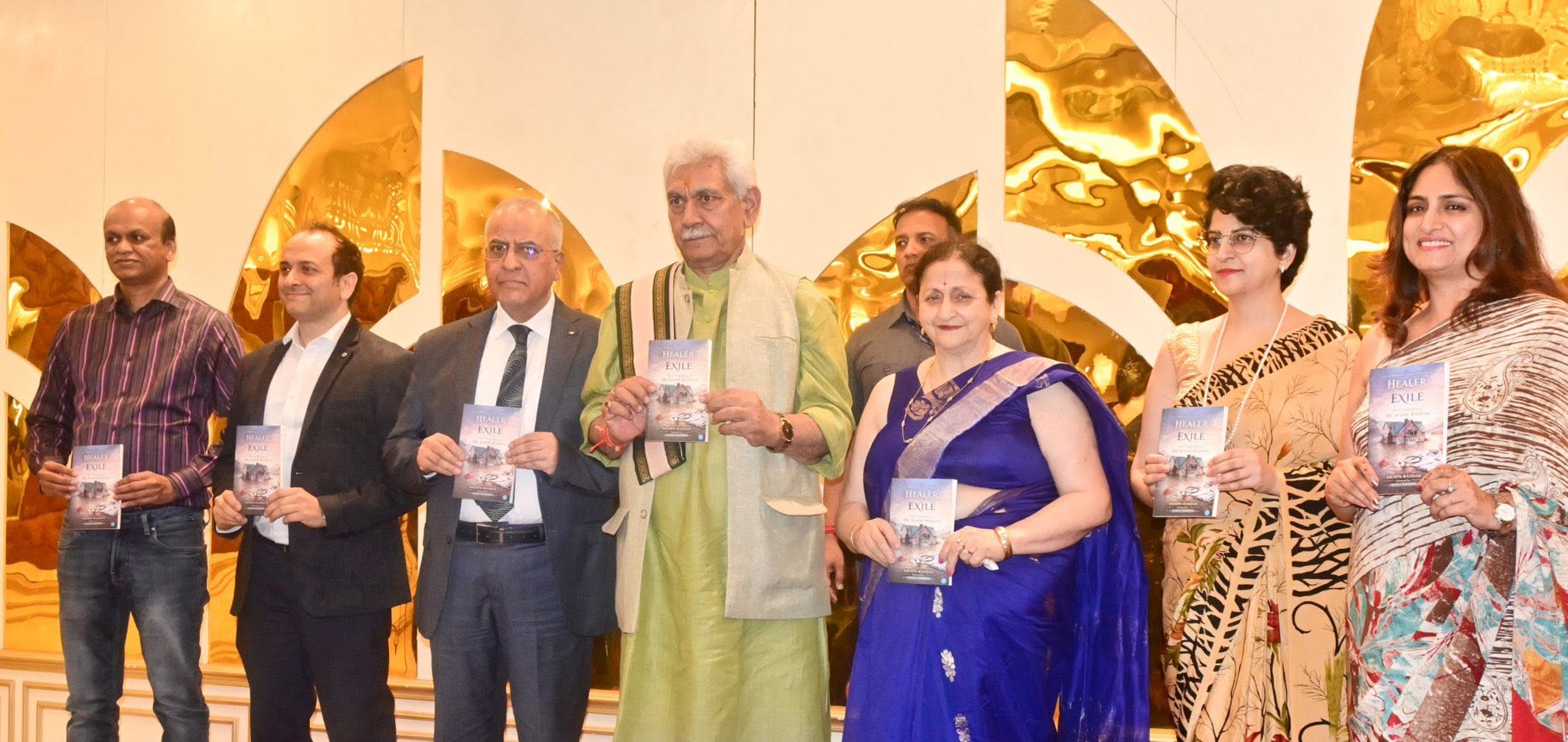 Dr Sushil Razdan with his son and author Sachin (Second from left) and Wife with LG Manoj Singh at the book Launch
Operating from a modest two-room house in Jammu's oppressive summer heat, he converted a room into a clinic that remained open to patients arriving from Kashmir. Sachin Razdan vividly describes how the family home became an extension of his father's mission, with patients streaming in throughout the day while the doctor himself travelled across the city to visit displaced Kashmiri Pandits living in cramped rented accommodations.
Those years were especially harsh. The summer of 1990 proved devastating for displaced Kashmiris, many of whom were unaccustomed to Jammu's extreme heat. Heatstroke and dehydration claimed numerous lives. Dr. Razdan personally visited homes, treating elderly patients who otherwise might not have survived. His medical practice extended beyond consultations—it became humanitarian service.
As a young journalist reporting from Srinagar during those years, I vividly remember chartered buses bearing banners that read, "Lal Chowk to Sushil Razdan," ferrying patients to Jammu. The queues only grew longer as terrorism, trauma and uncertainty spread across the Valley. Among Kashmiris, saying "I even consulted Sushil Razdan" became shorthand for having sought the final word on a troubling neurological or psychological condition.
The Doctor's concern also reached those beyond urban centres. He organised medical camps in remote regions such as Dhadkai in Doda district—known as India's "Silent Village" because of its unusually high incidence of congenital speech and hearing impairments believed to result from generations of inbreeding. Similar camps followed in Uri, Kupwara and Gurez, bringing specialist neurological care to places where it had never existed.
The comparison may sound extravagant, but it captures the affection and reverence with which Kashmiris regard him.
One of the book's most memorable passages comes when the author describes his father's philosophy of medical practice:
"Once, Papa described his clinic to someone as a dhaba. Not a boutique private practice, but a roadside eatery where people come all day long because they know they will be fed something honest. The metaphor amused me at first, but the more I thought about it, the more accurate it felt. A dhaba doesn't pretend to be exclusive. It is open, unassuming, and available. It doesn't turn people away for not looking the part or dressing the part. It exists to nourish. His clinic is much the same, always humming, rarely truly closed. People walk in not because of the décor, but because of what they know they will receive."
That metaphor perhaps explains Dr. Razdan better than any professional accolade.
Even today, despite an exhausting schedule across Delhi-NCR's premier hospitals, his heart remains anchored in Kashmir. Every month he returns to Srinagar, consulting patients from his ancestral home, drawing solace from the waters of the Dal Lake and reconnecting with the landscape that shaped him.
The book also reveals a defining moment in his life. Early in his career, Dr. Razdan was selected for a lucrative medical position in Saudi Arabia. Friends congratulated him; tickets to Jeddah had already been issued. Yet, at the last moment, he walked away. The prospect of financial success could not outweigh his sense of responsibility towards his patients, his homeland and his family. He chose Kashmir over comfort.
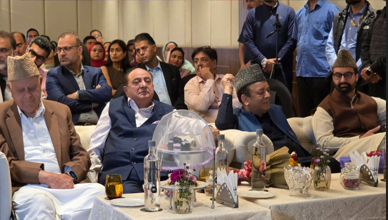 Dr Farooq Abdullah (Left) and Umer Farooq (Right) at the book launch
Healer in Exile succeeds because it is not a conventional biography. It is a son's deeply personal tribute to a father, but one that avoids hagiography by grounding admiration in lived experience and everyday acts of service. Through intimate family memories, it also chronicles the tragedy of displacement, the resilience of Kashmiri society and the extraordinary power of compassion in times of conflict.
READ MORE: Fauzia Dastango's journey of reviving the art of storytelling
In an era when medicine is increasingly measured by technology, corporate success and commercial value, Dr. Sushil Razdan's story reminds us that the greatest healers are remembered not merely for curing disease but for restoring faith in humanity. That is why, decades later, Kashmir continues to claim him as one of its own.
Healer In Exile: The Untold Story of Dr. Sushil Razdan; Sachin Razdan; BlueRose Publishers