Shampi Chakraborty Purkayastha
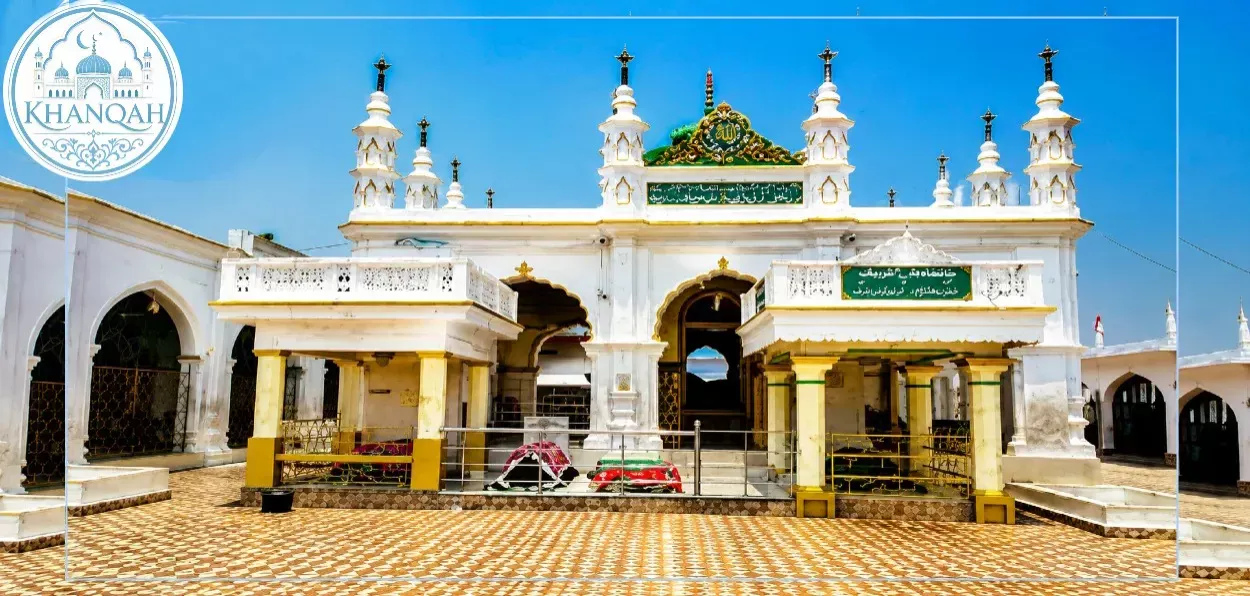
Amid the bustle of the city, traffic and the growing presence of high-rise buildings, some parts of Kolkata’s old lanes still preserve a history deeply connected with Bengal’s long tradition of Sufi spirituality, religious learning and communal harmony. No. 22 Khanqa Sharif Lane in the Taltala-Moulali area is one such address. It is home to Khanqa Sharif-e-Qaderiya, a historic khanqah associated with the Qaderiya Sufi order.
A khanqah was not merely a mosque. In the Sufi tradition, it served as a centre for the spiritual practices of pirs and murshids, the education of disciples, religious discussions and shelter for people. The Cultural Profile of Calcutta, published on the Muslim community of Kolkata, mentions the influence of three Sufi orders — Qaderiya, Chishtiya and Naqshbandiya. It also refers to a major Qaderiya khanqah in central Kolkata and its affiliated centres in Kidderpore and Beniapukur.
Hazrat Shah Murshed Ali Qaderi founded the tradition. In 2020, a Times of India report on a heritage walk organised in Taltala identified Khanquah Sharif-e-Quadariya at 22 Khanqa Sharif Lane as the khanqah established by him.
The same report stated that the khanqah played an important role in the spread of Sufism across undivided Bengal.
Shah Murshed Ali Qaderi was not only a Sufi saint but was also known as a scholar of Arabic, Persian and Urdu. A full-fledged PhD research project on his life and work was also completed at the University of Calcutta. The research was completed in 2014 under the title Syed Shah Murshed Ali Alquaderi – A Renowned Saint of Bengal, Scholar of Arabic, Persian and Urdu. Thus, his life and Kolkata’s Qaderiya tradition are not merely matters of family memory. They have also become subjects of academic research at the university level.
Another notable aspect of the khanqah is its library and manuscript tradition. According to news reports, a library exists within the khanqah complex alongside a mosque. It has reportedly preserved numerous Persian and Arabic books and manuscripts. This indicates that the institution was once more than a centre of spiritual practice. It also played a role in religious scholarship, Sufi literature and the preservation of manuscripts.
The history of the khanqah is also documented in connection with the waqf system. A 1977 case before the Calcutta High Court refers to a prolonged legal dispute concerning inheritance and management of Qaderiya waqf property on Khanqa Sharif Lane. Court records mention waqf deeds from 1931 and 1933 and the registration of the property as a waqf estate in 1936. The records also refer to property at No. 23 Khanqa Sharif Lane.
However, No. 22 is currently used as the address of the khanqah. Therefore, the relationship between properties numbered 22 and 23 needs to be further verified through old municipal records and the original waqf documents. This is precisely where the importance of historical research becomes evident.
Sources relating to the history of the Qaderiya family indicate that Shah Murshed Ali Qaderi’s Kolkata chapter began through the Qaderiya tradition of Medinipur. Later, the khanqah in central Kolkata became an important centre of Qaderiya spiritual practice. Historical records mentioning affiliated Qaderiya khanqahs in Kidderpore and Beniapukur also point to the expansion of the tradition.
Even amid the rapidly changing face of the city, this institution on Khanqa Sharif Lane is therefore more than a religious establishment. It is a living document of the history of Kolkata’s Muslim community, the spread of Sufi spirituality in Bengal, Arabic and Persian scholarship, and religious institutions built around the waqf system.
ALSO READ: Kashmiris who played their role in India's freedom Movement
History of Khanqah Sharif reminds us that the identity of this city is not limited to colonial architecture, grand thoroughfares and commerce. Hidden within its lanes is also a long legacy of Sufi spirituality, scholarship and pluralism.
_(1).webp "Graves of Sufis at Triveni-Saptagram Khanqah")

_(1).webp "Sufi Heritage of Gaur")