_(1).webp "Sufi Heritage of Gaur")
Shompi Chakraborty Purkayastha
The ancient city of Gaur in the Malda district of West Bengal was not only the former capital of Bengal but also one of the most important centres of Sufi spirituality and Islamic culture in the Indian subcontinent. The Sufi tradition that flourished in medieval Gaur and the neighbouring region of Pandua profoundly influenced not only the religious history of Bengal but also its society, culture, and the tradition of communal harmony. Even today, the Khanqahs, Dargahs, and ancient monuments scattered among the ruins of Gaur bear witness to that glorious past.
The arrival of Sufi saints in Bengal began in the thirteenth century. Along with preaching Islam, they established Khanqahs in different parts of Bengal to promote humanitarian service, education, assistance to the poor, and the message of social harmony. Gaur and Pandua soon emerged as the principal centres of these activities. According to historians, it was in this region that the Sufi saints combined religious education, spiritual practice, and humanitarian work to create a new model for society.
At the very beginning of Gaur's Sufi tradition, the name that is remembered foremost is that of Sheikh Jalaluddin Tabrizi. This Sufi saint, who came from Tabriz in Iran, arrived in Bengal during the thirteenth century and established his Khanqah at Pandua. Along with religious instruction, he introduced shelter for the poor, free meals, and various humanitarian activities. The Boro Dargah founded by him remains one of the most important Sufi pilgrimage centres in eastern India.

Later, Akhi Sirajuddin Usman played an outstanding role in the development of the Chishti order in Gaur. He was a disciple of the renowned Sufi saint of Delhi, Nizamuddin Auliya. After returning to Bengal, he propagated the ideals of Sufism in Gaur and Pandua and firmly established the foundations of the Chishti order there. His mausoleum is still located near Sagardighi in Gaur, and among the local people he is revered as "Piran-e-Pir" or "Puran Pir." Every year, countless devotees gather there on his Urs.
One of the foremost disciples of Akhi Sirajuddin was Makhdoom Sheikh Alaul Haq. By establishing a Khanqah in Pandua, he further organised the activities of education, social reform, and humanitarian service. His son, Nur Qutbul Alam, expanded this tradition even further. The Sultans of medieval Bengal also held them in great esteem and sought their advice on various social and religious matters.
The most remarkable characteristic of the Khanqahs of Gaur was their commitment to humanitarian service. In these institutions, religion, caste, or ethnic identity did not define a person; humanity itself was the foremost identity. Providing shelter to travellers, food to the hungry, assistance to the poor, and moral education formed the foundation of these institutions. For the Sufi saints, the welfare of humanity was the highest form of devotion. The Sufis gained widespread acceptance among the common people of Bengal due to their approach.
Many folk traditions are also associated with the Sufi heritage of Gaur. According to local belief, many people still visit various Dargahs to make vows, and after their wishes are fulfilled, they return to express their gratitude. Although such beliefs are not supported by historical evidence in every case, they are nevertheless regarded as an important part of Bengal's folk culture.

Today, many of Gaur's historic Dargahs and Khanqahs possess great archaeological significance. The Dargah of Akhi Sirajuddin, the Boro Dargah of Shah Jalaluddin Tabrizi, the Eklakhi Mausoleum, the Adina Mosque, and other medieval monuments all form part of the same historical landscape. This region continues to attract researchers, historians, and tourists from both India and abroad.
However, according to historians, many valuable documents, manuscripts, and oral traditions relating to Gaur's Sufi heritage have still not been adequately preserved. Greater efforts are needed in modern research, digital documentation, and heritage conservation. This is because the Sufi heritage of Gaur is not merely a part of religious history; it is an invaluable testament to Bengal's pluralism, humanity, and social harmony.
ALSO READ: Khanqah of Pandua: A seven-century legacy of love and service
Even amid the silence of its ruins, Gaur seems to proclaim that royal palaces may crumble and empires may fall, but the message of love, service, and harmony that the Sufi saints left behind can never disappear. That is why Gaur continues to stand as a unique beacon of spiritual light in the history of Bengal.


.webp "Shrine of Bulbul Shah, Srinagar, J&K")

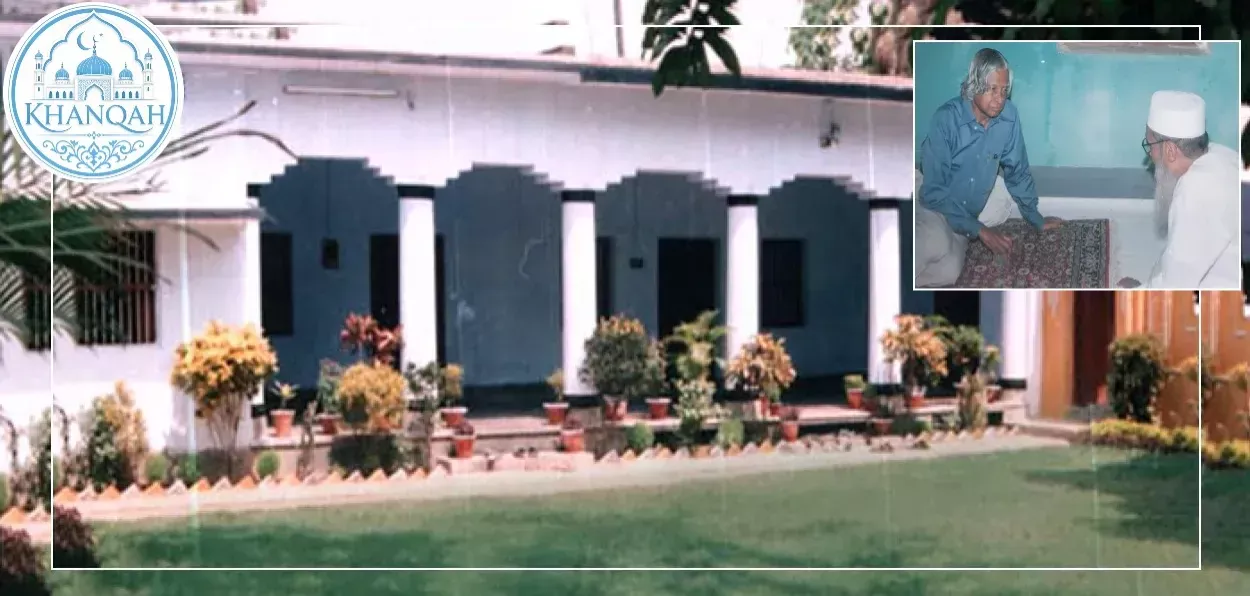






_(1).webp "The Khanqah of Pandua, Malda, West Bengal")