




Vidushi Gaur/ New Delhi
On the icy cliffs of Kargil, where even standing upright was a challenge, Captain Neikezhakuo Kenguruse made a decision that redefines courage and has since become one of the extraordinary stories of bravery taught in India's Military schools.
Remembering Heroes
He took off his boots to take on the intruders on Indian soil -Pakistani soldiers- during the 1999 Kargil conflict.
It was not an act of desperation. It was a calculated choice made in the middle of battle. The frozen rocks were too slippery for heavy combat boots to grip, and every passing moment gave the enemy an advantage. Barefoot, despite the biting cold, the young officer began climbing the near-vertical cliff that stood between his men and victory.
Born on 15 July 1974 in Nerhema village near Kohima, Nagaland, Neikezhakuo Kenguruse grew up in a modest farming family. Like many children from the hills, he learned the value of hard work early in life. Before joining the Indian Army, he briefly worked as a school teacher, a profession dedicated to shaping young minds. But deep inside, he carried another dream of wearing the olive-green uniform and serving the nation.
That dream became reality when he was commissioned into the 2 Rajputana Rifles.
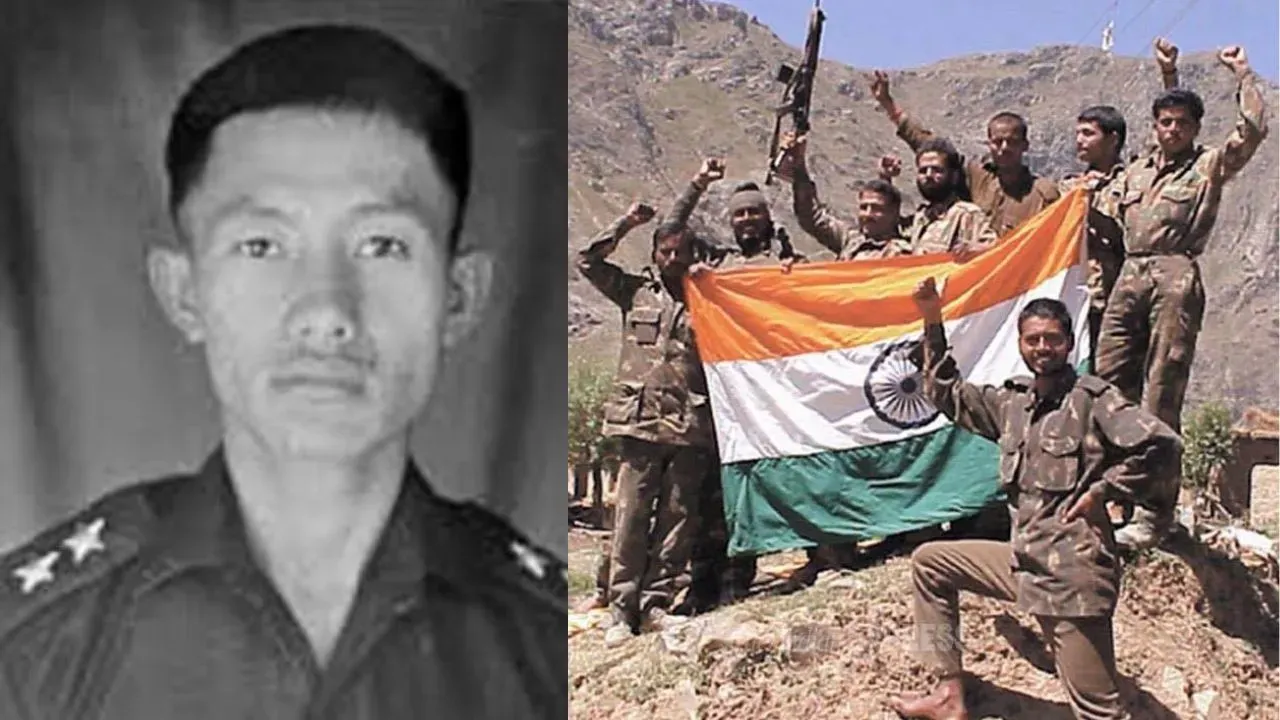 Captain Neikezhakuo Kenguruse
Just a few years later, fate placed him in the middle of one of India's toughest battles, the Kargil War of 1999.
His battalion was assigned the daunting task of capturing enemy positions on Black Rock, a heavily fortified feature in the Drass sector. Pakistani intruders occupied the heights, firing relentlessly at Indian troops attempting to advance. The terrain itself was as dangerous as the enemy. Sharp rocks, freezing temperatures and steep cliffs turned every step into a struggle for survival.
Leading his platoon on the night of 28 June 1999, Captain Kenguruse realised that the rocky slope ahead could not be scaled with ordinary military boots. Rather than allowing the mission to fail, he removed them and continued the climb barefoot, using his hands and feet to grip the icy mountain.
His men watched in awe as their commander led from the front.
Reaching the enemy bunker, Captain Kenguruse launched a fierce assault. In close combat, he eliminated several enemy soldiers, clearing the way for his troops to continue their advance. Even after sustaining multiple bullet injuries, he refused to retreat.
The 24-year old warrior kept fighting until his last breath.
His courage inspired his men to press forward and secure the objective, contributing significantly to India's eventual victory in the Kargil War.
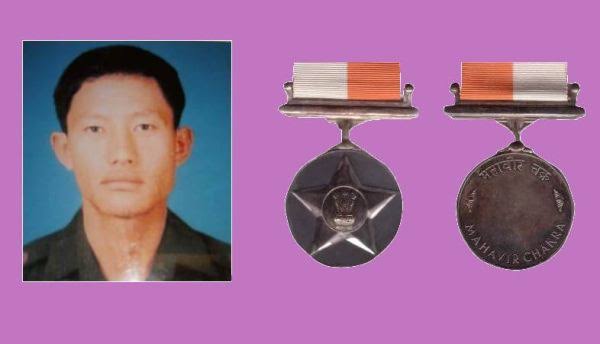 Captain Neikezhakuo Kenguruse
For his exceptional bravery, indomitable spirit and supreme sacrifice, he was posthumously awarded the Maha Vir Chakra (MVC), India's second-highest wartime gallantry award.
Back home in Nagaland, the news shattered his family. A son who had once taught children in a village classroom had laid down his life defending a nation thousands of kilometres away. Yet his sacrifice also filled an entire state with pride. Today, schools, roads and institutions bear his name, ensuring that future generations remember the young officer who climbed into history without shoes but with unmatched determination.
His story carries a lesson far beyond the battlefield.
Leadership is often spoken about in words. Captain Kenguruse demonstrated it through action. He never asked his soldiers to go where he himself would not lead. In the harshest conditions imaginable, he chose to move ahead first, proving that true courage is not the absence of fear but the willingness to place duty above one's own life.
The image of Captain Kenguruse climbing a frozen mountain barefoot has become one of the enduring symbols of the Kargil War. It reminds us that India's borders are protected not merely by weapons or fortifications, but by ordinary young men who perform extraordinary acts when the nation calls.
ALSO READ: Bulbul Shah: The first Sufi of Kashmir and his historic shrine
Neikezhakuo Kenguruse's footprints on those icy rocks disappeared with time; his story lives on.


.webp "Representational Image")









_(1).webp)
.webp)