




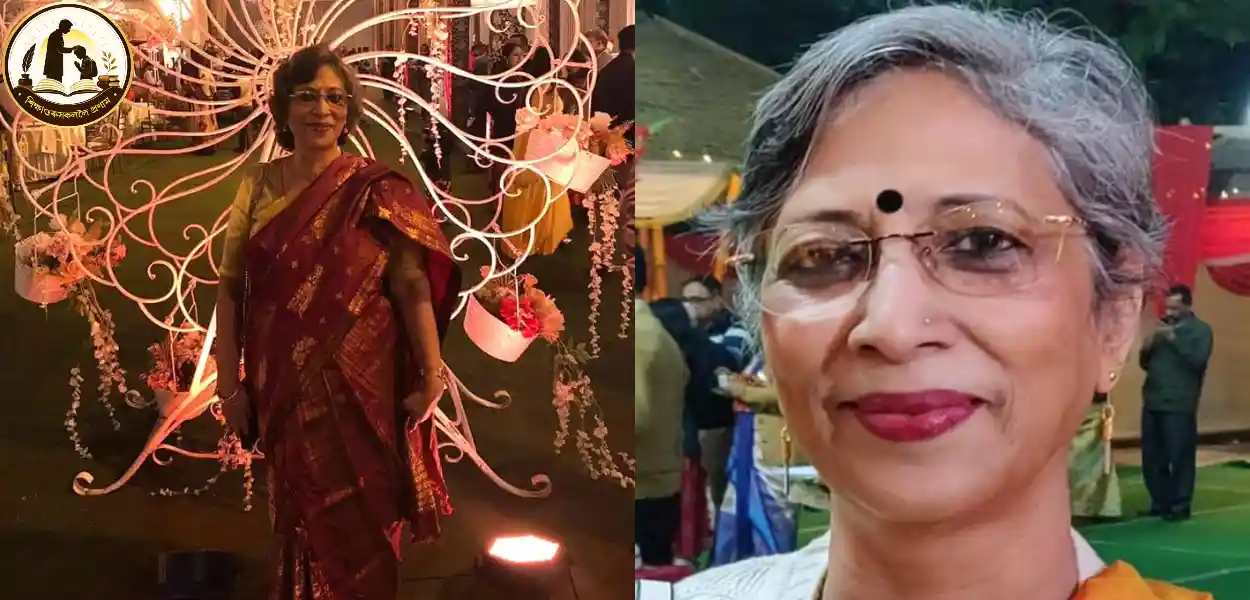
Munni Begum/Guwahati
Shehnaz Rahman, a senior advocate from Guwahati who once fought legal battles in the court room has taken to full time teaching. While her legal career gave her an identity, it was in teaching that she found her life’s purpose.
For Shehnaz Rahman, lecturer at the Bishnuram Medhi Government Law College in Panjabari, Guwahati, teaching is not merely a job but an integral part of her existence. Life led her to the courtroom and placed the law books in her hands; yet, she eventually returned to teaching to seek fulfilment of her sense of belonging.
For her, teaching is not just a chapter in her professional life; it is a call of the heart.
Shehnaz Rahman says even as a child, she had wanted to be a teacher. After completing her honours graduation in political science from Cotton College (now Cotton University), she enrolled at Delhi University and completed her doctorate.
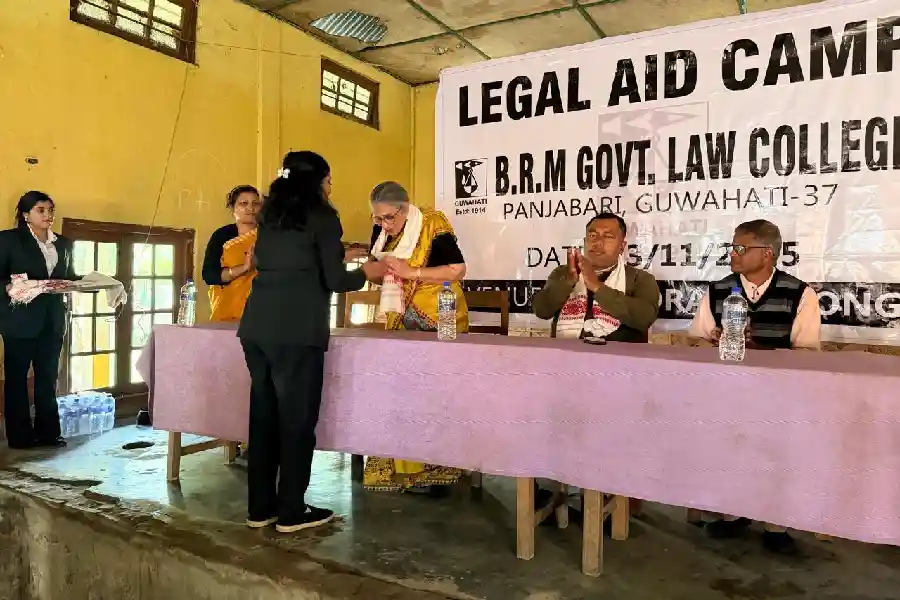 Shehnaz Rahman , lecturer and senior advocate of Bishnuram Medhi Government Law College at a function
The primary purpose of earning her doctorate was to enable her to adopt teaching as a profession in the future. During that period, Shehnaz also obtained her law degree.
However, life does not always follow a planned course. Due to the lack of teaching opportunities during her doctoral studies, she began practicing law in court. Gradually, Shehnaz established herself in the legal profession. Yet, even amidst the demanding job of a advocate, she had kept her dream of becoming a teacher alive.
In a conversation with Awaz-The Voice, Shehnaz Rahman said: “In 1988, I had the opportunity to work as a part-time lecturer at B Barooah College. Shortly after, the then principal of the Government Law College located in Panbazar at that time, Mr Haren Kalita, invited me to teach as a guest lecturer. As soon as I got this opportunity, I accepted his invitation without a second thought. That is how my new journey began. From guest lecturer to part-time lecturer, and finally, in 1995, I joined the Government Law College as a full-time guest lecturer.”
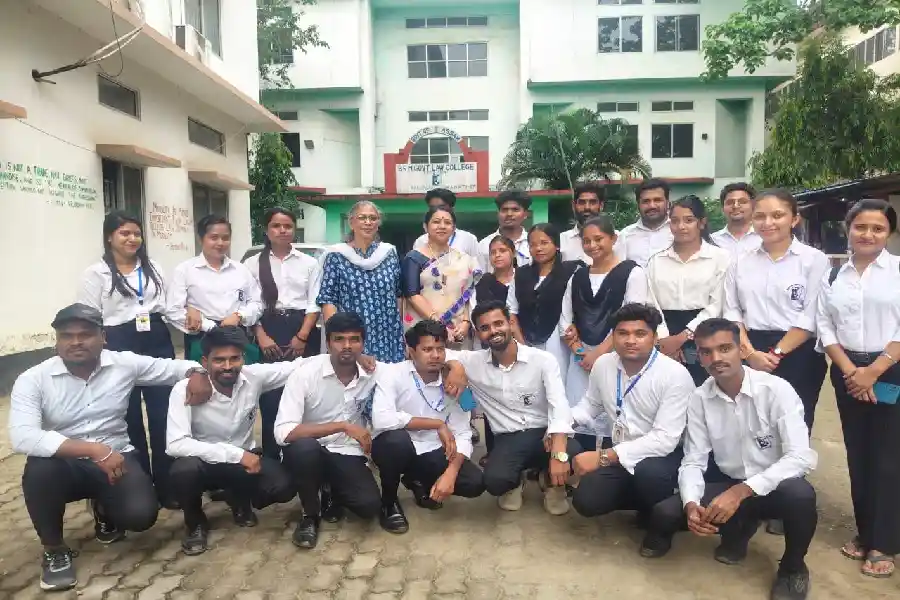 Lecturer and Senior Advocate Shehnaz Rahman with the students
Balancing her legal practice in court during the day and teaching in the evening, Shehnaz realised that she was doing well as an advocate, her heart pinned for a role as a teacher.
She said, “The legal profession has its own appeal, but the satisfaction I derive from teaching is entirely different. Gradually, I understood that I could never give up teaching.”
This dual experience of teaching and legal practice shaped Shehnaz Rahman into a unique educator. With her courtroom experience, she has been able to introduce students to the world beyond textbooks.
Through court visits, legal awareness camps, practical learning or real-life case management experience, she explained all these aspects to students based on her own experiences. She says, “Students understand the subject more deeply when they engage with real-life situations rather than just reading from books.”
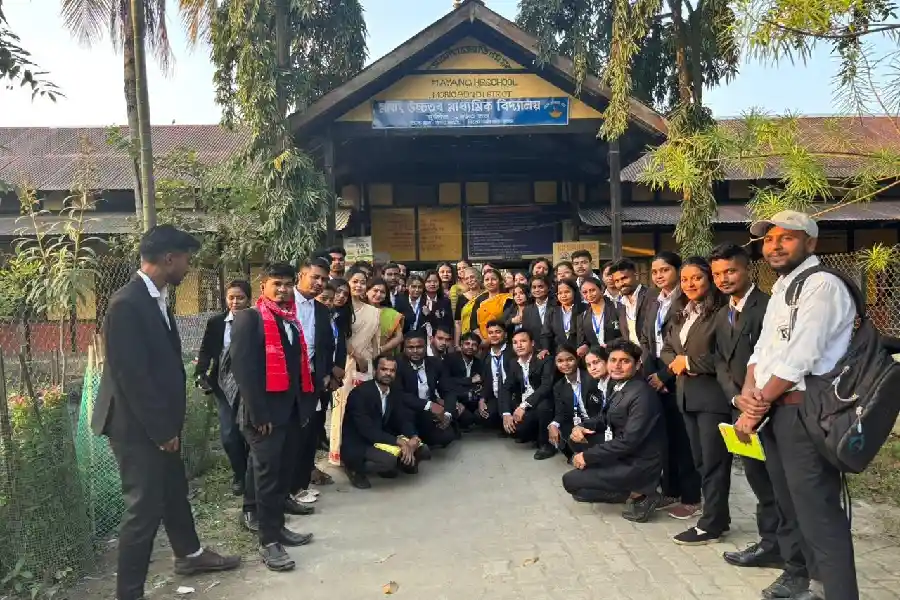 Lecturer and Senior Advocate Shehnaz Rahman with the students
However, the most emotional chapter of Shehnaz Rahman’s relationship with teaching lies hidden in a very difficult period of her personal life. While she was serving as a government advocate for the Meghalaya government, her husband suddenly passed away following a cardiac arrest. Within just an hour, Shehnaz’s life seemed to change completely.
She was deeply shattered. It was then that teaching seemed to bring her back to life. Gradually, going to the classroom, talking with students, listening to their questions and teaching them helped ease her sorrow and unrest.
She felt that teaching had become a mental strength for her.
Shehnaz said, “After my husband’s death, I was mentally devastated. But the work of teaching gave me the courage to live like a mother, a healer, a friend and a family member, and it helped me. Among the students, I could forget my sorrow for some time. This gave me new inspiration and enthusiasm to live. It provided new strength to face life. That is why I also call teaching a kind of therapy of my life.”
Today, many of Shehnaz Rahman’s students are lawyers, judicial officers and professionals in various fields. She said, “When any former student comes to me in court and says, ‘Madam, I was your student,’ the pride and satisfaction I feel at that moment cannot be compared to any professional success.”
Shehnaz Rahman believes that a teacher’s true success is not reflected in their own position or personal achievements, but in the success of their students.
“I always advise the new generation of law students to work honestly and with dedication.
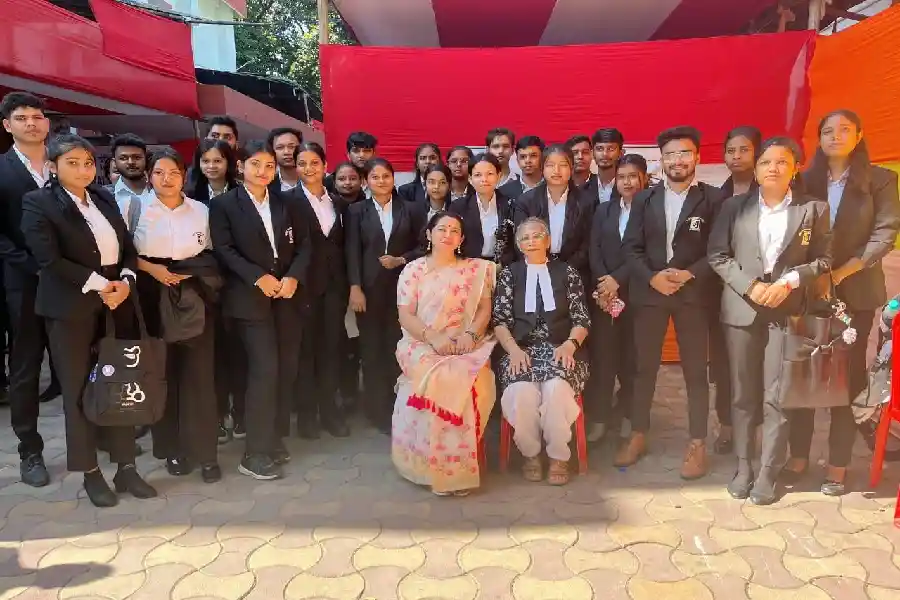 Lecturer and Senior Advocate Shehnaz Rahman with the students
Shehnaz Rahman says that there is no substitute for fundamental books, laws, research and analysis in this era of digital resources. Therefore, both teachers and students must keep enriching themselves with new knowledge in tune with the times.
She does not support complete dependence on technology. That is why, the habit of reading, thinking and working independently should never be abandoned. She encourages students to read books, research journals and primary laws, to conduct research, to write themselves and to improve their skills in preparing legal documents. In her view, we must adopt new technology, but technology can never be a substitute for fundamental knowledge, reading, and analysis.
Shehnaz Rahman says she will never give up teaching.
She said, “For me, whether I will teach or not? This is not a question. Because I have already made my decision. Now the question is, where and how I will continue teaching. If tomorrow I cannot continue working at this college, I will still not give up teaching. I will continue teaching through training centers, private universities, law universities or any other medium. In whatever way I can, wherever I can, I will keep teaching students.”
ALSO READ: Simab Khan's rise from a notorious slum to becoming a civil servant
The legal profession has given Shehnaz Rahman experience, identity, and professional success. But teaching has given her something even more valuable — ‘life’s purpose’. When life had deeply broken her, teaching helped her stand up again. And when the strength to move life forward was diminishing, she gained a new strength to live from among her students. That is why Shehnaz Rahman’s life can perhaps be summarised in one sentence: The court taught her law, but the classroom taught her life.


.jpg "Gujarat’s women entrepreneurs bring their craftsmanship to life during Navratri")










_(2).webp)
.webp)
