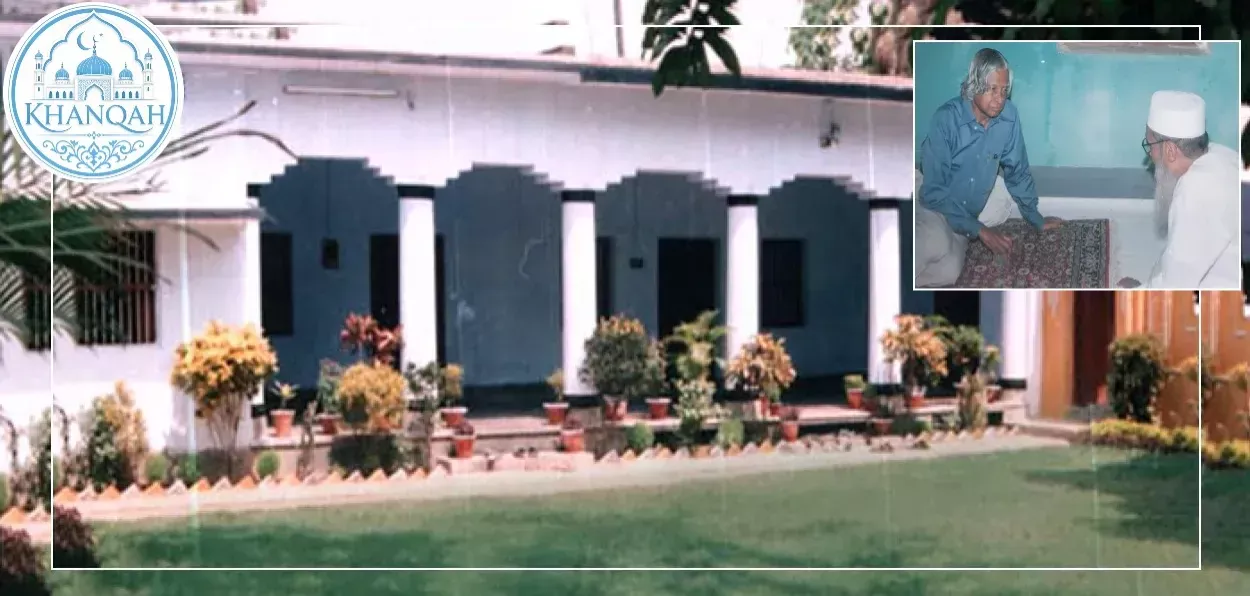
_(1).webp "The Khanqah of Pandua, Malda, West Bengal")
Shompi Chakraborty Purkayastha
Pandua in the Malda district of West Bengal is not merely a historical township; it is one of the finest centres of Bengal's Sufi heritage. Once renowned as the capital of Bengal, this region emerged during the medieval period as a unique confluence of religious education, spiritual practice, and humanitarian service. At the heart of this history stood two great Sufi saints—Hazrat Makhdoom Sheikh Alaul Haq Pandavi and his worthy son, Hazrat Nur Qutbul Alam. The Khanqah established by them remains one of the brightest chapters in the spiritual history of Bengal.
During the fourteenth century, when the Sultanate of Bengal was flourishing, Sufi traditions from Central Asia and Persia began to take deep root in the soil of Bengal. It was during this period that Hazrat Makhdoom Sheikh Alaul Haq Pandavi developed Pandua into a centre of spiritual devotion and humanitarian service. The Khanqah founded by him was not merely a place of religious worship; rather, it was an exceptional institution dedicated to education, social reform, service to the poor, and the cultivation of humanitarian values.
Every day, lessons in the Holy Qur'an, Hadith, Islamic philosophy, Fiqh, and moral education were conducted at the Khanqah. Students, dervishes, and ordinary people arriving from distant places found both shelter and education there. Travellers were provided with accommodation, while the needy were offered food. The core principles of Sufism—service to humanity, humility, compassion, and self-purification—were reflected in every activity of the Khanqah.

Hazrat Nur Qutbul Alam further strengthened the foundation laid by his father. He was not only a Sufi saint but also one of the most influential Islamic thinkers and social leaders of medieval Bengal. His spiritual influence extended far beyond the boundaries of Bengal, reaching northern India and various regions of the Muslim world of that time. According to historians, his Khanqah became one of the foremost centres of learning, social organisation, and humanitarian activities.
Historical sources reveal that the Sultans of Bengal held these Sufi saints in great esteem and attached considerable importance to their opinions. However, they never became part of the ruling establishment; instead, they remained among the common people, spreading the ideals of justice, honesty, and humanity. For this reason, their Khanqah became equally respected and accepted by people from every section of society.
Even today, numerous devotees and visitors arrive daily at the Dargah and Khanqah of Hazrat Makhdoom Sheikh Alaul Haq Pandavi and Hazrat Nur Qutbul Alam in Pandua. Alongside Muslims, followers of other faiths also visit the shrine. Some come to offer prayers, some fulfil vows, while others are drawn by the historical and architectural significance of this heritage site. Every year, on the occasion of the Urs Sharif, Pandua transforms into a grand gathering place with the participation of thousands of people.
The significance of these Sufi centres in Pandua is not confined to their religious importance alone. They are closely connected with nearby historical monuments such as the Eklakhi Mausoleum, the Adina Mosque, and other medieval architectural sites. Consequently, Pandua stands not only as a witness to the political history of Bengal but also as an invaluable repository of Sufi philosophy and a pluralistic cultural tradition.

Although religious activities continue at this historic Khanqah today, historians believe that many of its ancient documents, manuscripts, and oral histories have yet to be adequately preserved. With systematic research, scientific conservation, and the development of tourism-supporting infrastructure, this Sufi heritage could become far better known among researchers and history enthusiasts across the country and abroad.
In today's divided and conflict-ridden world, the Khanqah of Pandua reminds us that the greatest power to win people's hearts lies in love, knowledge, compassion, and service. For more than seven hundred years, the teachings of Hazrat Makhdoom Sheikh Alaul Haq Pandavi (RA) and Hazrat Nur Qutbul Alam (RA) have sown the seeds of harmony and humanity in the society of Bengal, and those teachings remain as relevant today as ever.
ALSO READ: Furfura Sharif: Spiritual heart of Bengal’s Sufi heritage
The Khanqah of Pandua in Malda is therefore not merely a religious site; it is an enduring symbol of Bengal's history, Sufi philosophy, education, humanitarian service, and communal harmony, continuing to illuminate the hearts of people across generations.


.webp "Shrine of Bulbul Shah, Srinagar, J&K")