




Ehsan Fazili/Srinagar
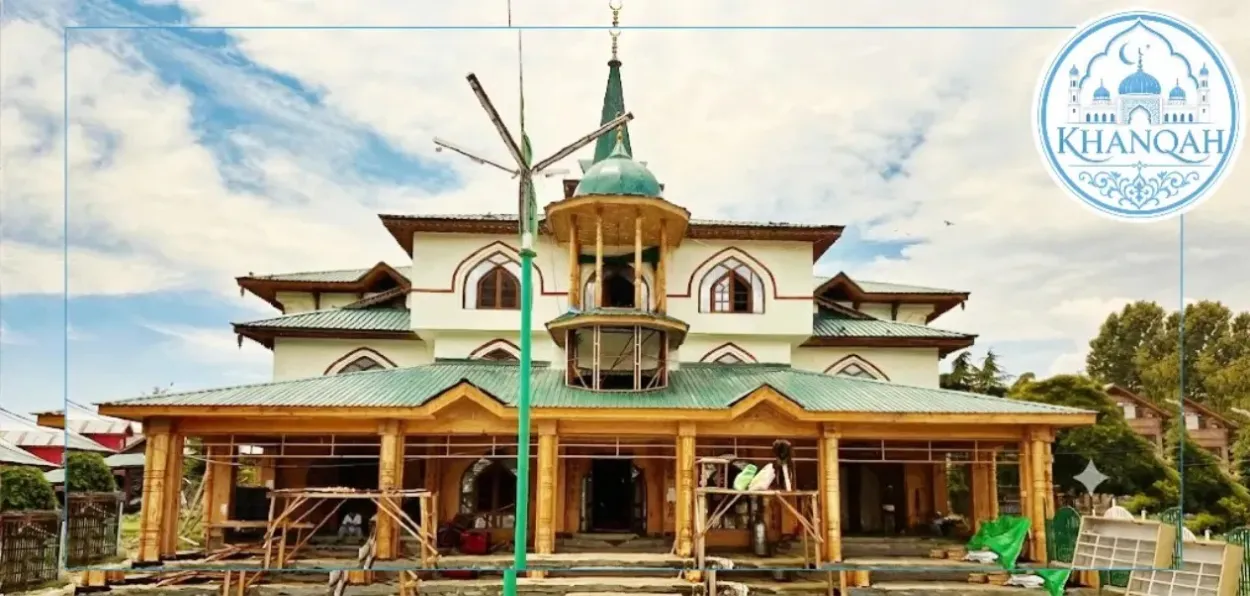
Khanqah-e-Faiz Panah in Tral, dedicated to Mir Sayyid Ali Hamadani (Shah-e-Hamadan), is one of the most significant Sufi shrines in Kashmir. It is among the 51 Khanqahs established by Shah-e-Hamadan and his son, Mir Mohammad Hamadani, across the region stretching from Kashmir to Kashgar. In Kashmir alone, it is one of the 16 Khanqahs built under the supervision of Mir Mohammad Hamadani.
Located in the heart of Tral town, about 45 km from Srinagar in South Kashmir's Pulwama district, the centuries-old shrine was originally constructed during the reign of Sultan Sikandar. It was destroyed in a mysterious fire on December 16, 1997, but reconstruction is now nearing completion after years of delays.
According to Dr Sayed Darakhshan Andrabi, Chairperson of the J&K Waqf Board, which resumed the reconstruction in 2025, the work is expected to be completed by September. The project, initially undertaken by the J&K Tourism Department and executed by the J&K Projects Construction Corporation (JKPCC), suffered repeated setbacks due to inadequate funding and the prevailing security situation in Kashmir.
Despite the destruction of the original structure, the shrine has never ceased to attract devotees. Hundreds visit every day to seek blessings, while thousands gather during the annual Urs and other important religious occasions.
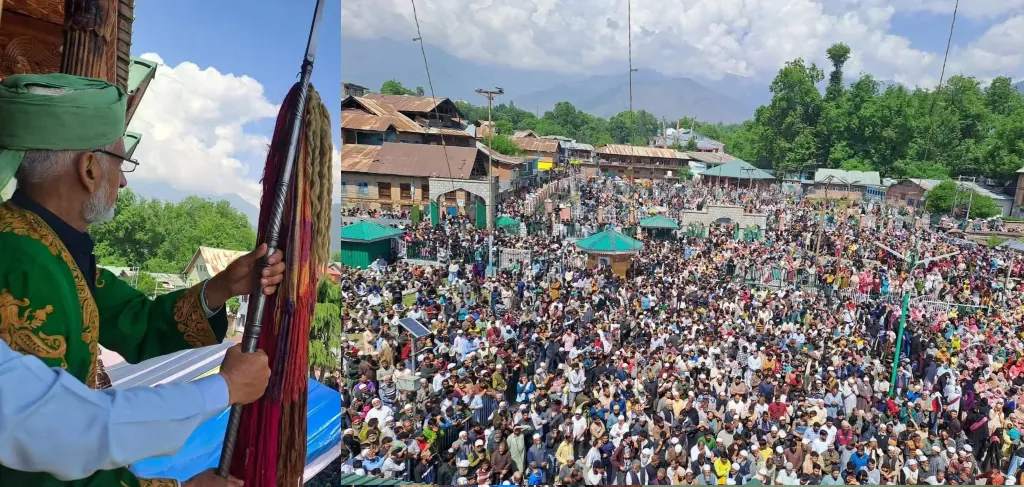
The annual Urs is observed on the 6th of Dhu'l-Hijjah, unlike the week-long Urs at Srinagar's Khanqah-e-Moalla, which is celebrated during the first six days of the month. According to Dr Nisar Ahmad Bhat's book Aaina-e-Tral, Khanqah-e-Faiz Panah is believed to be the only shrine after Srinagar's Khanqah-e-Moalla that houses the sacred Aasa-e-Sharief (walking stick) of Shah-e-Hamadan. The relic is displayed primarily during the annual Urs.
Historical accounts state that during his third and final visit to Kashmir in 1383–84, Shah-e-Hamadan stayed for some time at Kousarbal in Tral, a site now known as the Ziyarat of Mir Mohammad Hamadani. As the existing place of worship proved too small for imparting religious education to new converts, a larger site was identified where the present Khanqah stands today.
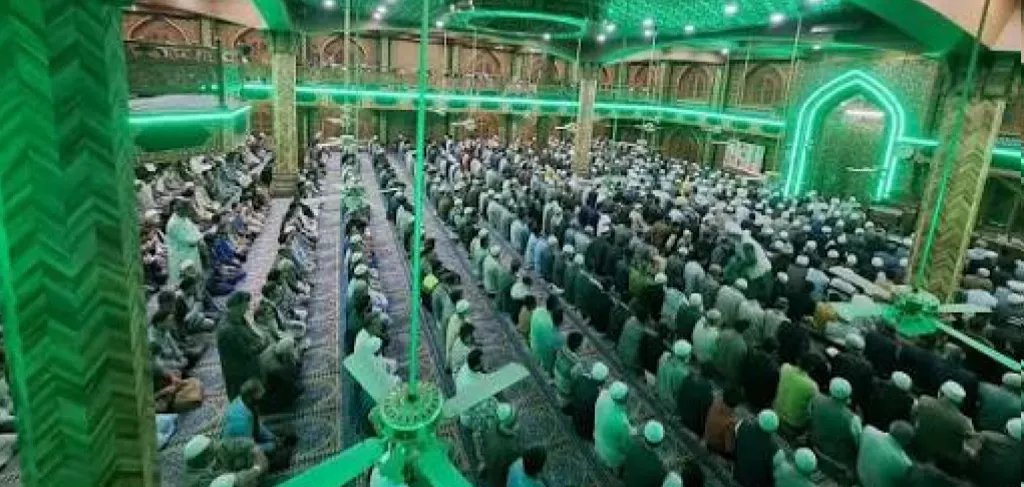
Sultan Sikandar is said to have supported the construction by providing logistical assistance to labourers, while the work was supervised by Mir Mohammad Hamadani. Completed in 880 AH, the Khanqah was built on the architectural pattern of Srinagar's Khanqah-e-Moalla. Constructed mainly from deodar timber with intricate woodwork and carvings, it made minimal use of brick, clay and soil.
The original roof, believed to have survived for more than two centuries, was covered with Bhoj Patra (birch bark), topped with mud on which seasonal flowers were grown. In 1953, during the tenure of the then Prime Minister of Jammu and Kashmir, Bakshi Ghulam Mohammad, it was replaced with a tin roof crowned by a central dome-like minaret.

The reconstructed shrine is a three-storey structure. The ground floor can accommodate more than 1,000 devotees, while the second floor has open galleries on three sides overlooking the central hall. The top floor extends across the full length of the building. Unlike the original structure, however, the new building does not have dedicated chambers for Aitikaf, according to the shrine's caretakers.
At the entrance, devotees—men and women alike—continue to offer prayers before the Hujra-e-Khas (special chamber), which houses the sacred relic. The chamber, secured and draped in cloth, also bears the inscriptions of Shah-e-Hamadan's Awrad-e-Fathiya on its walls.
ALSO READ: Khanqah Rahmani: The spiritual center behind Rahmani 30
The Aasa-e-Sharief, the only relic preserved at the shrine, has remained there for over five decades. Before that, it was in the custody of the Kar family, descendants of Krishen Kar, who is believed to have embraced Islam during Shah-e-Hamadan's stay in Tral. More than fifty years ago, the family formally entrusted the relic to the shrine's management, where it continues to be preserved and displayed on important religious occasions.









.webp)

.webp)