Mansooruddin Faridi
“This is Congress Radio. Addressing you from somewhere in India on 42.34 meters.”
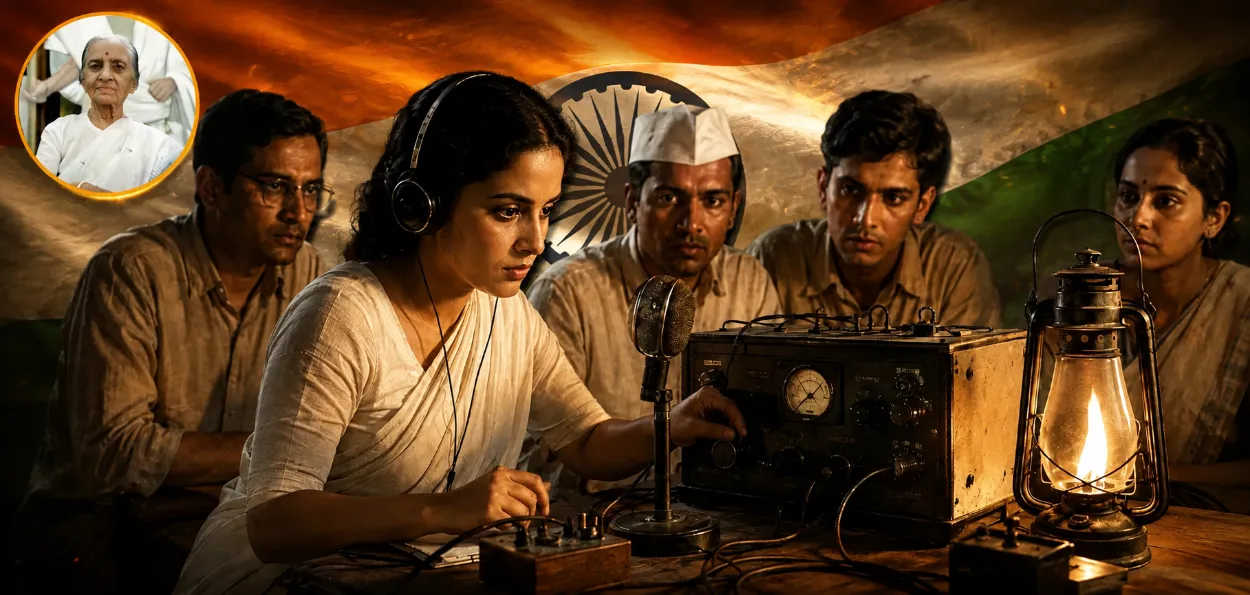
This announcement was made by Dr Usha Mehta, a young freedom fighter, on the first secret independent radio station set up by young nationalists during the Quit India Movement of 1942.
The radio station was dedicated to conveying news of the freedom struggle to the masses despite the strict censorship imposed by the British government. On August 14, 1942, Usha Mehta and her colleagues successfully developed a portable radio transmitter, through which Congress Radio began broadcasting. It soon became a powerful voice of resistance.
On August 8, 1942, at the All India Congress Committee meeting in Bombay, Mahatma Gandhi gave the historic call of “Quit India” and asked the British to leave India. The following morning, the government arrested Gandhi, Jawaharlal Nehru, Sardar Vallabhbhai Patel and almost all the prominent Congress leaders. The British believed that the arrests would derail the movement. Instead, young students, workers and ordinary citizens took over its leadership.
At the same time, strict restrictions were imposed on newspapers, preventing them from publishing news about the movement. The need for an independent means of communication became increasingly urgent.
It was in this atmosphere that Usha Mehta and her colleagues decided to establish a clandestine radio station to circumvent censorship. At the time, three different groups were attempting to set up such radio channels. Mehta eventually persuaded a radio mechanic to build a portable transmitter.
Who was Usha Mehta?
Born in Gujarat, Usha Mehta was deeply influenced by Mahatma Gandhi from childhood. She attended the 1942 All India Congress Committee session in Bombay, where she listened to Gandhi, Nehru and Sardar Patel. She realised that the freedom movement needed a radio station free from government control.
 Usha Mehta in her younger days
Mehta had studied revolutionary movements in different countries and understood the potential of radio as an effective means of reaching large numbers of people. After the arrest of the Congress leadership, young activists held a meeting at which she proposed establishing a secret radio station to bypass censorship. The proposal received strong support.
Congress Radio made its first broadcast on August 14, 1942, with Mehta making the opening announcement: “This is Congress Radio broadcasting from some place in India on 42.34 meters.”
The words brought fresh hope to freedom fighters. For the first time, an underground broadcasting station was presenting an alternative account of the freedom struggle to the public, in contrast to official broadcasts. The announcement became a regular feature of every programme.
Although Mehta led Congress Radio, several others played important roles. Socialist leader Dr Ram Manohar Lohia provided speeches and messages, while Achyutrao Patwardhan and other Congress leaders were associated with the project.
Setting up the station was expensive. Initially, a relative of Mehta offered to sell her jewellery to meet the expenses, but Babubhai Khakhar later arranged the necessary funds. Vithaldas Jhaveri played a key role in acquiring the broadcasting equipment and got the transmitter made by radio engineer Nariman Abarbad Printer. Nanak Motwani, a well-known radio businessman in Bombay, secretly supplied essential equipment.
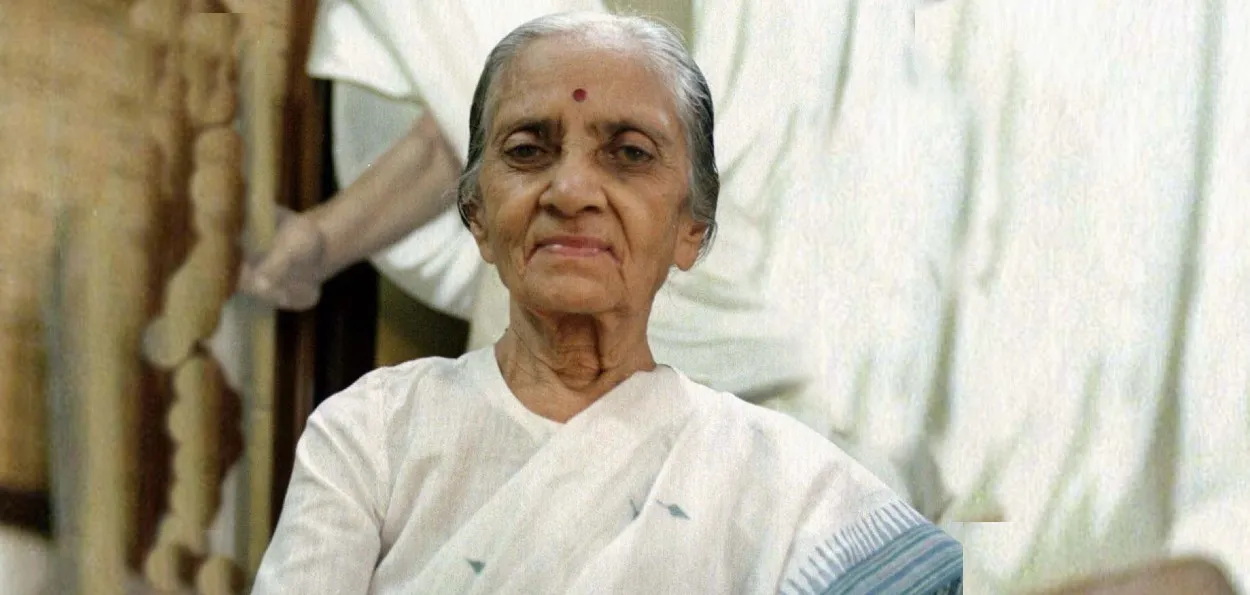 Usha Mehta
Running Congress Radio was extremely risky. The British intelligence services were constantly searching for it, forcing Mehta and her colleagues to keep moving.
According to historical records, the station changed locations seven or eight times in about two and a half months. It initially broadcast from the Sea View Building in Bombay before moving to Ratan Mahal on Walkeshwar Road, Ajit Villa on Laburnum Road, Laxmi Bhavan, Sandhurst Road, Parikhwadi in Gurgaon and finally Paradise Bungalow near Mahalakshmi Temple. The frequent shifts were intended to prevent the British from tracing the radio signal.
Congress Radio broadcast in both Hindi and English. Initially, programmes were aired twice a day, but as the danger increased, the frequency was reduced to once a day. The broadcasts included national anthems and patriotic songs, particularly “Saare Jahan Se Achcha” and “Vande Mataram”, as well as messages from Gandhi, Lohia and other leaders.
Reports of protests, police firing, arrests and other developments in the freedom struggle were also broadcast. News of the bombing in Chittagong, public protests in Jamshedpur and the Ballia uprising reached listeners through Congress Radio.
A prominent feature of the broadcasts was their direct appeal to young people and students to join the freedom struggle. One historic message urged them: “Education can wait but freedom cannot.”
The words inspired thousands of students to join the movement, with many boycotting schools and colleges and taking part in protests.
Women and children also played an important role in keeping the underground network functioning. As the police closely watched young male activists, women and children were often entrusted with carrying secret messages, documents and essential supplies between locations. This strategy helped the network evade detection for months.
The impact of Congress Radio
Congress Radio operated for only about two and a half months, but its impact was considerable. People gathered around their radio sets at appointed times to listen to the secret broadcasts.
 Padma Vibhushan and Usha Mehta
At a time when official sources largely reflected the government's position, Congress Radio offered an alternative account of events. It reported police operations, demonstrations, arrests, firing incidents and messages from national leaders, boosting public morale and helping sustain the momentum of the Quit India Movement.
Its growing popularity alarmed the British administration. Intelligence agencies and police teams repeatedly tried to locate the transmitter, conducting raids and tracking signals. But the constant movement of the station enabled Mehta and her colleagues to evade arrest.
The broadcasts eventually convinced the British authorities that Congress Radio was more than an underground radio station—it had become an important centre of the wider freedom movement.
How was Congress Radio traced?
The British finally located the station through technical means. According to some historical accounts, information obtained during the interrogation of a radio technician helped the police identify its location.
On November 12, 1942, while Mehta was broadcasting from a secret location in Gurgaon, the police raided the premises. She and her colleagues were arrested, while the transmitter, broadcasting equipment, written records and other materials were confiscated.
Thus, after about two and a half months, the voice of Congress Radio was silenced.
Trial and imprisonment
Following her arrest, Mehta and her associates were tried in a special court. The proceedings continued for several weeks, and she was sentenced to four years of rigorous imprisonment and sent to Yerwada Jail in Pune.
The British authorities subjected her to sustained pressure to disclose the names of her associates and details of the underground network. She was also offered inducements, and according to some accounts, even the prospect of higher education abroad in exchange for information.
Mehta rejected the offers and refused to disclose the identities of her associates. She was interrogated repeatedly for about six months, but despite the mental pressure and harsh treatment, she remained steadfast.
The rigours of imprisonment affected her health, but not her resolve. She was the only woman arrested in the case to receive a four-year sentence of rigorous imprisonment.
ALSO READ: Letters of Tololing hero Captain Vijayant Thapar are testament to his bravery
After her release in 1946, Mehta continued her public and academic life. She pursued higher education, became a distinguished teacher of political science at the University of Mumbai and worked to promote Gandhian thought. In recognition of her contribution to the freedom struggle and public life, she received several honours.
Congress Radio may have existed for only a brief period, but it occupies a significant place in India's freedom struggle. At a time when newspapers were censored and official channels controlled the flow of information, the clandestine station gave people access to an alternative national voice. Its broadcasts challenged colonial propaganda, kept the public informed and demonstrated the power of communication as an instrument of resistance.
_(1).webp "Sufi Heritage of Gaur")
_(1).webp "The Khanqah of Pandua, Malda, West Bengal")






_(1).webp "Graves of Sufis at Triveni-Saptagram Khanqah")
.webp)