




Vidushi Gaur/New Delhi
Captain Vijayant Thapar, who was posthumously awarded the Vir Chakra for his bravery during the Kargil War, left behind three deeply personal letters to his family that are testimony to his indomitable spirit in fighting for India's territorial integrity.
Born into a military family, Captain Vijayant grew up with a strong sense of duty towards the nation. His father, Colonel V.N. Thapar, had served in the Indian Army, and the young Vijayant inherited the desire to wear the uniform. He was commissioned into the 2 Rajputana Rifles, one of the Army's distinguished infantry regiments.
In 1999, when Pakistan-backed forces occupied strategic heights in Kargil, Captain Thapar was serving with his battalion in the Drass sector. The young officer was entrusted with responsibilities that demanded courage far beyond his years.
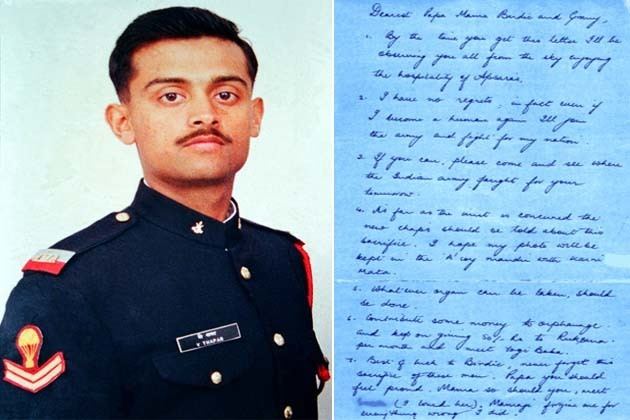 Captain Vijayant Thapar
His defining battle came during the operation to capture Knoll, a strategically important position in the Tololing complex. The enemy held the heights and had established well-protected positions from which they could target advancing Indian troops.
On the night of 28-29 June 1999, Indian troops launched an assault to recapture the position. Captain Thapar and his soldiers advanced through extremely difficult terrain under intense firing. During the battle, he moved towards an enemy position and helped neutralise it, displaying remarkable courage even as the assault became increasingly dangerous.
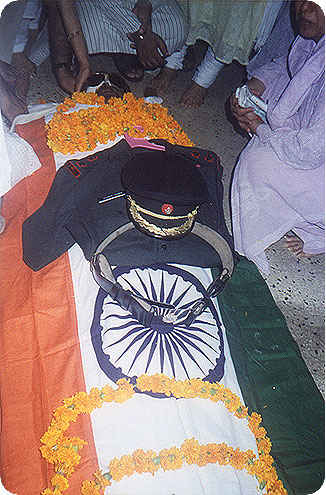 Mortal remains of Captain Vijayant Thapar
He was eventually hit by enemy fire and succumbed to his injuries. He was martyred at the age of 22.
For his conspicuous bravery and leadership in the face of the enemy, Captain Vijayant Thapar was awarded the Vir Chakra posthumously.
But perhaps the most enduring window into the young officer's mind is not his citation. It is a letter he wrote to his parents before his final battle.
In that letter, Vijayant spoke about his hopes, his faith and his understanding of the possibility that he might not return. He wrote with the emotional honesty of a son who knew that his parents would worry, yet did not want them to be consumed by grief.
 Captain Vijayant Thapar
One line has stayed with generations of Indians: "If I come back, I will have a lot of stories to tell you. If I don't, please don't cry."
His words were not an expression of fear. They reflected the quiet acceptance of a soldier who understood the risks of his profession.
He also wrote about the people he had met during his posting and expressed concern for those living in the difficult terrain of Kashmir. His letter revealed something often hidden behind the image of a decorated soldier, the compassion of a young man who cared deeply about ordinary people.
For his parents, however, the letter would eventually become both a source of unbearable pain and immense pride.
Vijayant had gone to war as a young officer. He returned home only in memory.
READ MORE: Sufiya Khan sets Kanyakumari to Karakoram world record!
Captain Vijayant Thapar's story has survived because his courage was matched by his humanity. His final letter allows us to see beyond the uniform, to the son, brother, friend and young man behind the soldier.









.webp)