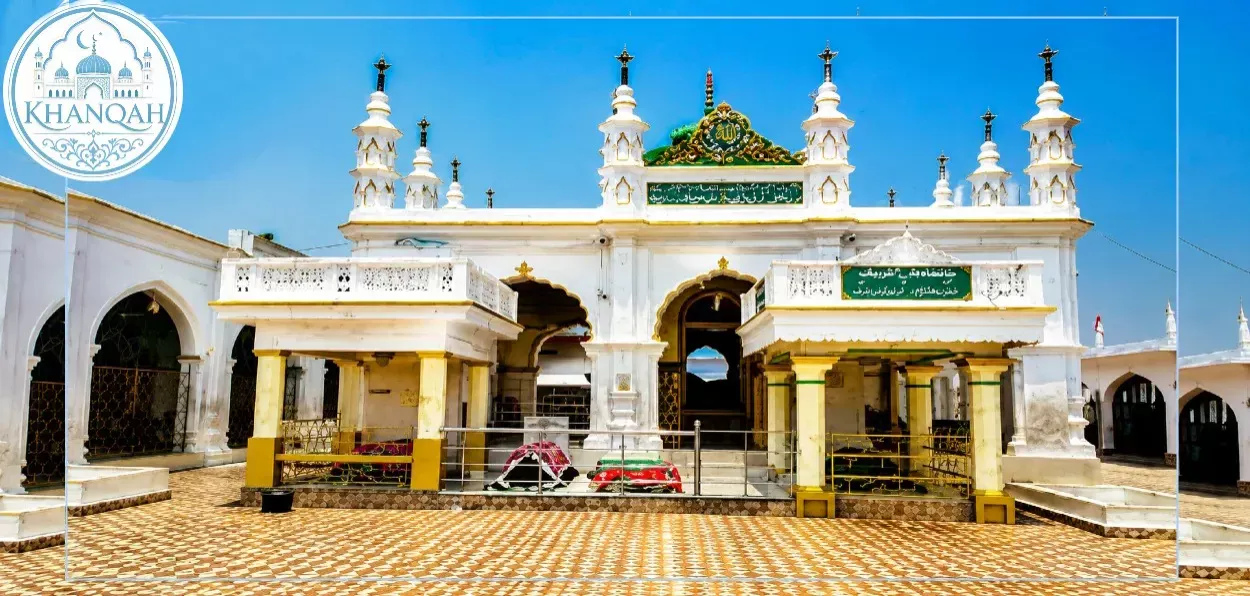
_(1).webp "Khaqah Pirana Pir of Gaur, West Bengal")
Shampi Chakraborty Purkayastha
The history of the ancient city of Gaur in Malda is not merely a history of kings and emperors, palaces and mosques. The land is also deeply connected with Bengal’s long and rich tradition of Sufi spirituality.
One of the most important names in this history is Sheikh Akhi Sirajuddin Usman. His mausoleum and dargah near Sagar Dighi in Gaur is today known as Pirana Pir. According to information from the Malda district administration, the dargah is located about 6.5 kilometres southwest of Malda town. Akhi Sirajuddin Usman played an important role in establishing and organising the Chishti order in Bengal.
Akhi Sirajuddin Usman was a disciple of the renowned Delhi Sufi saint Hazrat Nizamuddin Auliya. He received an extensive education in Islamic sciences in Delhi and obtained spiritual initiation and khilafat from Nizamuddin Auliya. Historical sources say that Nizamuddin Auliya referred to him as “Aina-i-Hindustan”, or “Mirror of Hindustan”, because of his scholarship and spiritual stature.
After the death of Nizamuddin Auliya, Akhi Siraj returned to Bengal and began spreading Sufi teachings in the Gaur and Pandua regions. He played a significant role in establishing and organising the Chishti tradition in Bengal. One of his prominent disciples was Makhdum Sheikh Ala-ul-Haq. Through him, the Chishti Sufi tradition in Pandua became even stronger.
As a result, Akhi Siraj’s khanqah was not merely a centre of spiritual practice. It also became a centre of education, moral discipline and humanitarian values.
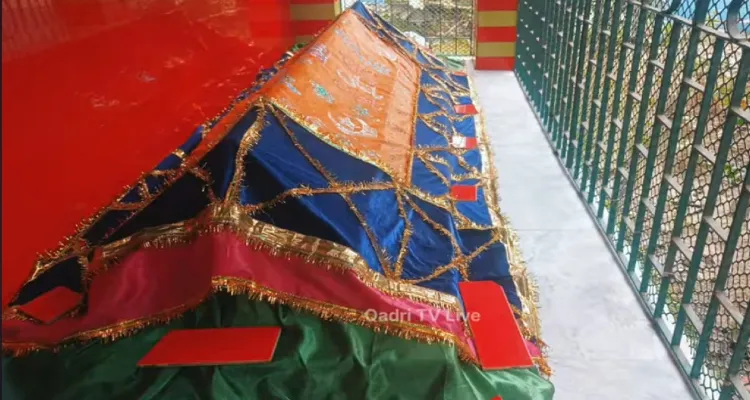 The graves of Sufis at Khaqah Pirana Pir
There is also an important historical fact concerning the connection between Akhi Sirajuddin Usman’s life and Gaur. For a long time, he was believed to have been a resident of Badaun. However, modern research has raised questions about this belief. In the work Akhbar-ul-Akhyar by historian Abdul Haq Dehlavi, he is referred to as “Akhi Siraj Gauri”. This provides historical grounds for the view that he was associated with Gaur.
His year of death is mentioned as 758 Hijri, or 1357 CE. According to historical accounts, in accordance with his wishes, he was buried near the place where his sacred robe had been buried, at the northwestern edge of Sagar Dighi in Gaur. A shrine or mausoleum was later constructed over his grave. The present Pirana Pir Dargah is a continuation of that tradition.
There is an important point regarding the name “Piran-i-Pir”. Akhi Sirajuddin was traditionally known among local people as “Purana Pir” or “Piran-i-Pir”. “Purana Pir” means the old Pir, while “Piran-i-Pir” means the Pir of the Pirs. However, from the perspective of historical sources, “Purana Pir” appears to be more plausible because the title “Piran-i-Pir” is generally associated with Hazrat Abdul Qadir Jilani in Indian Muslim society. Therefore, referring to him as the “Purana Pir of Gaur” is historically safer in a news report.
The present architecture of the dargah also bears testimony to its history. Two inscriptions associated with the entrance of the mausoleum indicate that its two gateways were constructed during the reigns of Sultan Alauddin Hussain Shah and Sultan Nasiruddin Nusrat Shah at later periods. Historical sources also mention that Hussain Shah constructed a shed, or sikaya, at the dargah to provide drinking water. Thus, the dargah is also a tangible example of the respect and patronage extended by rulers of the Sultanate period towards the Sufi saint.
Even today, devotees and visitors from different parts of the country visit Pirana Pir Dargah. Every year on Eid-ul-Fitr, a special programme is organised to commemorate the death anniversary of Akhi Sirajuddin. On this occasion, there is a tradition of bringing the flag of Makhdum Jahania Jahangasht from Pandua and the panja of Nur Qutb-ul-Alam to this dargah in Gaur as a mark of respect. This tradition continues to preserve the historical and spiritual connection between the Sufi centres of Gaur and Pandua.
ALSO READ: Grateful nation honoured Lt Balwan Singh for Tiger Hill operation with MVC
Standing beside Sagar Dighi, Pirana Pir is therefore not merely a mausoleum. It is a living monument to the development of the Chishti Sufi tradition in Bengal, the medieval history of Gaur and the spiritual beliefs of its people. The state government’s tourism information also lists Pirana Pir among Malda’s important historical and religious attractions.
_(1).webp "Sufi Heritage of Gaur")
_(1).webp "The Khanqah of Pandua, Malda, West Bengal")








_(1).webp "Graves of Sufis at Triveni-Saptagram Khanqah")