




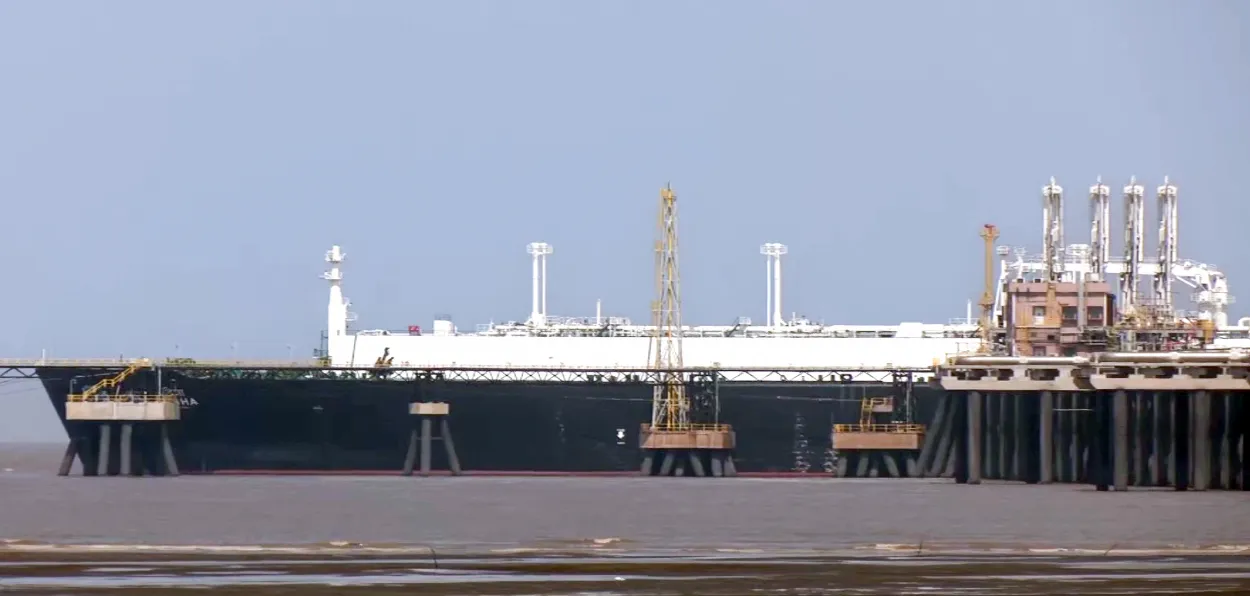
 Sushma Ramachandran
The opening of the Strait of Hormuz, even on a limited basis, has had a moderating effect on global oil markets. This has been bolstered by reports of dissensions within the Organisation of Petroleum Exporting Countries and its allies, as Iraq has hinted it could leave the cartel. These developments have brought the price of oil down to pre-war levels.
The benchmark Brent crude is ruling at 72 dollars per barrel while the West Texas Intermediate crude has gone even lower at around 69 dollars. As for India, the price for its basket of crudes has also fallen sharply to around 70 dollars, a heartening development for a country that imports over 85 per cent of its fossil fuel requirements.
The outlook for oil prices remains uncertain, however, as it hinges on several critical factors. The first is the time taken to end the war launched on Iran by the U. S and Israel. Though a memorandum of understanding has been signed between the U.S. and Iran, it remains a fragile peace till the conclusion of a final pact. Attacks on vessels traversing the Strait are growing, while Iran has claimed attacks on U.S. military bases.
Apparently, negotiations are going on simultaneously over the development of nuclear arms by Iran as well as compensation to repair infrastructural damage due to the war. Sanctions may have been lifted for the time being on Iran’s oil exports, but these will have to be removed on a permanent basis. Only then will it be possible for the country to raise revenues to prop up an economy which is in shambles right now.
In case peace ultimately descends on the region after the deal is finalised, oil prices could come down even further. Even so, there continue to be sticky issues that would have an impact on oil markets. These include the role of Israel in the agreement, especially relating to the strife with Hezbollah in Lebanon. The timeline for ending the war will thus play a major role in determining the future of oil prices in the coming months.
The second factor that will affect the movement of global oil markets is the policy stance of the powerful Saudi-led cartel, OPEC Plus. OPEC became OPEC Plus in 2016 when other non-OPEC oil producers led by Russia joined it to bring stability to oil markets. The expanded cartel has already been weakened by the exit of the U.A.E in April, and the situation could worsen in the coming days. Iraq, the second largest oil producer in the group, has recently signalled its concern over the rigid production quotas that have reduced revenues for its economy. The country’s Oil Ministry spokesperson warned that withdrawal from the group may be an option in case the plea for raising output to better reflect its production capacity and long-term development plans is not met.
Iraq needs to raise oil production to revive an economy that has been damaged, like many others in the region, by the West Asian war. Its normal oil production was earlier around 4.5 million barrels per day (bpd), of which 3.5 million bpd was exported, largely through the Strait of Hormuz. Output fell to as low as 1.3 million bpd during the war but has now risen yet again to about 2.3 million bpd. Since oil sales account for as much as 90 per cent of the country’s revenues, the production curbs laid down by the cartel have been an obstacle to economic progress.
OPEC Plus has indicated it would reassess the production quotas in the light of Iraq’s concerns, but there seems to be a real possibility of the country leaving the group. In case such a development takes place, OPEC Plus would find it difficult to continue the entire regime of output quotas. This longstanding system had evolved as a way of keeping market prices at levels considered adequate to meet the revenue needs of oil-exporting countries.
In recent years, however, the output curbs have not had much impact on prices, which have drifted steadily lower owing to declining demand, especially from large consumers like China. Supply has also risen faster than expected owing to increased production from shale oil wells in the U.S. as well as the emergence of non-OPEC suppliers like Guyana and Brazil.
Prices have shot up in the short run during the Iran war largely due to the blockade of the Strait of Hormuz. But with the expectation of peace on the horizon, prices have once again settled down to pre-war levels. In case OPEC Plus continues to face troubles such as the exit of leading member countries, the rest of the group would also seek to produce more oil than is being stipulated so far. This would lead to an even greater softening of international market prices.
It would thus be safe to conclude that if the U.S. and Iran arrive at a peace agreement within the next two months, world oil prices would stabilise at levels around 65 to 75 dollars per barrel by the end of the year. Any implosion within OPEC Plus would accentuate these trends. Conversely, continuation of the conflict would have the opposite result. In case the Strait of Hormuz is shut yet again, prices would shoot up to around 100 dollars per barrel. Even now, vessels are moving through this passage at a far slower rate than in the past.
The entire world is waiting with bated breath for an end to the conflict, which has hit the global economy hard as it has created shortages of petroleum products, petrochemicals and fertilisers. All these products have an enormous downstream impact on a wide range of goods. As a result, inflationary pressures are mounting in most parts of the world.
India, like many other economies, is looking forward to a speedy resolution of this crisis. As a country that imports most of its fossil fuel needs, it is already facing higher prices of oil products as well as downstream goods. At the same time, the prognosis for the medium term is better than had been expected about two months ago. Oil prices have already settled down to pre-war levels despite the uncertainty over the final agreement between the US and Iran.
READ MORE: Fauzia Dastango's journey of reviving the art of storytelling
The oil import bill may thus not be as high as had been anticipated earlier. This also reduces the prospect of a widening current account deficit for 2026-27, though inflationary pressures are bound to mount in the economy. One can thus make the cautious prediction that India is set to continue on a high growth path in the medium and long term despite the continuance of war clouds over West Asia.

_(1).jpg "Visitors gather at the Santosh Mitra Square Durga Puja pandal, themed on the 150th anniversary of Vande Mataram and its historic role in India's freedom movement, ahead of the festival, in Kolkata")

.jpg "Gujarat’s women entrepreneurs bring their craftsmanship to life during Navratri")










_(2).webp)
.webp)