




Amir Suhail Wani
Bhagavad Gita, one of the most ancient scriptures, is not only about Sanatan Dharma; it is one of humanity's greatest conversations on duty, morality, self-realisation, and the relationship between the individual and the Divine. While rooted in the spiritual soil of India, the Gita has repeatedly transcended the boundaries of religion, geography, and culture, attracting readers from every conceivable background.
Among the most remarkable chapters in this long history is the deep engagement of Muslim scholars, mystics, translators, and intellectuals with the Gita. Their translations into Persian and Urdu, together with their philosophical reflections upon its teachings, stand as enduring testimony to the universality of this extraordinary scripture. Muslim scholars regarded it as a profound repository of ethical and metaphysical wisdom, worthy of careful study and respectful interpretation.
The earliest and perhaps the most celebrated example of this engagement was by Prince Dara Shikoh, the eldest son of Emperor Shah Jahan. Dara Shikoh occupies a unique place in the history of comparative religion.Deeply influenced by Islamic mysticism, especially the teachings of Ibn Arabi and the Qadiri Sufi order, he devoted much of his life to building bridges between Islam and the spiritual traditions of India. Although he is most famous for translating the Upanishads into Persian as Sirr-i-Akbar (The Great Secret), his intellectual circle also encouraged the study and translation of the Bhagavad Gita.
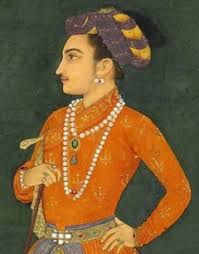
Dara regarded the philosophical teachings of Krishna as profound reflections on the nature of the soul, detachment, devotion, and the Divine. His efforts were motivated neither by political expediency nor by theological compromise, but by a conviction that divine wisdom cannot be monopolised. In many respects, his work anticipated modern interfaith dialogue by several centuries.
The Persian language served for many centuries as the language of administration, literature, and scholarship throughout much of the Indian subcontinent. It was, therefore, natural that several Muslim scholars undertook the translation of Hindu scriptures into Persian. These translations opened entirely new intellectual horizons. They enabled Muslim scholars to engage directly with concepts such as Karma, Dharma, Yoga, and Moksha. At the same time, they introduced Hindu philosophy to scholars from Iran, Central Asia, and other parts of the Persian-speaking world. The Bhagavad Gita thus became not only an Indian scripture but also a participant in the wider conversation of Islamic philosophy and Sufi metaphysics.
The Sufi tradition, in particular, displayed a remarkable openness towards India's spiritual heritage. Many Sufi scholars believed that wisdom is a divine gift that may manifest itself in different lands and among different peoples. The Qur'an itself speaks of prophets being sent to every nation, and numerous Muslim thinkers interpreted this universal outlook as an invitation to study the ethical and spiritual achievements of other civilisations.
It is therefore not surprising that several Sufi scholars found resonances between the Gita's teachings on self-discipline, purification of the ego, detachment from worldly desires, and complete surrender to God, and the spiritual path described in Islamic mysticism. They recognised striking similarities in their emphasis upon inner transformation. For many Sufis, the greatest battle was the struggle against the lower self, a theme that finds powerful echoes in the Bhagavad Gita's repeated insistence upon mastery over desire, anger, attachment, and ego.
As Persian gradually gave way to Urdu as the principal literary language of North India, Muslim scholars continued this tradition by translating the Bhagavad Gita into Urdu. Among the most respected names is Khwaja Dil Muhammad, whose translation introduced countless Urdu readers to Krishna's dialogue with Arjuna in clear and elegant prose. His work did not seek to reinterpret the Gita through an Islamic framework or reduce its distinctive philosophical identity. Rather, it aimed to present the scripture faithfully while making its profound ethical insights accessible to readers who might otherwise never encounter it.
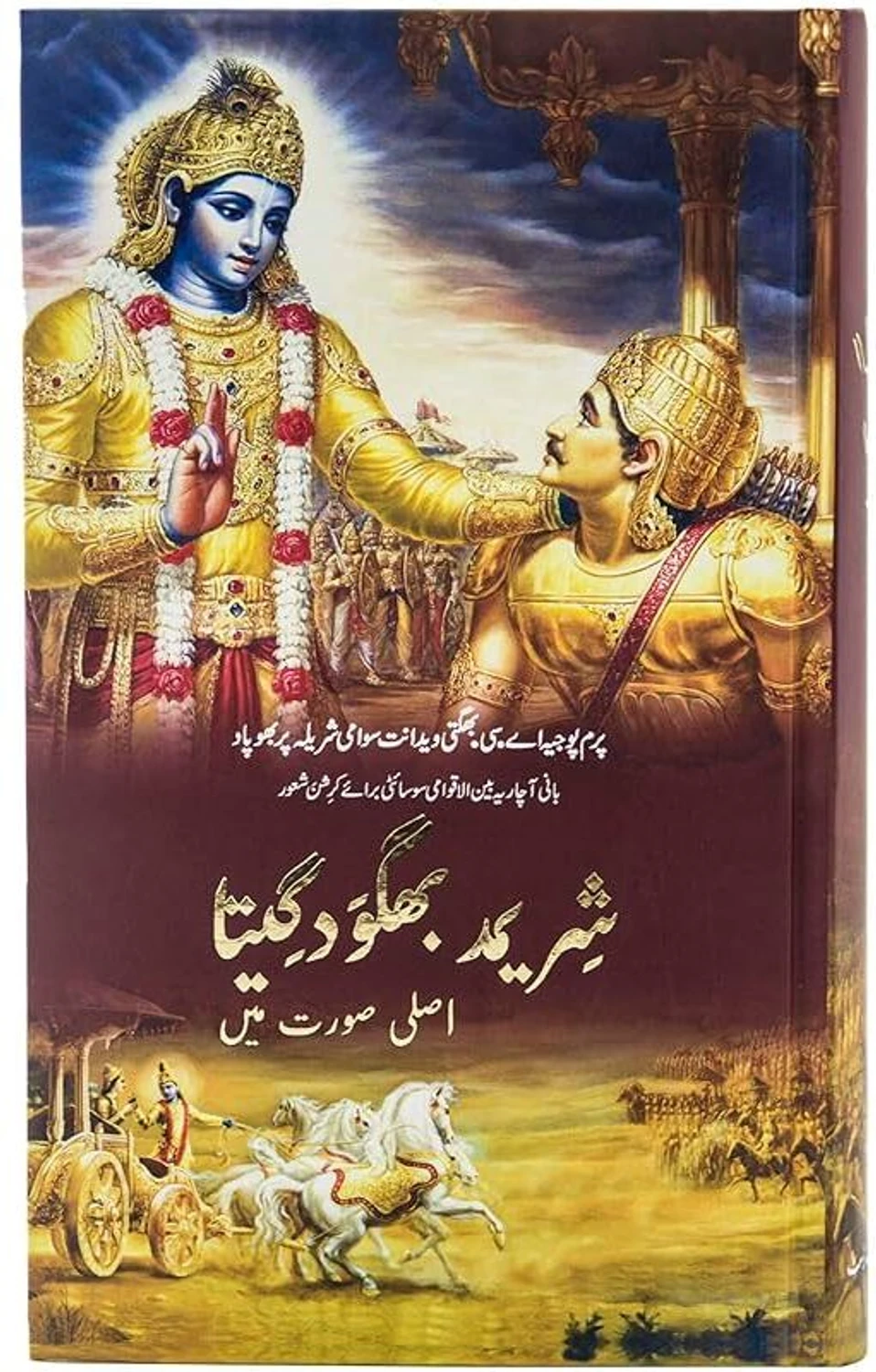 Bhagvad Gita in Urdu
Through such translations, many Muslims discovered that the Gita addresses universal human questions: How should one act when confronted by moral uncertainty? How does one remain steadfast amid suffering? What is the relationship between action and renunciation? How can one overcome fear, grief, and despair? These are questions that transcend religious affiliation and speak to every reflective human being.
The flourishing culture of translation was further strengthened by the remarkable publishing activities of the famous Nawal Kishore Press of Lucknow during the nineteenth century. This publishing house became one of the greatest centres for printing Sanskrit, Persian, Arabic, and Urdu classics, often employing scholars from different religious communities to edit and translate texts. Hindu scriptures, including the Bhagavad Gita, were published alongside Islamic theological works, Persian poetry, and classical literature, creating an intellectual environment in which mutual learning became possible.
Such institutions embodied the composite culture of India, where scholarship was judged by its intellectual merit rather than the religious identity of its author. The collaboration between Hindu and Muslim scholars in preserving and disseminating India's classical heritage remains one of the finest examples of cultural coexistence in South Asian history.
Several modern Muslim intellectuals also regarded the Bhagavad Gita as one of the world's greatest philosophical works. Scholars such as Syed Abdul Latif emphasised that its teachings on selfless action, moral responsibility, inner discipline, and devotion possess universal significance.
Likewise, Muhammad Mujeeb, the distinguished educationist and Vice-Chancellor of Jamia Millia Islamia, repeatedly argued that Indian Muslims could not fully understand the civilisation to which they belonged without engaging seriously with its classical texts, including the Bhagavad Gita. Such scholars rejected the notion that studying another religion's scripture constituted a threat to one's own faith.
On the contrary, they believed that genuine knowledge deepens rather than diminishes religious conviction, while ignorance breeds misunderstanding and prejudice. Their scholarship reflected an intellectual confidence that has become increasingly valuable in today's polarised world.
Scriptures are light from the skies meant to illuminate our paths on Earth. pic.twitter.com/rWcnos2szO
— Amir Suhail Wani (@AmirSuhailWani2) June 29, 2026
Even where direct translations were absent, the influence of the Gita upon Muslim thinkers can often be discerned in broader philosophical conversations. The poet-philosopher Muhammad Iqbal, though firmly rooted in Islamic theology, admired many aspects of Indian philosophical thought. His doctrine of Khudi, emphasising moral strength, purposeful action, and spiritual self-realisation, has often been compared with the Gita's teaching of Nishkama Karma—the performance of duty without attachment to personal reward.
Although important theological distinctions remain between the two systems, both reject fatalism and passive resignation, urging human beings to fulfil their responsibilities with courage, discipline, and unwavering trust in God. Such convergences reveal that profound ethical insights frequently emerge across religious traditions, even when their doctrinal foundations differ.
The translations of the Bhagavad Gita by Muslim scholars, therefore, represent far more than literary achievements; they symbolise a civilizational ethos grounded in mutual respect, intellectual curiosity, and spiritual humility.
The Bhagavad Gita continues to inspire Hindus in their devotion, philosophers in their inquiry, statesmen in their ethics, psychologists in their understanding of the human mind, and seekers of every background in their quest for meaning. The fact that distinguished Muslim scholars devoted years of their lives to translating and interpreting this remarkable text is among the strongest evidence of its universality.
ALSO READ: 10 Muslim women achievers in the field of art and creativity
It speaks to the enduring power of wisdom to transcend boundaries of language, culture, and creed, affirming that while humanity may worship differently and articulate its beliefs in diverse ways, the search for truth, justice, self-mastery, and the Divine remains a common inheritance shared by all.

.jpg "Gujarat’s women entrepreneurs bring their craftsmanship to life during Navratri")













.webp)