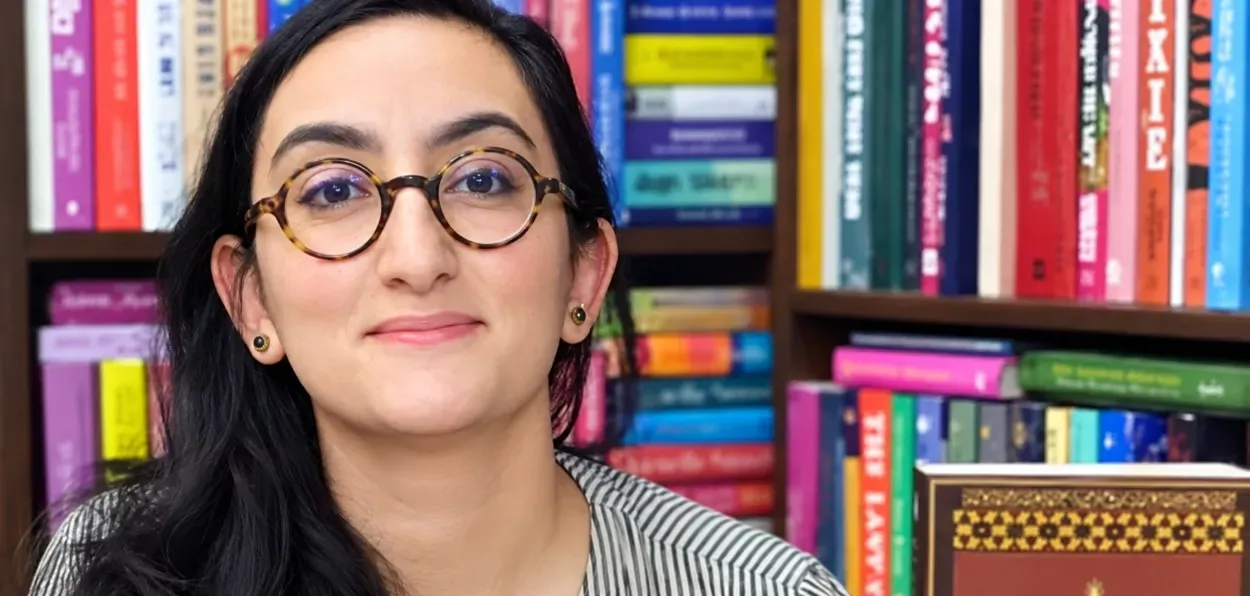
.webp "Farkhanda Khan Fida")
Onika Maheshwari
Twenty-eight years ago, a young artist named Farkhanda Khan attended an art exhibition in Delhi, where she unexpectedly came face to face with the legendary painter Maqbool Fida Husain. Mesmerised by the barefoot master who towered over India's art world, she could scarcely imagine that this brief encounter would transform her life.
Though she possessed artistic talent, Farkhanda was uncertain about the direction her work should take. She approached Husain with a simple question: "Husain Sahab, what should I paint?"
With a warm smile, he replied, "Paint only what emerges from your heart and soul."
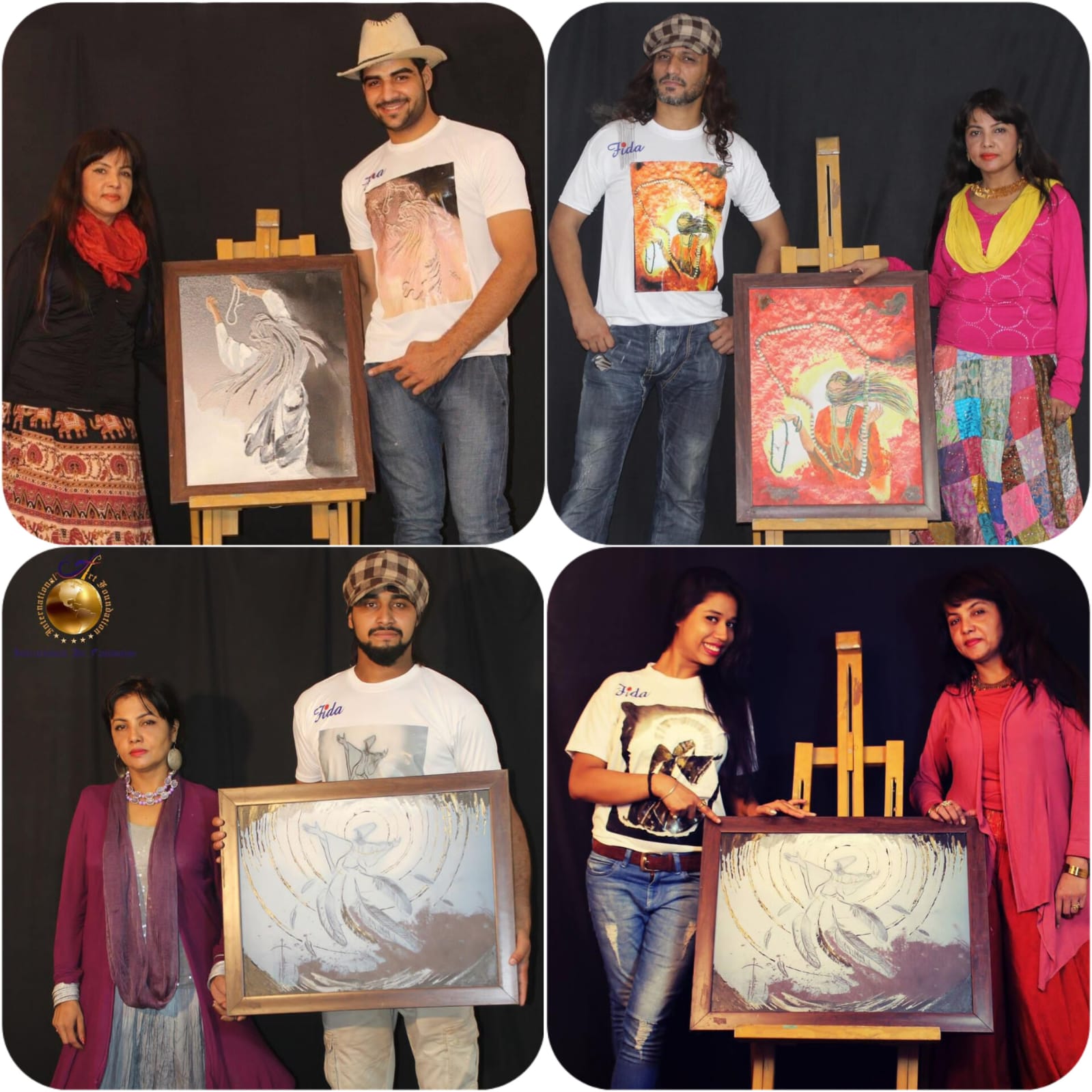 Farkhanda Khan's various works
Those words became the guiding principle of her artistic life. Inspired by her idol, she later adopted "Fida" as the suffix to her name, becoming Farkhanda Khan Fida. Even today, she recalls this encounter as the defining moment of her artistic journey.
Farkhanda was born in Kalinjar village in Uttar Pradesh's Banda district. While the region is known for its rich history and tales of valour, her home nurtured a different legacy—that of art. Her father, Mohammad Saeed Khan, served as an officer in the Indian Air Force. After fulfilling the demands of military life during the day, he spent his evenings painting.
An amateur artist, he created vibrant images of Radha-Krishna and Goddess Saraswati on pieces of cloth and discarded gramophone records. Watching her father paint late into the night left a lasting impression on young Farkhanda. It taught her that art was more than a hobby—it was a profound form of self-expression.
.jpeg) Farkhanda Khan during a show abroad
Farkhanda Khan during a show abroad
She received her early education in Pune and Kakinada before pursuing a Master's degree in Fine Arts at Aligarh Muslim University (AMU), where she graduated with a gold medal. She later earned a doctorate in Modern Art from Nagpur University.
For some time, she taught art at Salwan Public School in Delhi. After her marriage, she devoted herself more fully to her artistic career.
A turning point came when Sufism became central to her creative vision. After completing her studies at AMU, she explored the relationship between art, religion, and spirituality. This quest brought her to Delhi's Hazrat Nizamuddin Dargah, where the atmosphere of devotion, the strains of qawwali, and the spirit of inclusiveness deeply moved her.
For Farkhanda, Sufism represents inner peace. She believes that when a person attains inner tranquillity, hatred, jealousy, and conflict naturally fade away.
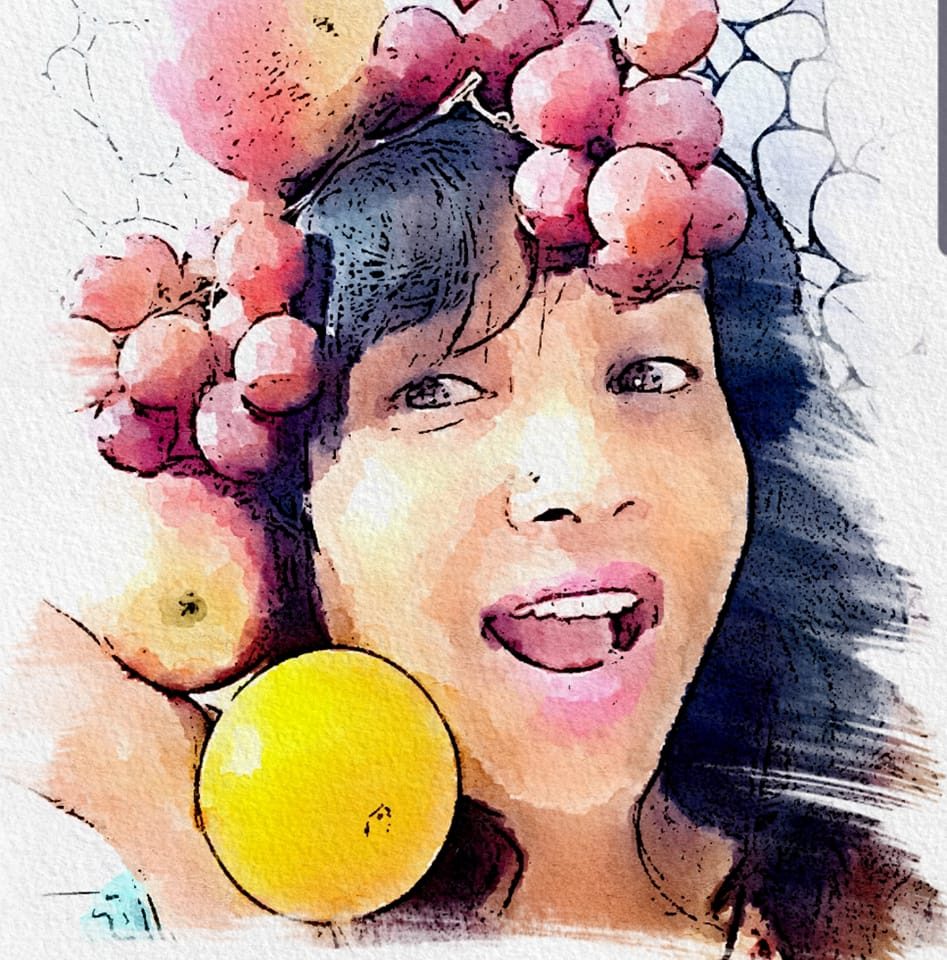 Farkhanda Khan's self portrait
Her paintings gradually began to reflect the spirituality of Sufi saints, the serenity of dargahs, and the search for divine love. Through her choice of colours and expressive brushwork, she seeks to transport viewers into a world defined by harmony, compassion, and brotherhood.
The year 2002 marked a major milestone in her career when she held her first major solo exhibition. The simplicity of her work and its spiritual depth won widespread appreciation in India and abroad. Her paintings found buyers in countries such as the United Kingdom and Bahrain. One of her works was sold in Bahrain for ₹5 lakh, affirming Husain's advice that art created from the heart transcends all boundaries.
Farkhanda's interests have extended beyond painting. While living in Delhi, she performed in theatre with noted actor Yaseen Khan and appeared in Daddy, directed by filmmaker Mahesh Bhatt. The experience broadened her understanding of society, particularly the lives of Indian Muslims.
She believes that Indian Muslims enjoy the freedom to practise their faith and preserve their cultural traditions, making them among the happiest Muslim communities in the world.
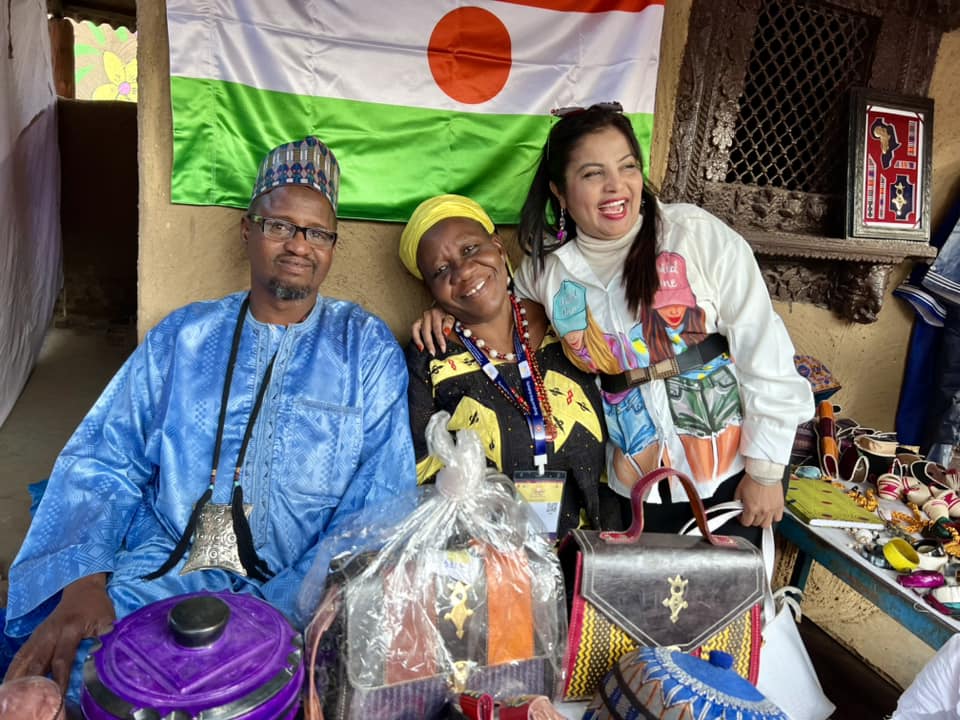 Farkhanda Khan's with African artists
Her artistic journey, however, was not without challenges. When she began painting portraits, she faced criticism from some who believed depicting human figures was religiously inappropriate. She remained undeterred.
Her response was simple: every human face is a unique creation of the Divine, and portraying that beauty through art cannot be wrong. She continued painting portraits with conviction, capturing the emotions and individuality of her subjects.
The COVID-19 pandemic also reshaped her outlook. It reinforced her belief that material success and outward display are temporary, while kindness, compassion, and service to others give life its true meaning.
Today, alongside her Sufi-themed works, she also paints on social issues. Through a series of paintings on water scarcity, she seeks to promote awareness about water conservation and environmental responsibility.
Dr. Farkhanda Khan Fida lives in South Delhi with her husband and two children and remains active on social media.
ALSO READ: 10 Muslim women achievers in the field of art and creativity
Her message to young people is straightforward: there is no substitute for hard work. She urges young women to break free from social and mental barriers, stand up for their rights, and let their talent speak for itself.