Rampur (Uttar Pradesh)
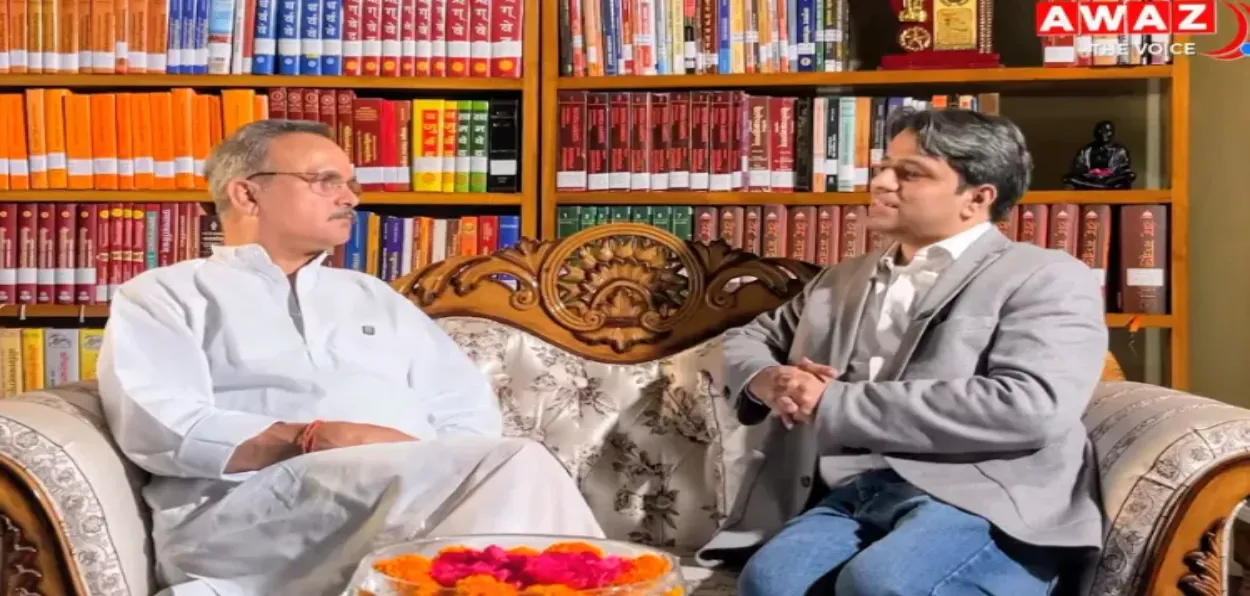
Dr Pushkar Mishra, Director of Rampur Raza Library, one of the most important repositories of the Indo-Islamic heritage, said the library would be digitised with the artificial intelligence-based “talking books” project and the establishment of world-class research centres.
Speaking to Saquib Salim of Awaz-The Voice in a special interview, Mishra said the library based in Rampur, Uttar Pradesh, is being noticed for the intellectual capital that it offers to global scholars.
Interview of the week -1
The library established at the end of the 18th century by successive Nawabs of Rampur is today a public library and houses rare manuscripts.
Mishra told Awaz-the Voice that from rare copies of the Ramayana to valuable manuscripts of Arabic, Persian, Urdu and Sanskrit are preserved there.
Mishra said that in the last few years, the library has received global recognition with researchers from Japan, America, Mongolia, etc. visiting it. During the conversation, he also emphasised that the Raza Library is a multilingual and multicultural institution where manuscripts of more than 21 languages.
Mishra feels that greater levels of tolerance, dialogue and mutual respect were the need of the hour, and that alone would ensure our next generations would inherit a better world to live in
He says that the Raza Library's role is to bring humans closer to each other through knowledge, culture and civilisation and build a more peaceful world.
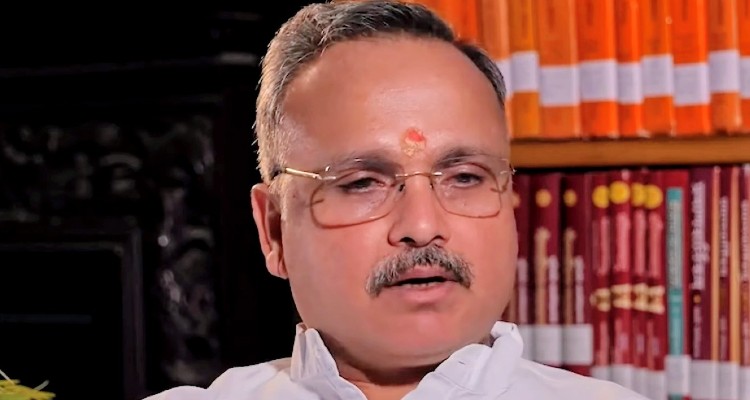 Dr Pushkar Mishra, Director of Rampur Raza Library
Excerpts from the interview:
Earlier, not many people in academic circles knew about the Rampur Raza Library. The situation has changed and people have started coming here. How did this happen?
People knew about the Rampur Raza Library, but this information was limited only to academic circles and researchers. Those who did high-level research knew that there was an extraordinary collection here. Researchers from abroad, especially from Iran, used to come here. When I took over the responsibility here, I tried to introduce this institution as much as possible through various means.
We contacted various embassies and told them how rare and important the collection is. Ambassadors of several countries have visited here. Diplomats of Tajikistan are also coming soon. Ambassadors of Azerbaijan, Lebanon and other countries have also visited here before. A delegation of ambassadors from European countries also came here. Thus, global awareness about this library has increased.
We have also established contacts with many countries through various cultural exchange programs under the Ministry of External Affairs of India. Discussions were held on the possibilities of cooperation with institutions of several countries, including Kazakhstan, Saudi Arabia, Indonesia, Iran and the United Arab Emirates. We also had an online bilateral meeting with the Government Museum Department of Saudi Arabia. Similarly, at a function of ambassadors of Central Asian countries, I got the opportunity to discuss the Rampur Raza Library in detail.
Within the country too, we organised programs in various universities, including JNU, Jamia Hamdard and Jamia Millia Islamia. Teachers and students participated in these programs. The result of all these efforts is that now researchers from different countries, including Japan, America and Mongolia are coming here.
Have the number of researchers also increased?
Yes, there has been a significant increase. Recently, a researcher came from Japan. A researcher from the University of California, USA, also came. There has also been a lot of interest in our collection in Mongolia because we have a unique and rare material related to Mongolian history. The main problem was the lack of information. Now that people are coming to know what is here, they are starting to come here.
When we came to your office, we saw a picture showing that the design of this building represents different religions. Similarly, there are manuscripts related to different languages, cultures and religions here. In the past, this aspect was not so prominent, but during your tenure, special emphasis has been given to it. Why do you think it is important to highlight it?
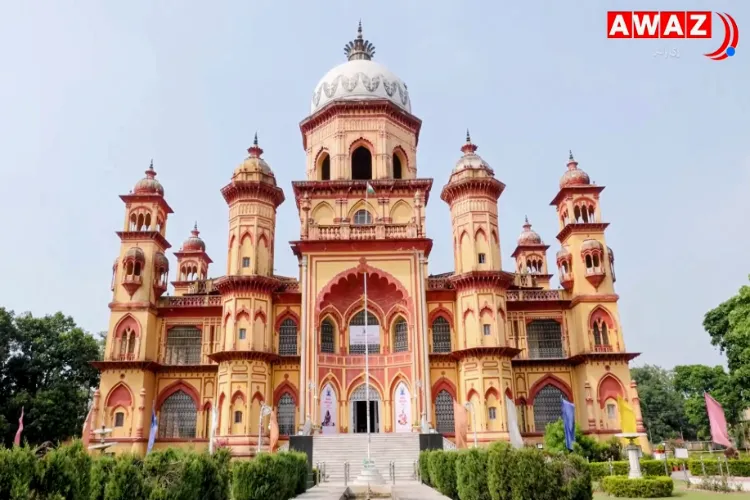 Rampur Raza Library
Today, the world is standing on the brink of a major conflict and war. For the peaceful, prosperous and secure future of the coming generations, we must adopt "Bhi Manisha" and abandon "He Manisha". "Bhi Manisha (Sanskrit)" means that my truth can also be right, and your truth can also be right. We can both do good for each other and achieve progress by adhering to our own beliefs and ideologies. Whereas "He Manisha" means that only my ideology is right, all others are wrong, and others have to follow my path, otherwise they have no right to live. This is the thinking that gives rise to violence and conflict.
If this mentality comes into a family, then even the family cannot function, and society and the world are far apart. I have believed in this ideology since I was a student at Jawaharlal Nehru University. When I first visited the Rampur Raza Library, I was told that the first of its eight minarets represents a mosque, the second a church, the third a gurdwara and the fourth a temple. Then I said, " What more beautiful example of "Bhi Manisha" can there be?
So this philosophy is not limited to the building but is included in the entire ethos of the institution?
Absolutely. Not only the building, but also its collection reflects this spirit. This institution has been multilingual, multicultural and multidisciplinary since its inception. There are manuscripts and books in more than 21 languages. There are a large number of manuscripts in Arabic, Persian, Urdu, Hindi, and Sanskrit. Persian manuscripts are the most numerous, followed by Arabic. Apart from this, we also have Talipatras (palm leaf manuscripts) in Tamil, Telugu, Sinhala, and Kannada. There are also manuscripts in Turkish and Pashto. That is why it is a truly multilingual institution.
This institution is very diverse not only in terms of languages, but also in terms of various sciences.
Yes. Nowadays, people talk about "multidisciplinary" or "interdisciplinary" education, but this tradition has existed at Rampur Raza Library for a long time. This library is a treasure trove of rare and important books on Ayurveda, astrology, philosophy, religions, history, literature and countless other subjects.
What do researchers come here for the most?
We have original edicts from the Mughal era, which bear the seals of the Mughal emperors. Similarly, we have rare miniature paintings that require a lens to view. Art and history researchers come here especially to study these treasures.
You are constantly highlighting the multicultural and multilingual aspects. Do you think its importance has increased more than ever in the current era?
Absolutely. This library is almost 250 years old. It was founded in 1774 with the establishment of the Rampur state. This institution has been promoting multicultural, multilingual and multi-subject values for two and a half centuries. If we do not accept each other today, then instead of books, our future generations will have guns and stones in their hands. We have to learn to live with each other, respect each other's thoughts and beliefs. I believe that a peaceful, prosperous and secure world of the future will come from this thinking.
You mentioned that manuscripts related to different religions and cultures are preserved here. Are there rare manuscripts of the Ramayana also here?
Yes, we have several rare copies of the Ramayana preserved here, and they are among our most important collections. For example, we have the "Masih Panipati Ramayana" of 1627. Similarly, the 18th-century Ramayana of Samir Chand is also preserved, which is a post-Aurangzeb era composition, and probably its writing began in the Mughal court itself. Apart from this, the Ramayana written in Urdu is also present in our collection.
People generally assume that since the Nawab of Rampur was a Muslim, and that too a Shia Muslim, then if there is a religious collection, it must be of an Islamic nature. In such a case, what does the presence of texts like the Ramayana indicate?
I always say this and we have also emphasised it on various occasions that the worldview of the Nawabs was not limited to just one religion or one culture. We have always appreciated this and tried to convey to the world that this multicultural, multilingual and multi-subjective point of view is the future of the world. This is not something new that we are doing today; it is a continuation of the same tradition that the Nawabs had established.
In today's political environment, there is often talk of polarisation. Do you think this has had an impact on such institutions as well?
READ MORE: Bhiwandi mosque opened doors to NEET parents, showed way to brotherhood
It is possible, although I have not done any formal research on it. But one thing is certain: when I saw that the Nawabs of Rampur have been promoting the same comprehensive and harmonious worldview from generation to generation, I felt it was my duty to take this message to every corner of the world. What we call the Ganga-Jamni civilisation has been cultivated very beautifully here.
(To Be Continued)