Ranchi
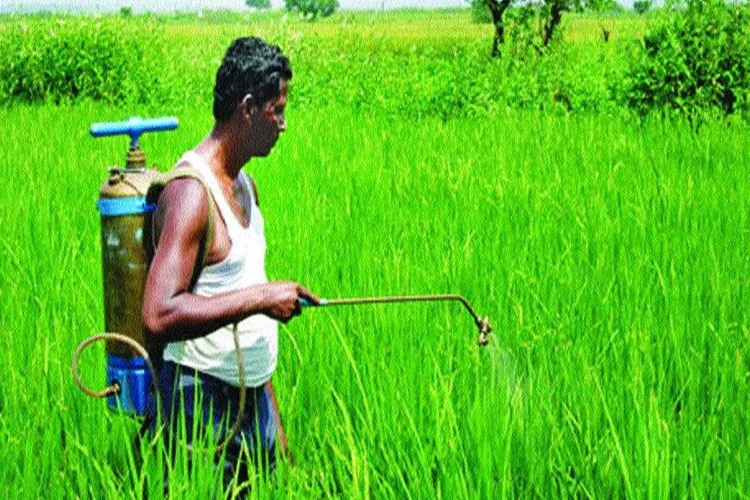
Farmers across several districts of Jharkhand are worried over the Kharif crop this year as they have not started preparatory work for paddy sowing due to scanty rainfall in June, officials said on Wednesday.
The rainfall deficiency in the state has already reached 60 per cent, and it may increase further, they said.
The Jharkhand government has prepared a state-wide contingency plan in advance to deal with possible rainfall uncertainty, an official from the agriculture department said.
"Farmers have not started preparatory work for paddy sowing in several districts. Those who have developed nurseries for paddy saplings are now worried as scanty rainfall might dry the seedlings," he said.
A farmer from Garhwa, Bhushan Singh, said that agri growers are concerned about the lack of rainfall in the district so far.
"We were not even able to prepare a nursery for paddy saplings. We generally prepare the seedlings and farmland by this time and start transplanting the saplings in the fields from the first week of July," he said.
Another farmer from Garu block in Latehar district, Manoranjan Kisan, said they were not able to prepare their farmland for paddy crop in the Kharif season.
He also alleged that farmers have not received the government's paddy seeds.
The southwest monsoon entered Jharkhand on June 12, but due to its tardy progress, it could cover 22 out of 24 districts by June 23, an IMD official said.
"Currently, the monsoon is weak over Jharkhand. We hope that it will cover the remaining two districts - Garhwa and Palamu - during the next 2-3 days. The monsoon is likely to be active after June 26," Ranchi Meteorological Centre Deputy Director Abhishek Anand told PTI.
Jharkhand's Garhwa and Sahebganj are the worst-affected districts with 99 per cent and 98 per cent rainfall deficiency.
Excluding Ranchi and Dumka, the shortfall is hovering between 41 per cent and 99 per cent across Jharkhand, and the deficit is above 60 per cent in 16 districts.
The state has received a mere 49.5 mm of rainfall till June 23 against the normal rainfall of 122.6 mm during this period.
Anand said the rainfall is expected to be good during the first week of July.
Agriculture experts expressed concern over the current rain-deficient situation.
"The Kharif season may be tough for farmers as per the current situation. We have been advising them to go for alternative crops which require less water in comparison to paddy," Ranchi's Birsa Agricultural University (BAU) Director (Research) PK Singh said.
The institute has prepared a contingency plan for the government to deal with the situation.
"In Jharkhand, the ideal season for paddy sowing is considered to be till July 15. But with changes in the rainfall pattern over the past few years, the sowing activity extends till the first week of August," he said.
Singh said the institute asked farmers to go for direct sowing of paddy in low-land areas and pulses on upland.
Jharkhand Agriculture Minister Shilpi Neha Tirkey said a strategy, in view of the impact of El Niño, is being adopted to promote climate-resilient crops such as finger millet (madua), maize, and pulses.
"At the same time, activities such as beekeeping, mushroom cultivation, fisheries, and other forest produce-based ventures are being encouraged to ensure stability in farmers' income and mitigate potential economic losses," the minister said.
Tirkey said the Jharkhand government prepared a state-wide contingency plan as early as May, keeping the potential impact of El Niño in mind.
"Farmers have been sensitised through agricultural workshops, organised at the district and block levels. They are being encouraged to adopt their farming practices to changing climatic conditions," she added.
During a meeting with Union Agriculture Minister Shivraj Singh Chouhan through video conferencing on Tuesday, Tirkey urged the central government to provide a special relief package for farmers in districts that have received below-average rainfall.
She claimed that the farmers are likely to face the adverse effects of El Niño, and the proposed package would help them overcome their financial crisis.
Raising the issue of fertiliser availability, the minister said the Jharkhand government had requested 3.90 lakh metric tonnes of fertiliser from the central government, against which the Centre has agreed to provide 3.20 lakh metric tonnes.
READ MORE: How Amal Ayub's Bridalbug.Co is redefining luxury weddings
She urged the Centre to ensure the timely availability of the remaining fertiliser to meet the state's requirements, and make sure that farmers do not face any difficulty during the season.













_(1).webp)

.webp)