New Delhi
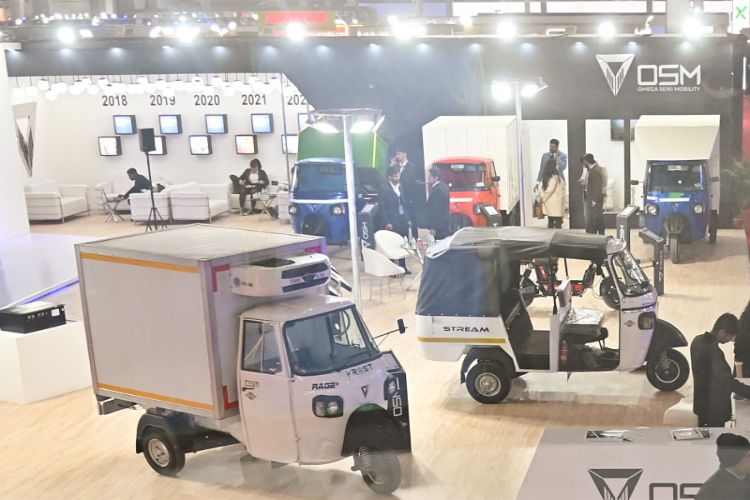
Demand for commercial vehicles in India is expected to remain in a gradual recovery phase through the second half of 2025-26, with growth being led by LCVs (light commercial vehicles), according to a report by India Ratings and Research (Ind-Ra).
Medium and Heavy Commercial Vehicles (MHCV) volumes are likely to stay subdued, contingent on infrastructure execution and freight stability.
In 2026-27, Ind-Ra expects the overall commercial vehicle industry to witness a modest uptick, supported by replacement demand and capex revival, though ageing fleets and delayed scrappage incentives could cap the upside.
According to the rating agency, the outlook remains "stable", with "structural headwinds" likely to limit any sharp acceleration over the next six-to-nine months.
Demand for commercial vehicles (CV) displayed a stabilising trend in the first half of 2025-26, supported by festive season purchases and goods and service tax (GST)-related benefits. However, the structural drivers remain weak.
"Ind-Ra further believes that the replacement cycle, historically a key driver for MHCV demand, is now stretched beyond seven years, which is a trend that was last observed in 2018-19. Companies have increased reliance on their ageing fleet due to higher prices of new vehicles, which has adversely affected demand for the latter," Karan Gupta, Director, Financial Institutions, Ind-Ra, said.
On the funding side, both banks and NBFCs have maintained a strong traction in commercial vehicle portfolios.
NBFCs have been leading on the growth front, catering to SRTO (Small Road Transport Operators) and DCO (Driver-cum-Owner) borrowers, mainly focusing on used vehicles.
Meanwhile, banks have been catering to fleet owners and larger SRTOs. While NBFCs continue to leverage their entrenched dealer networks and faster turnaround to capture granular demand, banks are focusing on selective growth, with an emphasis on risk-calibrated lending to customers with better credit profiles and offering loans at more competitive rates, noted Ind-Ra.
"This complementary approach is likely to support overall credit availability even as lenders prioritise segments with superior yields and resilience."
The uptick in asset quality stress during the first quarter of the current fiscal in the commercial vehicle sector was driven by prolonged monsoon activity and excessive rainfall, which disrupted freight movement and dampened agricultural trade flows, weighing on collections.
However, industrial production is likely to improve in the second half of 2025-26, backed by stronger agriculture and mining activities alongside infrastructure execution. This is likely to lead to stability in the operating environment, which would aid a gradual recovery in asset quality.
Ind-Ra believes used vehicles will grow faster amid cost constraints and delayed replacements.
Volumes remain concentrated in light commercial vehicles (LCVs), which account for nearly two-thirds of the mix, while medium and heavy commercial vehicles (MHCVs) contribute about one-third.
In the first half of 2025-26, the commercial vehicle sector showed only a mild recovery despite festive-led momentum, with growth of 5.2 per cent year-on-year in MHCVs and 5.3 per cent year-on-year in LCVs.
While monsoon coverage has been widespread, erratic rainfall in certain regions has impacted crop yields and rural liquidity, which had constrained freight availability and borrower cash flows in 1HFY26.
ALSO READ: Dr. Siddiq Ahmad Meo has chronicled Mewati Culture for posterity
However, in 2HFY26, Ind-Ra expects the momentum to be dependent on private sector capex and government spending.




.png)











_(1).webp)