Malick Asghar Hashmi/New Delhi
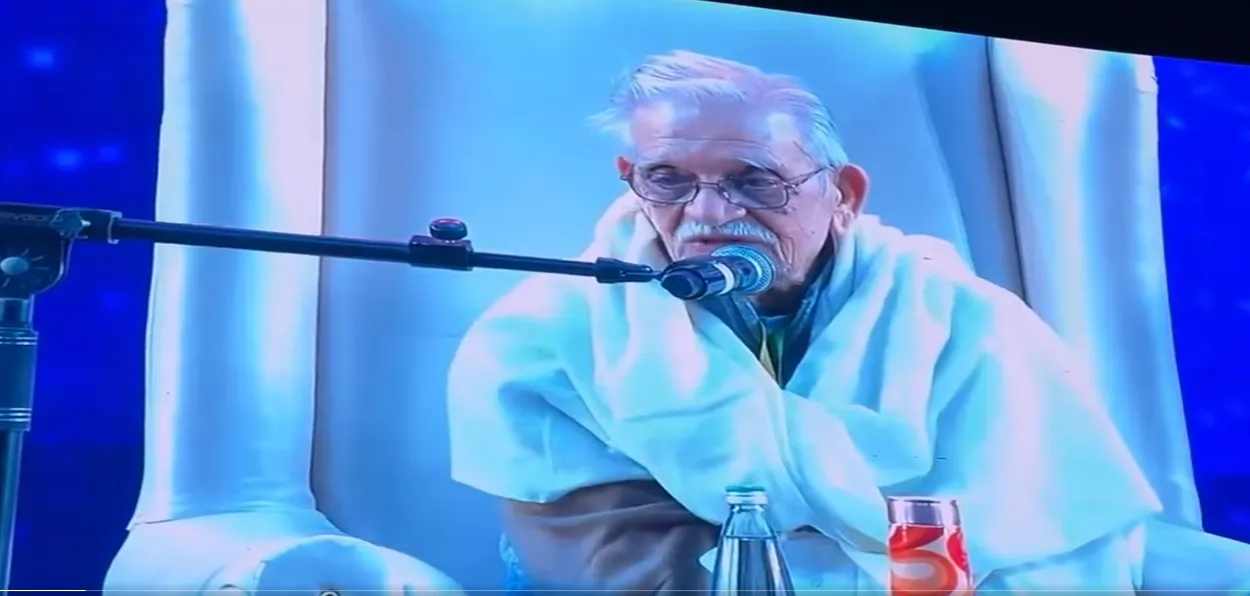
As actor Divya Dutta gently touched upon poet, writer, lyricist Gulzar's memories, layers of emotions, suppressed for years, broke free and flowed out. Audiences had tears in their eyes, and Gulzar, sitting on the dias reached a emotional point while narrating his story that words failed him.
This was the inaugural session of the three-day Jashn-e-Rekhta, a festival celebrating the Urdu language and culture associated with it, on Friday evening at Bansera, the newly laid-out Yamuna waterfront. Delhi's Lieutenant Governor V.K. Saxena inaugurated the annual festival, which is eagerly awaited by Urdu aficionados.
Saxena called Gulzar a "rare treasure trove and a multifaceted talent." However, the magic flowed as during the 'Samvad', interaction program, Divya Dutta spoke with Gulzar about his childhood, relationships, and unforgettable moments from his epic life.
Gulzar addressed his father as ‘Pitaji’, ‘Papa ji’, and even ‘Abbu ji’. Although he was born in a Muslim-majority village (in Today’s Pakistan), the sweet way the children of that village called their fathers ‘Abbu ji’ appealed to him so much that he chose that address for his own father.
He said, “Abbji, I have learned to swim now... but I can't find the shore,” he said this while addressing his late father.
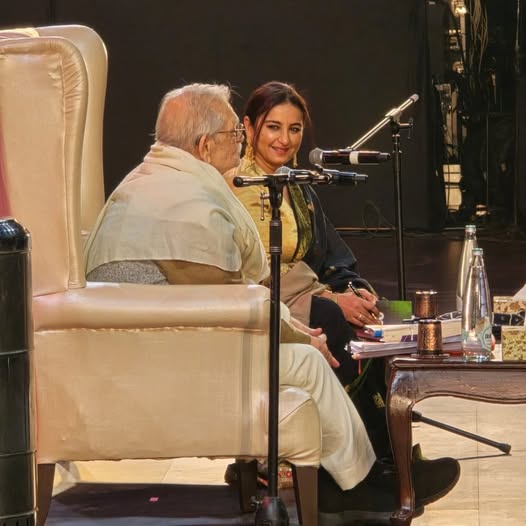 Gulzar and Divy Dutta at Jashn-e-Rekhta
Gulza recounted that in his childhood, during the ‘Baitbazi’ (a game of reciting couplets, similar to Antakshari) sessions at school, he stood out for his flair of language.
Gradually, this manipulation became the first step in his journey as a poet. In those days, poets adopted a ‘takhallus’ (pen name). He chose the name ‘Gulzar’, and that became the very essence of his identity.
However, his father considered all this "aimless wandering." He wanted him to give up poetry and pursue a "proper job." Nobody knew that this very "aimless wandering" would later give Indian poetry, songs, and cinema a priceless gem.
That's why even the Lieutenant Governor of Delhi proudly says, "I consider myself fortunate to share the stage with Gulzar Sahab."
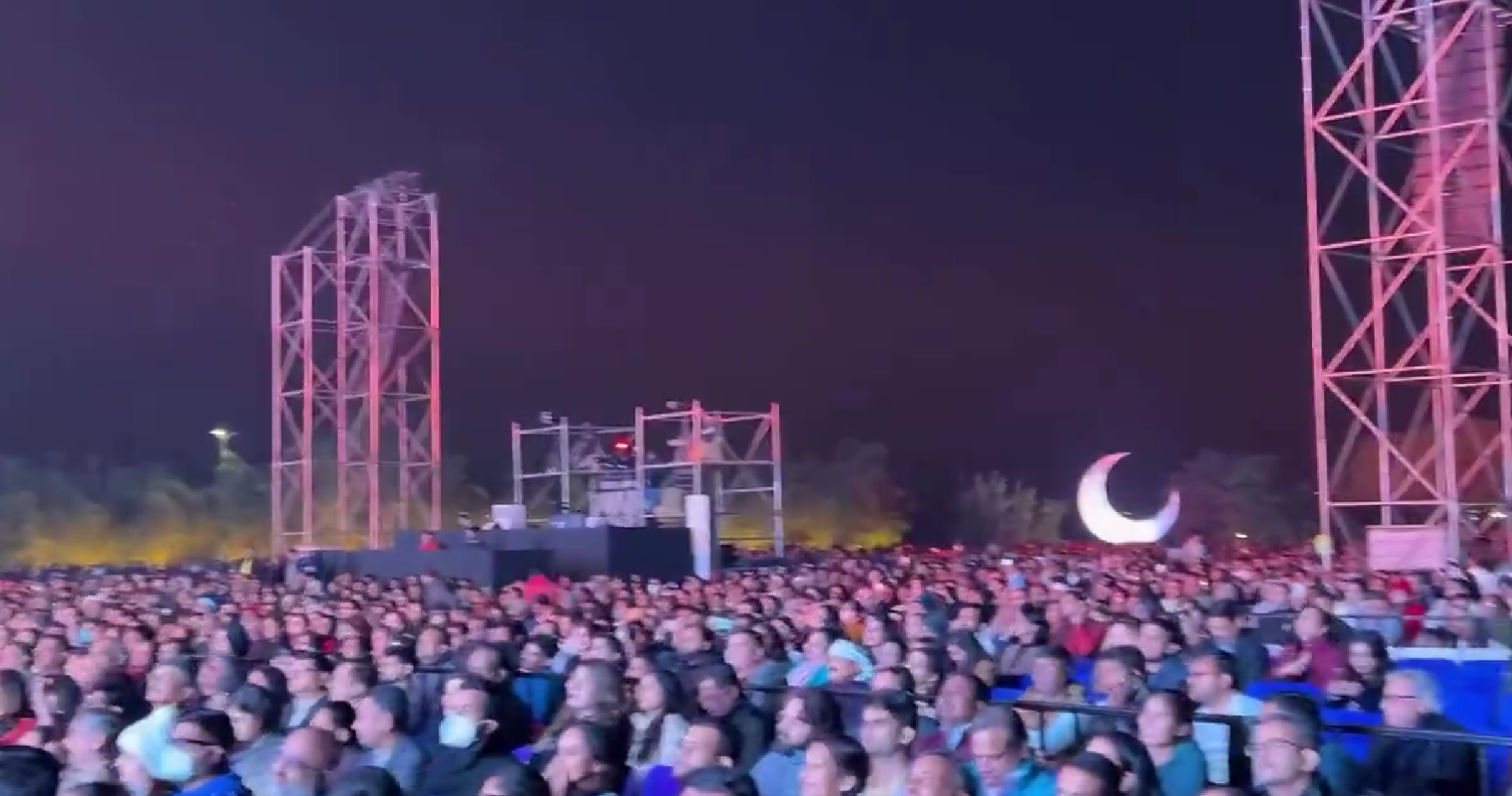 The scene at inaugural session of the Jashn-e-Rekhta
However, the pain of his father not being around to see his success lingers in his heart as he said, "Abbuji didn't live to see all this."
His mother had passed away even earlier, when he was just a child. When Divya Dutta mentioned his mother, Gulzar's eyes welled up. In a soft but painful voice, he said, "Amma was in such a hurry, she ran away as if she had seen God somewhere."
Gulzar said he was told that his eyes resembled his mother's. His ears were probably pierced because his mother had done it after his wish was granted. He didn’t remember his mother's face.
During the conversation, he fondly recalled the late actor Sanjeev Kumar, whom he affectionately called 'Haribhai', with a wistful smile. Poetry, Urdu, films, friends—at every turn, there was that same inner resonance in Gulzar's voice, the kind that is born only in the soul of a true artist.
Gulzar said, "Urdu is the language of the heart and of love."
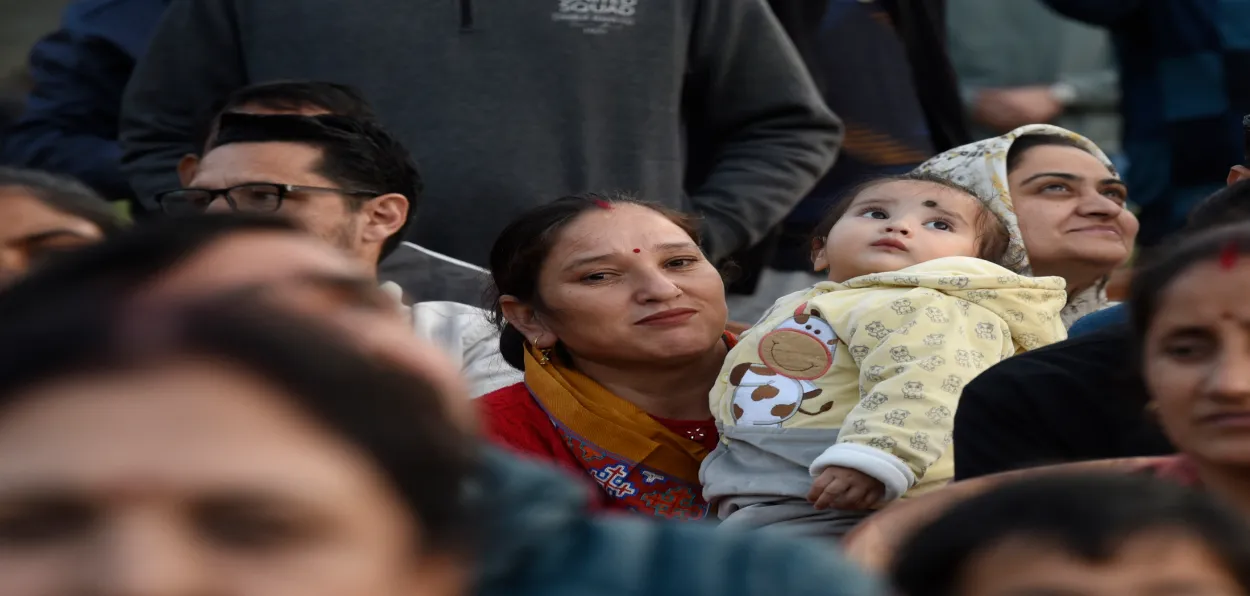
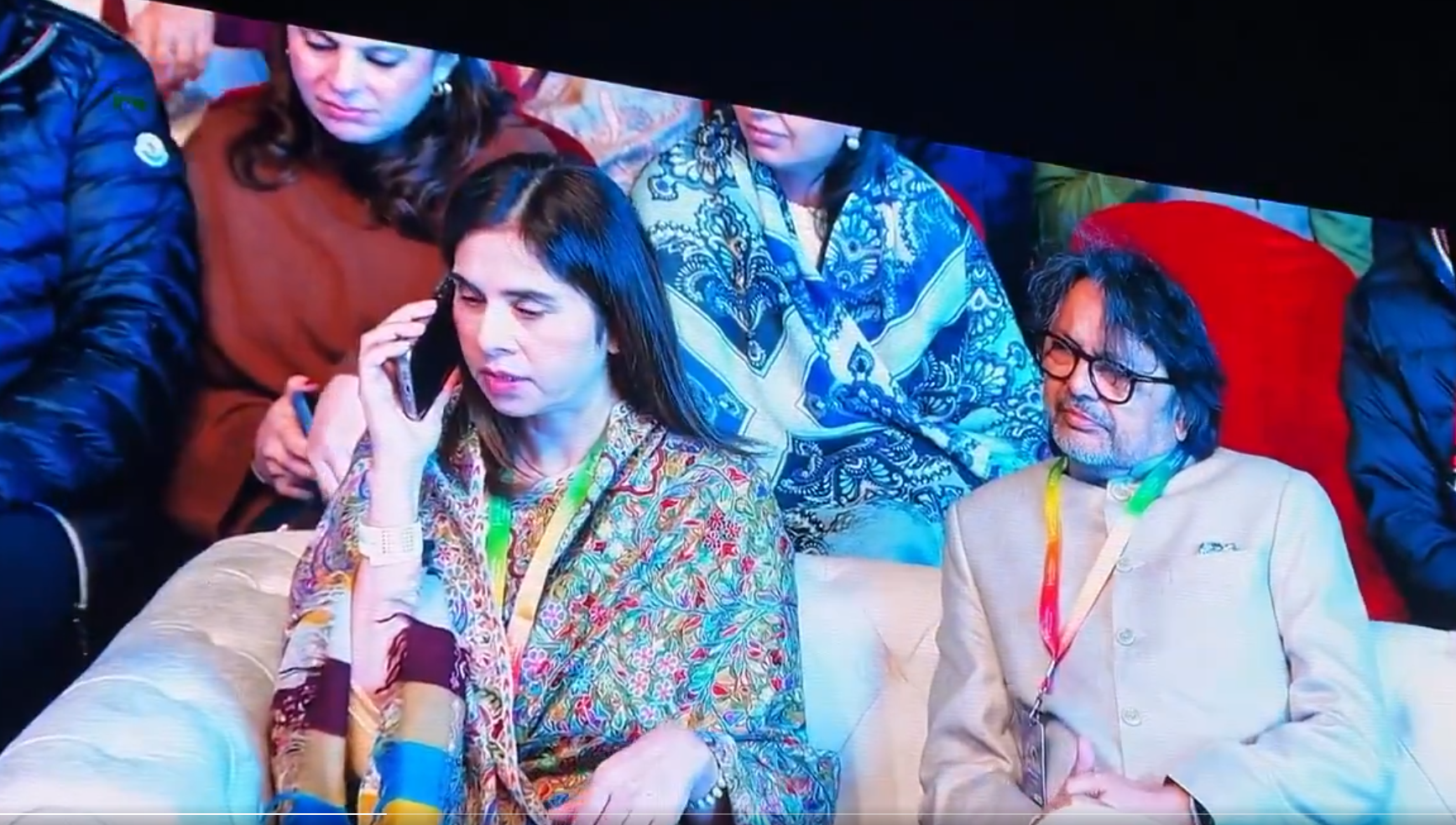 A woman at Jashn-e-Rekhta
He loves Bengali, Punjabi, and Awadhi, but he holds a special place in his heart for the sweetness and refinement of Urdu. "Urdu makes you feel rich even in poverty. If a fakir speaks refined Urdu, he sounds like a Nawab."
And looking at the grandeur of Rekhta, he was amazed, "To bring Urdu to this level... It's incredible."
That night at Bansera, as Gulzar was unfolding layers of his memories, had slowly matured into a beautiful evening. All around were the bright eyes of Urdu enthusiasts, and the air was filled with the fragrance of words.
This area, once known for its slums, has now transformed into one of Delhi's most beautiful cultural hubs. A policeman smiled and said, "Sir, until a year ago, there was a slum here... Now look, it's as if a garden has bloomed."
Gulzar Sahab in conversation with Divya Dutta ♥️ #JashneRekhta #10YearsofJashn #Jashn pic.twitter.com/DqBOwl9rFJ
— Jashn-e-Rekhta (@JashneRekhta) December 5, 2025
Amidst the flowerbeds, even the darkness of the night seemed soft. The lights of cars passing on the distant flyover twinkled like tiny fireflies. Looking at them, one truly felt—we are not just a part of a big city, but a part of a grand story.
ALSO READ: 2 Muslims discover essence of India through their temple visits
And one of the most beautiful pages of that story was this moment of the night, when Gulzar, opening his bundle of memories, said, "Abbuji, I have learned to swim now... but I can't find the shore."