New Delhi
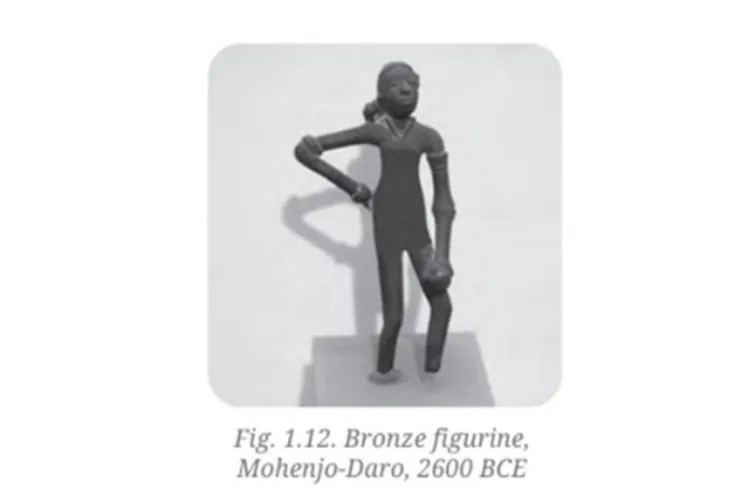
The National Council of Educational Research and Training (NCERT) has decided to replace the edited depiction of the renowned Mohenjo-daro "Dancing Girl" figurine in its Class 9 Arts textbook with the original image after criticism from academics and historians.
The controversy arose after the newly introduced Class 9 Arts textbook, Madhurima, featured a modified version of the bronze artefact in which the figurine’s bare torso appeared to have been covered. The alteration sparked debate over the portrayal of one of the most iconic objects from the Indus Valley Civilisation.
Confirming the change, NCERT Director Dinesh Saklani told PTI that the original image would be restored in future editions of the textbook.
The revised illustration appears in the opening chapter, History of Arts. Critics pointed out that the image differed significantly from the original sculpture, as shading had been added to conceal details visible on the actual artefact.
In contrast, the image of the same figurine included in NCERT’s Class 6 Social Science textbook closely resembles the original bronze sculpture.
Historian and author Michel Danino, who chaired the committee responsible for developing NCERT’s new Class 6 Social Science textbooks, said he had earlier been informed that the figurine was considered unsuitable for younger students.
According to Danino, his team disagreed with that assessment and even consulted teachers, who reportedly saw no issue with including the original image in educational material. He argued that viewing such representations as inappropriate reflects an outdated Victorian mindset that contradicts efforts to decolonise education.
Reacting to the modified image in the Class 9 textbook, Danino said he was initially shocked. He maintained that excluding or altering the figurine in a chapter dedicated to Indian art raises serious concerns about how historical artefacts are presented to students.
He further argued that modifying the image distorts the authenticity of the original object, comparing the change to historical instances where artworks were altered to conform to changing social attitudes.
Discussing the significance of the artefact, Danino noted that scholars continue to debate its exact meaning and cultural context. However, he pointed out that similar postures have been identified on pottery fragments from the Harappan site of Bhirrana in Rajasthan, suggesting that the stance likely held cultural or artistic importance.
He also criticised the broader practice of altering images of archaeological objects, stating that unless such changes are clearly intended to reconstruct damaged artefacts, they risk creating misleading representations of history.
The textbook identifies the “Dancing Girl” as a bronze figurine from Mohenjo-daro dating to around 2600 BCE and highlights that it was created using the lost-wax casting technique, a method still practiced in parts of eastern and central India.
It describes the sculpture as depicting a figure standing with one hand on the hip, a bent knee, and an uplifted chin. The chapter also includes activities encouraging students to observe, interpret, and recreate the figurine’s posture through drawing and movement exercises.
READ MORE: Zeenat Pannah's enduring work to preserve India's textile heritage
Discovered at Mohenjo-daro, the “Dancing Girl” remains one of the most celebrated and widely recognised artefacts of the Indus Valley Civilisation.

.webp "Rocks bearing inscription in ancient Arabic excavated in Saudi Arabia's Madina region")