Ehsan Fazili/Srinagar
Over the last five years, Pulwama district in South Kashmir has emerged as one of India's major garlic-producing hubs, attracting traders from different parts of the country.
More than 600 hectares of land in the district are currently under garlic cultivation, with farmers targeting a production of around 500 metric tonnes of the herb, which remains in high demand across Indian kitchens.
India is the second largest producer of garlic with 3.1 million metric tons annual production. Besides Madhya Pradesh, the major garlic-producing states include Rajasthan, Uttar Pradesh, Gujarat, Punjab, Odisha, Assam, and West Bengal. In Himachal Pradesh, garlic cultivation is also significant, particularly in the Kullu and Mandi regions.
Commercial cultivation of Garlic is relatively new in Kashmir.
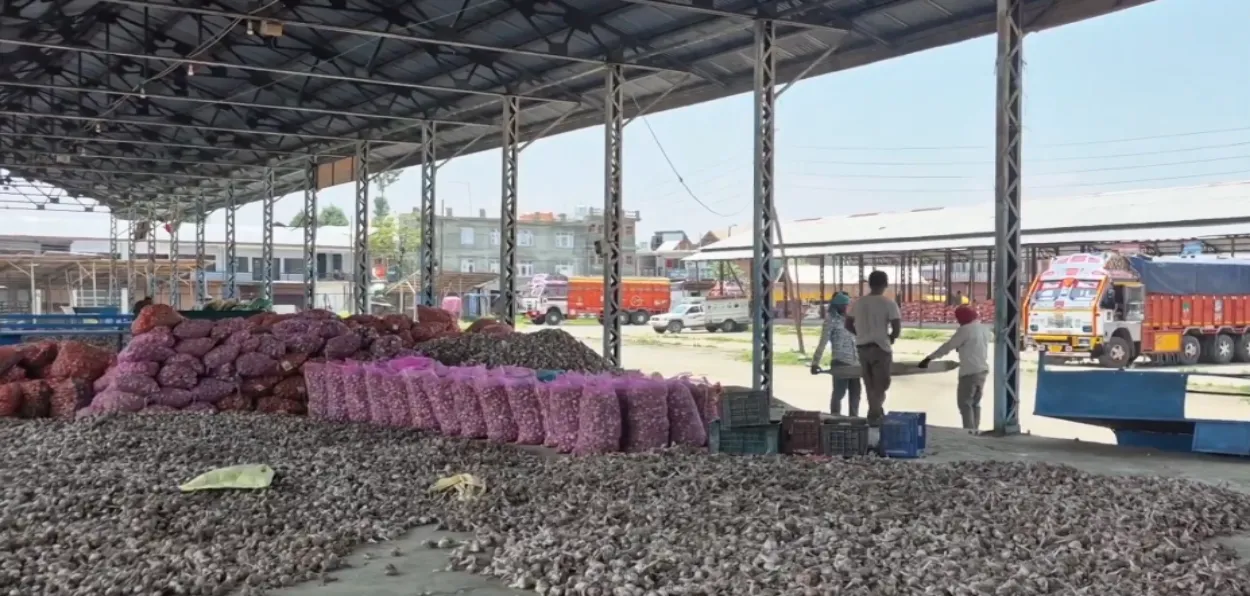
The peak harvesting season has transformed Pulwama into a bustling commercial centre. Garlic stocks are pouring into the Fruit Mandi in Pulwama town as well as at least eight major marketplaces across the district, including Awantipora, Tral and Vessu. The arrival of buyers from outside Kashmir has given the region a festive atmosphere.
Kashmir’s first open garlic market opens in Pulwama, giving farmers better prices and direct access to buyers while boosting local agriculture.
— DD NEWS SRINAGAR (@ddnewsSrinagar) June 5, 2026
Report: Rabiya Bashir
Visual Editor: Shahid Habib#Pulwama #GarlicMandi #Kashmir #Farmers #Agriculture pic.twitter.com/NqtQtMLKC1
Local growers are optimistic about the harvest, crediting improved yields to scientific farming techniques and the use of high-yield seed varieties.
“We have now adopted scientific methods of cultivation, whereas traditional farming practices were followed earlier,” said Irshad Ahmad, a leading garlic grower from Pulwama, speaking to Awaz-The Voice.
Garlic cultivation has been the backbone of Ahmad's family farming enterprise since 2010, alongside vegetables, paddy, mustard, apples and almonds. However, he said the adoption of scientific methods over the past five years has significantly boosted productivity.
“With the support of the Central Institute of Temperate Horticulture (CITH), we have access to high-yielding seed varieties. Our production has increased to eight to ten quintals per kanal, and there is now scope for value addition as well,” Ahmad said.
His family has already sold around 2.5 metric tonnes of garlic, nearly half of its expected harvest this season. The household manages around 80 kanals of farmland, cultivating paddy, vegetables, mustard and other seasonal crops.
“Pulwama district has become the primary hub of garlic production in Kashmir,” said Prof. Javed Ahmad Mugloo, Head of the Krishi Vigyan Kendra (KVK) and Extension Training Centre (ETC) of Sher-i-Kashmir University of Agricultural Sciences and Technology-Kashmir (SKUAST-K) at Malangpora, Pulwama.
According to Prof. Mugloo, the ETC provides technical recommendations and expert guidance to farmers, helping them improve crop yields and diversify agricultural production.
He noted that garlic cultivation fits well into the region’s agricultural calendar because harvesting takes place in early spring, before the peak season for other major crops such as apples and paddy.
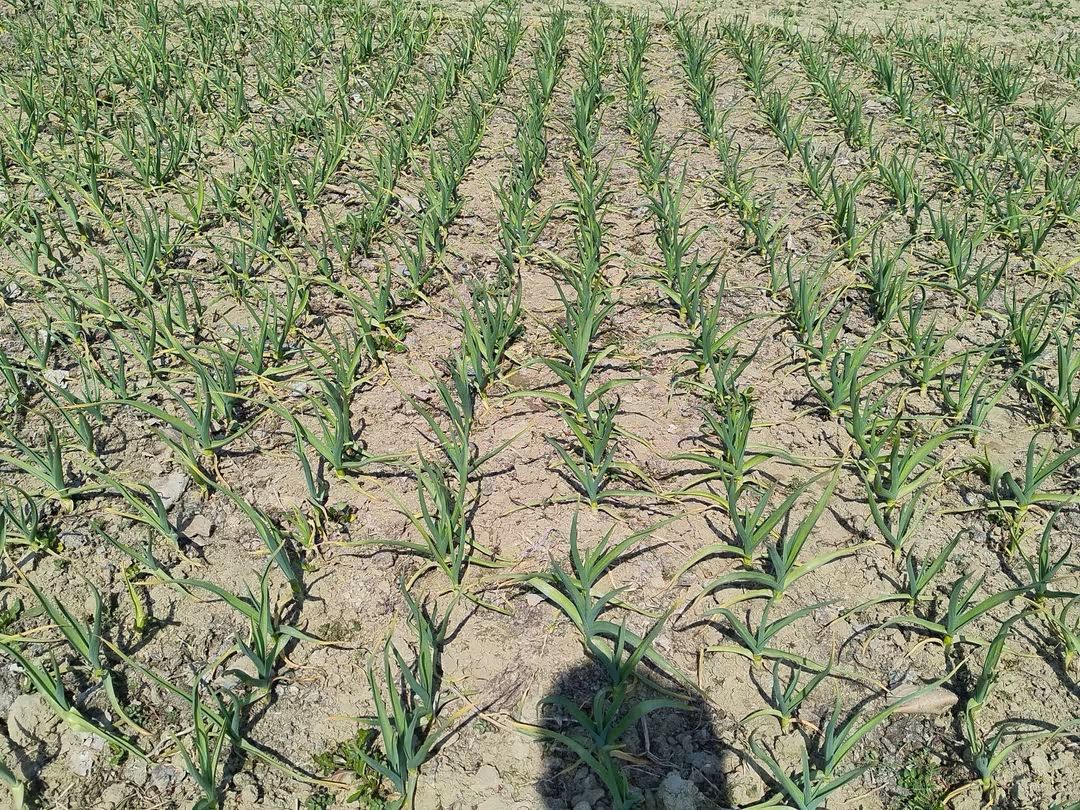 A Garlic field in Pulwama
“Garlic production does not interfere with other key agricultural activities. In fact, integrating garlic cultivation with traditional apple and almond farming has helped farmers reduce dependence on a single crop and improve overall productivity,” he said.
Prof. Mugloo explained that garlic cultivation offers several additional advantages. Since the crop is harvested early and its bulbs grow underground, it is largely unaffected by pesticide sprays used in apple orchards. Moreover, garlic acts as a natural rodent repellent, helping protect neighbouring crops from damage caused by rats and other pests.
He said the demand for Kashmir-grown garlic has been rising steadily across the country due to its superior quality. Cultivated in the temperate Himalayan climate, the garlic commands a premium price and is widely used as a spice.
READ MORE: BBC ranks Hafiz Ahmed's Bagurumba photo as second-best image of 2026
Garlic is among several high-value spices grown in Kashmir, alongside the world-famous saffron, often referred to as the Valley’s “golden spice.” Saffron cultivation is concentrated in the Karewa uplands of Pampore in Pulwama district. Other important spices produced in the region include red chilli, shahi zeera, saunf (fennel), and black and green cardamom.
With rising production, growing market demand and increasing adoption of modern farming practices, Pulwama is rapidly strengthening its reputation as Kashmir’s garlic capital.










.webp "Representational image")