Bristol
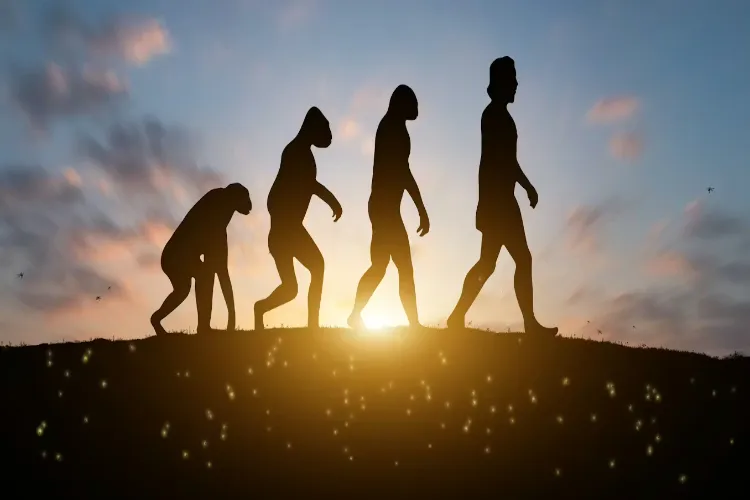
The human body is often celebrated as a masterpiece of design—precise, efficient and perfectly adapted to its environment. But a closer look through the lens of evolutionary biology reveals a far more complex reality: the body is not a flawless creation, but a patchwork of compromises shaped over millions of years.
Evolution does not build structures from scratch. Instead, it modifies what already exists, resulting in anatomical features that are often “good enough” rather than ideal. Many common health issues, in fact, arise directly from these inherited limitations.
The Spine: Built for one purpose, used for another
The human spine is a striking example of evolutionary compromise. Originally adapted for four-legged ancestors, it functioned as a flexible structure for movement and balance.
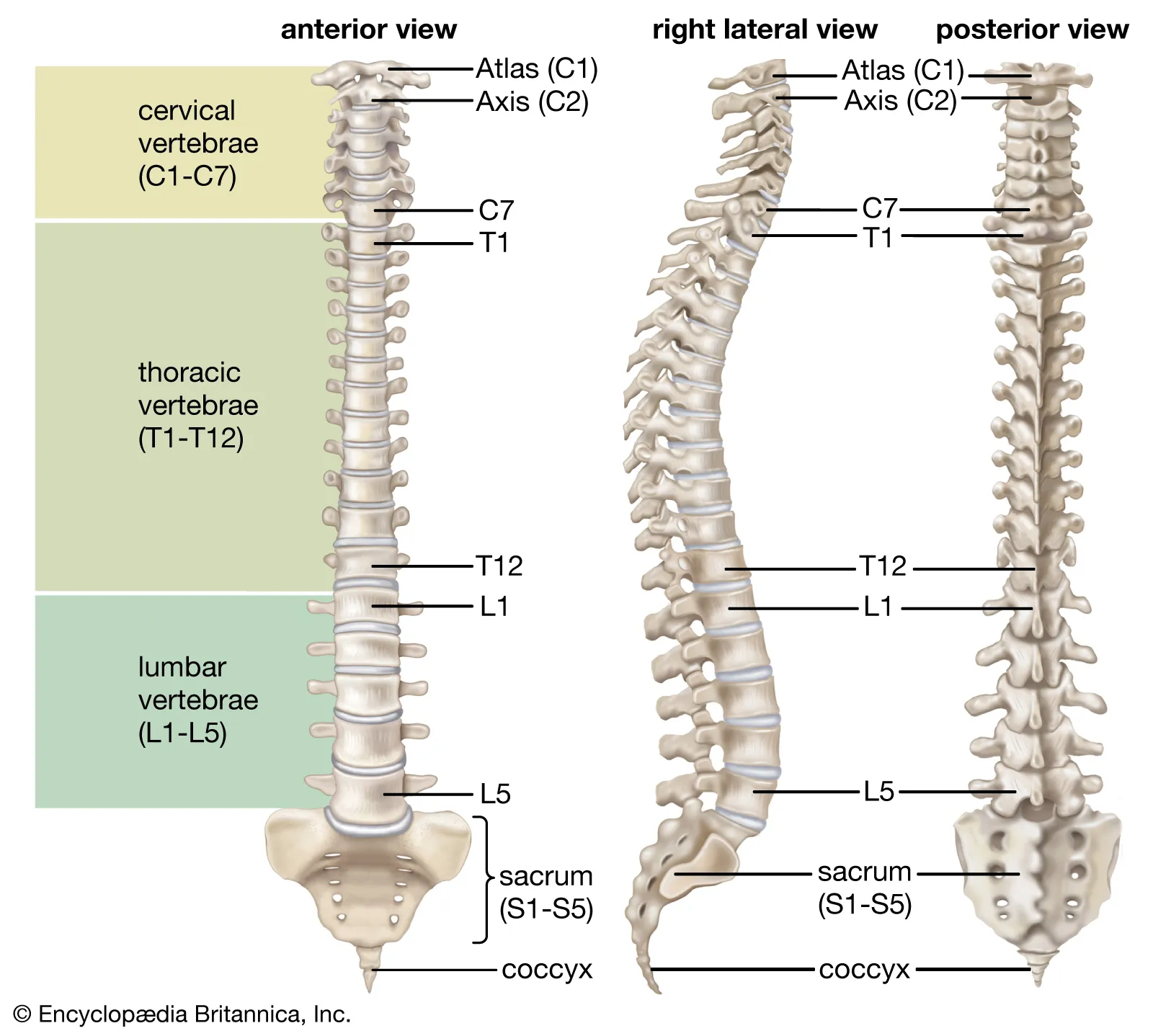 Human Spine (Photo Credit: Britanica)
With the shift to upright walking, or bipedalism, the spine had to take on a new role—supporting the body’s weight vertically while maintaining flexibility. These competing demands place significant strain on the structure.
While the spine’s natural curves help distribute weight, they also make humans prone to back pain, herniated discs and degenerative conditions. These issues are not design flaws per se, but consequences of repurposing an existing structure for a new function.
The Neck: A detour that defies logic
One of the most cited examples in anatomy is the recurrent laryngeal nerve, a branch of the vagus nerve. Instead of taking a direct route between the brain and the larynx, it descends into the chest, loops around an artery, and travels back up.
This seemingly inefficient pathway is a legacy of evolutionary history. In fish-like ancestors, the nerve followed a straightforward route around the gill arches. As necks lengthened over time, the nerve was stretched rather than redesigned.
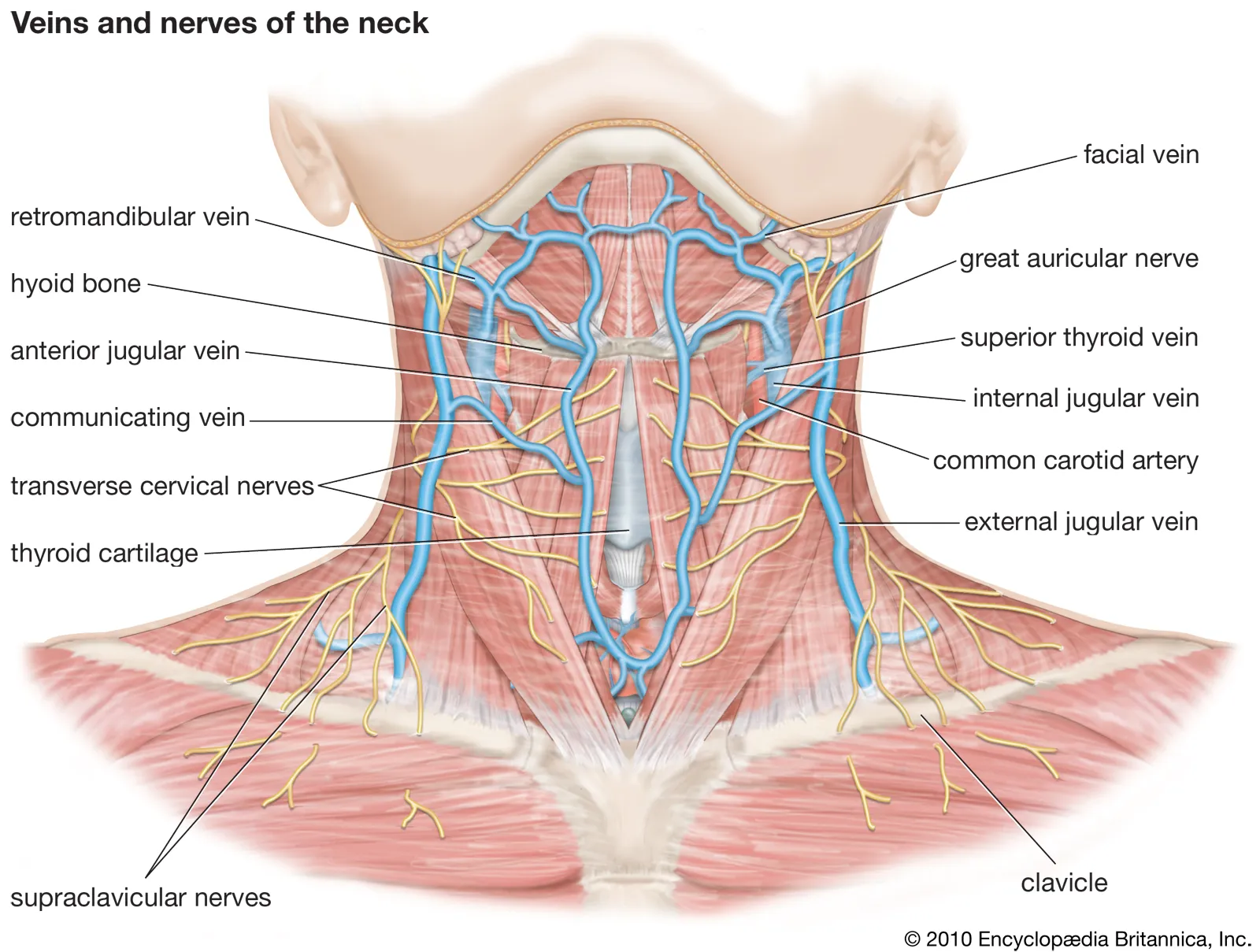 Human neck (Photo Credit: Britanica)
Today, this detour not only appears illogical but also increases vulnerability during surgical procedures.
The Eyes: Advanced yet imperfect
Human vision is remarkable, yet even the eyes carry evolutionary quirks. In vertebrates, the retina is wired “backwards,” meaning light must pass through layers of nerve fibres before reaching the photoreceptor cells.
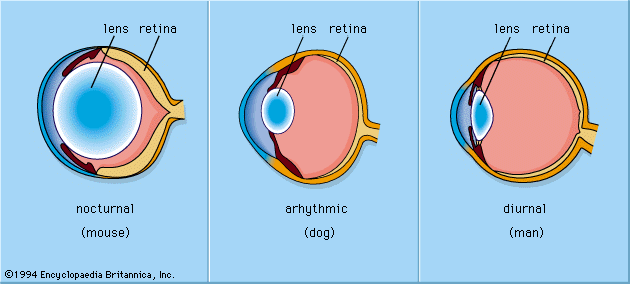 Human eye (Photo Credit: Britanica)
This arrangement creates a blind spot where the optic nerve exits the eye. Although the brain compensates for this gap seamlessly, it highlights the imperfect nature of the system.
The Teeth: Finite and fragile
Unlike some animals such as sharks, humans do not continuously replace their teeth. We develop two sets—baby teeth and adult teeth—and that’s it.
 Representational Picture (Photo credit: CNN)
This limitation makes us vulnerable to tooth decay and loss. Wisdom teeth further illustrate evolutionary lag. While our ancestors had larger jaws suited for tougher diets, modern humans often lack the space for these third molars, leading to crowding and surgical removal.
The Pelvis: A Delicate Trade-Off
Childbirth represents one of the most profound evolutionary trade-offs. The human pelvis must balance the demands of efficient walking with the need to deliver large-brained infants.
A narrower pelvis aids mobility but restricts the birth canal, making human childbirth unusually difficult compared to other species. This compromise has even influenced social behaviour, encouraging cooperative care and cultural practices around birth.
Vestiges of the Past
Some body parts persist despite offering limited benefits. The appendix, once thought useless, may play a minor immune role but can cause life-threatening inflammation.
Similarly, sinuses may help lighten the skull or influence voice, yet their structure makes them prone to infection. Even small ear muscles—functional in many animals for directional hearing—remain largely unused in humans.
A Living Record of Evolution
Rather than being a perfect machine, the human body is better understood as a living archive of evolutionary history. Each structure reflects adaptation, compromise and constraint.
Viewing anatomy through this perspective helps explain why many medical conditions—from back pain to sinus infections—are so common. They are not random failures, but the byproducts of an evolutionary process that prioritises survival over perfection.
READ MORE: Rajasthan: Gaurakshaks silence hatemonger with assertion of Hindu-Muslim unity
In the end, the human body is not flawed—it is simply unfinished, shaped by a process that works not toward ideal design, but toward what works well enough to endure.
















.webp)