New Delhi
The Government of India has unveiled a vision to make AI infrastructure more accessible across the country. A white paper titled “Democratising Access to AI Infrastructure”, published by the Office of the Principal Scientific Adviser (PSA), lays out plans to expand both physical and digital AI resources for innovators, startups, and institutions beyond major urban hubs.
India’s Vision for Shared AI Resources
In a statement, the PSA described the initiative as treating AI infrastructure as a shared national resource. The goal is to empower developers to build tools in local languages, create assistive technologies, and develop AI solutions that reflect India’s diverse needs. Key elements like computing power, datasets, and AI model ecosystems are to be made affordable and widely available, ensuring participation is not limited to a few global or urban players.
Physical and Digital AI Infrastructure
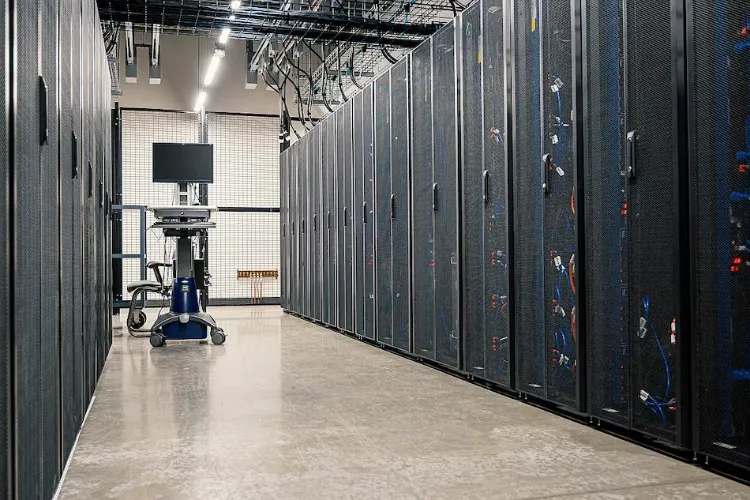
The white paper highlights the distinction between physical infrastructure, such as data centres, GPUs, TPUs, and specialized processors, and digital infrastructure, including datasets and AI models. While India hosts nearly 20% of the world’s data, its global data centre capacity is only around 3%, with most hubs concentrated in Mumbai, Navi Mumbai, Chennai, Bengaluru, Hyderabad, Delhi NCR, Pune, and Kolkata.
To address this gap, initiatives under the IndiaAI Mission plan to introduce a secure GPU cluster with 30,000 next-generation units for strategic applications. Alongside computing hardware, making high-quality datasets and model ecosystems widely accessible is considered essential to drive AI innovation nationwide.
Digital Public Infrastructure Approach
Central to the white paper is the digital public infrastructure (DPI) model, which treats AI systems as digital public goods. This approach allows developers to access data, compute, and models without needing physical proximity to data centres. Rather than relying on a single monolithic platform, the government proposes a modular ecosystem of public-good tools to address gaps efficiently.
The plan suggests starting with lightweight infrastructure such as directories, metadata standards, and access protocols, followed by systems for consent-based data flows and coordinated compute exchange mechanisms.
READ MORE: Cricket taught me to value human talent over caste and religion
A Vision for the Future
The white paper does not propose immediate policy changes but provides a long-term roadmap for India’s AI ecosystem. By designing infrastructure for inclusivity from the start, the country aims to ensure that non-urban centres, startups, and individual innovators can access AI resources without major future overhauls.