Gandhinagar
Launched on October 1, 2021, under the leadership of Prime Minister Narendra Modi, the Atal Mission for Rejuvenation and Urban Transformation 2.0 (AMRUT 2.0) aims to make Indian cities water-secure and self-reliant by rejuvenating water bodies, reducing non-revenue water and promoting the reuse of treated wastewater.
Alongside water security, the mission places strong emphasis on the creation and revival of urban green spaces to enhance the quality of life in cities.
In Gujarat, under Chief Minister Bhupendra Patel’s leadership, several municipal areas have undertaken the development and rejuvenation of parks and gardens under AMRUT 2.0. Many previously barren or neglected gardens are being restored, while new green spaces are also being developed.
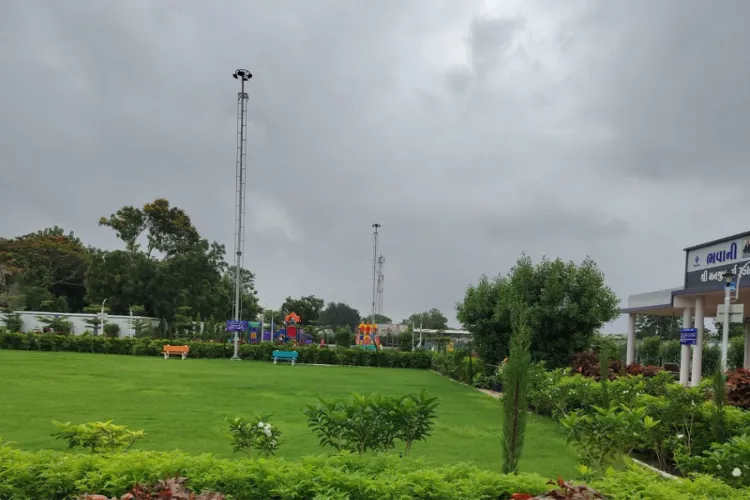
A notable example is Bhavani Garden in Lathi municipality, which had fallen into disuse over time. The state’s Urban Development Department redeveloped the garden under AMRUT 2.0, transforming it into a well-planned green space now used by residents for leisure and recreation.
Across Gujarat’s urban local bodies, 131 gardens are being developed under the mission at a total cost of Rs 117.56 crore. Of these, work on 70 gardens has been completed, while development of the remaining 61 is underway.
During the redevelopment of Bhavani Garden, existing trees were preserved and native plant species were added along walkways and landscaped areas to support local ecology and birdlife. The garden now features an open lawn, a children’s play area, an open gym, and designated spaces for yoga and learning. A white horse fountain sculpture has been installed at the centre. Spread over 10,936.35 square metres, the project was completed at a cost of Rs 1.26 crore.
Similarly, Kailash Vatika Garden in Palanpur municipality has been redeveloped at a cost of Rs 2.25 crore over an area of 10,000 square metres. The upgraded garden includes a children’s play zone, facilities for persons with disabilities, gazebos and seating arrangements, making it accessible and inclusive.
Officials said the creation of urban green spaces under AMRUT 2.0 is aimed at promoting sustainability, improving air quality and restoring ecological balance in densely populated areas. The use of native plants also helps reduce water consumption and long-term maintenance requirements.
READ MORE: Muslim couple arrange wedding of their adopted Hindu son
The ongoing implementation of AMRUT 2.0 is expected to strengthen urban resilience and improve overall well-being across Gujarat’s cities.









.webp "Lok Sabha Leader of Opposition Rahul Gandhi")

.webp)