Daulat Rahman/Guwahati
Assam's grave problem of drug trafficking and rising drug abuse by the youth has made the AIUDF chief and an influential Muslim leader Badruddin Ajmal join hands with the BJP government in combating the menace.
Supporting the government's anti-narcotic campaign in the border state, Ajmal made a forceful speech in the Assam Legislative Assembly. He sought harsh measures to smash the traffickers' network, and even likened the drug traffickers to "murderers who are killing society."
His speech in the House raised many an eyebrow, as he advocated stringent action—including police encounters against major drug traffickers. Ajmal argued that legal provisions alone were insufficient to dismantle the flourishing narcotics network.
Trinamool Congress MLA Sherman Ali Ahmed said his remarks amounted to endorsing extra-judicial killings and insisted that every accused must be dealt with strictly within the framework of law.
For years, the perfume baron Badruddin Ajmal has been recognised for his contribution in expanding quality education among economically disadvantaged communities, particularly Muslims. Through the Ajmal Foundation and its network of educational initiatives, thousands of students have benefited from scholarships, coaching programmes and academic support.
One of its most notable initiatives, the Super 40 programme, has helped many meritorious yet underprivileged students secure admission to premier professional colleges.
Against this backdrop, his recent vocal stand against the drug menace is significant. Observers believe that a leader who is deeply involved in shaping the future of young people is naturally concerned about the growing threat of narcotics among the youth.
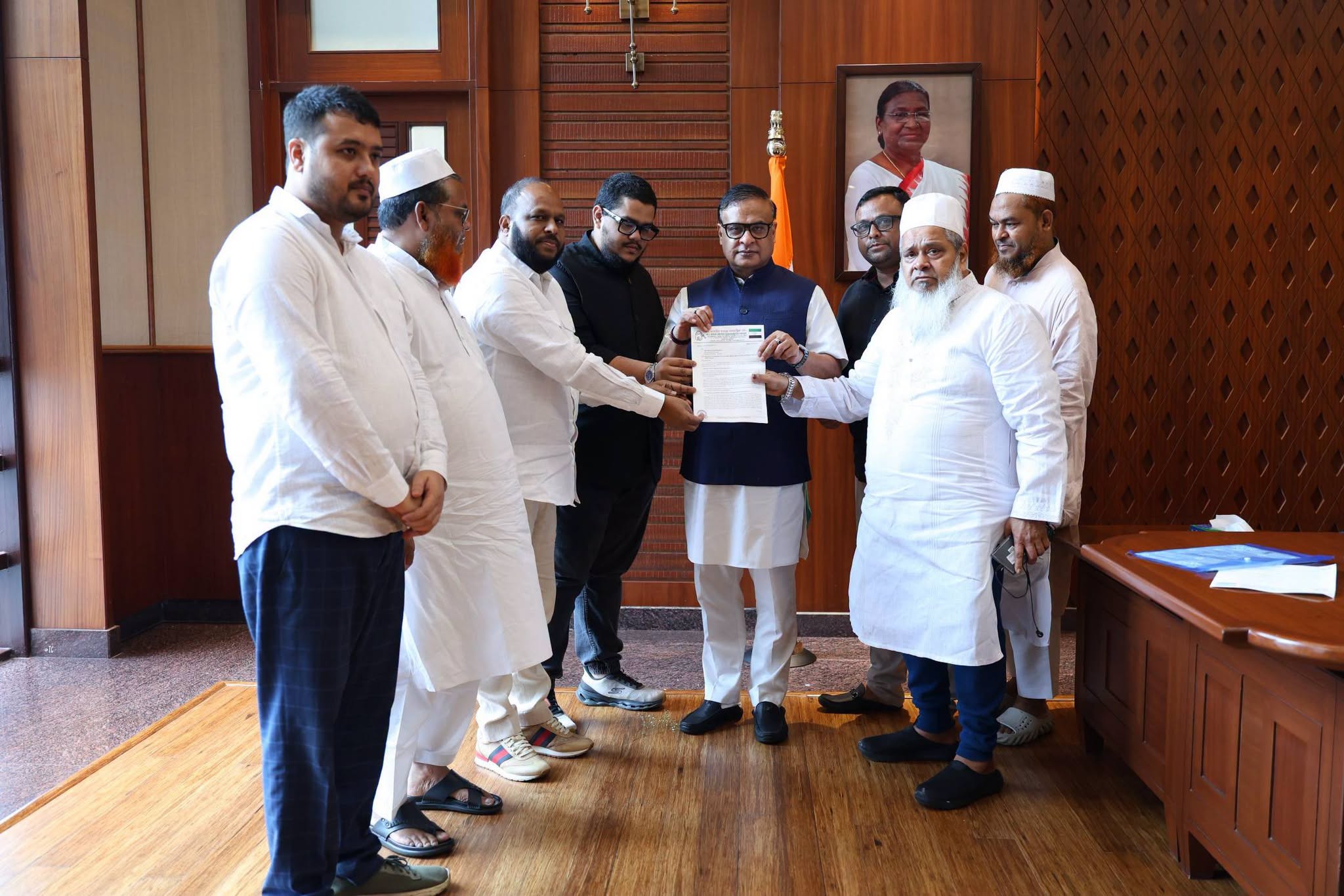 MLA Badruddin Ajmal meeting Chief Minister Himanta Biswa Sarma
Chief Minister Himanta Biswa Sarma welcomed Ajmal's stand and appealed to legislators across party lines to unite in combating the menace.
Sarma reiterated that narcotics should never become a subject of political polarisation or communal debate. He rued that police action against drug traffickers is seen through a communal lens. He said the battle against narcotics must remain a fight against crime and not against any religion or community.
The Sarma government launched an aggressive anti-drug campaign in 2021, and it has led the Assam Police to carry out extensive crackdowns on narcotics trafficking. So far, police have arrested more than 20,000 traffickers in the drive and recovered narcotics including heroin, methamphetamine (Yaba tablets), cannabis, opium and other contraband, worth several thousand crore rupees.
The crackdown also targeted interstate and international smuggling networks operating along Assam's borders.
Officials maintain that the campaign is aimed at dismantling the trafficking syndicates that exploit the state's strategic location along international borders.
Perhaps more significant than his remarks on police action was Ajmal's appeal to Muslim religious leaders.
The AIUDF chief urged imams, Islamic scholars and mosque committees across Assam to actively campaign against narcotics and educate young people about the consequences of addiction. He also praised the Chief Minister for taking action against criminal elements even in Muslim-majority areas, saying that crime should never be defended on communal grounds.
#WATCH | Nalbari: Assam Chief Minister Dr Himanta Biswa Sarma drove a roll roller as he attended the state level drugs disposal programme at 14th Assam Police Battalion, Daulasal in Nalbari district today.
— ANI (@ANI) July 12, 2026
Seized drugs worth over Rs 472 crore will be destroyed today. pic.twitter.com/kNCZthAmTl
His appeal carries particular weight because of his influence among a significant section of Assam's Muslims. Observers believe that if mosque pulpits begin regularly addressing drug abuse during Friday sermons, the campaign could substantially strengthen public awareness in vulnerable areas.
The Qur'an explicitly prohibits intoxicants, describing them as harmful despite any perceived benefits. Numerous sayings of Prophet Muhammad (peace be upon him) also declare that every intoxicant is forbidden and caution believers against anything that clouds judgment or harms society. Consequently, many religious leaders believe that combating drugs is not merely a social responsibility but also a religious obligation.
For this reason, experts argue that mosques can become powerful centres for preventive awareness by counselling young people, guiding families and encouraging rehabilitation.
The anti-drug movement has already begun to acquire a strong community dimension in several Muslim-majority areas of Assam.
In recent years, many villages and mosque committees have ostracised those involved in drug trafficking. In some instances, local communities reportedly refused to allow public janaza (funeral prayers) or burial in village graveyards for individuals identified as habitual drug traffickers.
Such decisions were intended as powerful social messages against narcotics rather than as theological rulings. Similar resolutions by mosque committees in districts such as Hojai and parts of central Assam received widespread public attention and triggered discussions on community-led efforts to discourage drug abuse.
In 2025, villagers in six villages in Jarpara under Goroimari in South Kamrup district of Assam had resolved not to conduct janaza (funeral prayer) or provide burial for individuals who die as a result of consuming banned drugs. Furthermore, families of such addicts will face social boycott from the community.
Community leaders say the objective was not to stigmatise families but to send a strong deterrent signal that society would not tolerate those who profit by destroying the lives of young people.
Drug addiction has emerged as one of Assam's biggest social challenges, affecting families across communities without discrimination. The victims include Hindus, Muslims, Christians, tribal communities and people from every social background.
ALSO READ: Bablu Siddiqui performed kanyadaan of his sister Deepanshi
In a state often marked by political contestation, the emerging consensus in the state's fight against drugs suggests that when it comes to protecting Assam's youth from addiction, humanity must prevail over identity, and collective responsibility must triumph over political differences.

.jpg "Gujarat’s women entrepreneurs bring their craftsmanship to life during Navratri")








.jpg "Representational image")