Ashhar Alam / New Delhi
In an age when differences of religion often dominate public discourse, a quiet wedding in Uttar Pradesh's Budaun district has reminded people that the strongest relationships are sometimes those that have nothing to do with blood or belief.
For Deepanshi, her wedding day was meant to be filled with joy, but it also carried the pain of absence. Having lost both her parents to Covid, she faced one of life's biggest milestones without the people who would traditionally stand beside her. Yet she never had to walk that journey alone.
Years before the wedding, another family had already embraced her as one of their own.
That family belonged to Bablu Siddiqui, a Muslim neighbour.
A resident of Ujhani town in Budaun, Bablu had known Deepanshi since childhood. Their families lived in the same neighbourhood, where festivals, celebrations and everyday life were shared without regard to religious identity. Over time, what began as neighbourly affection grew into a genuine brother-sister relationship.
After Deepanshi lost her parents, Bablu and his family stepped into the role of her guardians.
So, when the time came for her marriage to Kamalkant, Bablu did not see it as someone else's responsibility. He saw it as a promise a brother makes to his sister.
The wedding, held at SS Green Palace in Ujhani on July 8, was organised almost entirely by Bablu and his family. From arranging the venue and coordinating the ceremonies to hosting nearly 800 guests from both families and the groom's side, they ensured every detail reflected the warmth and dignity that every bride deserves.
But it was not the scale of the arrangements that touched people the most. It was the role Bablu chose to play during the ceremony.
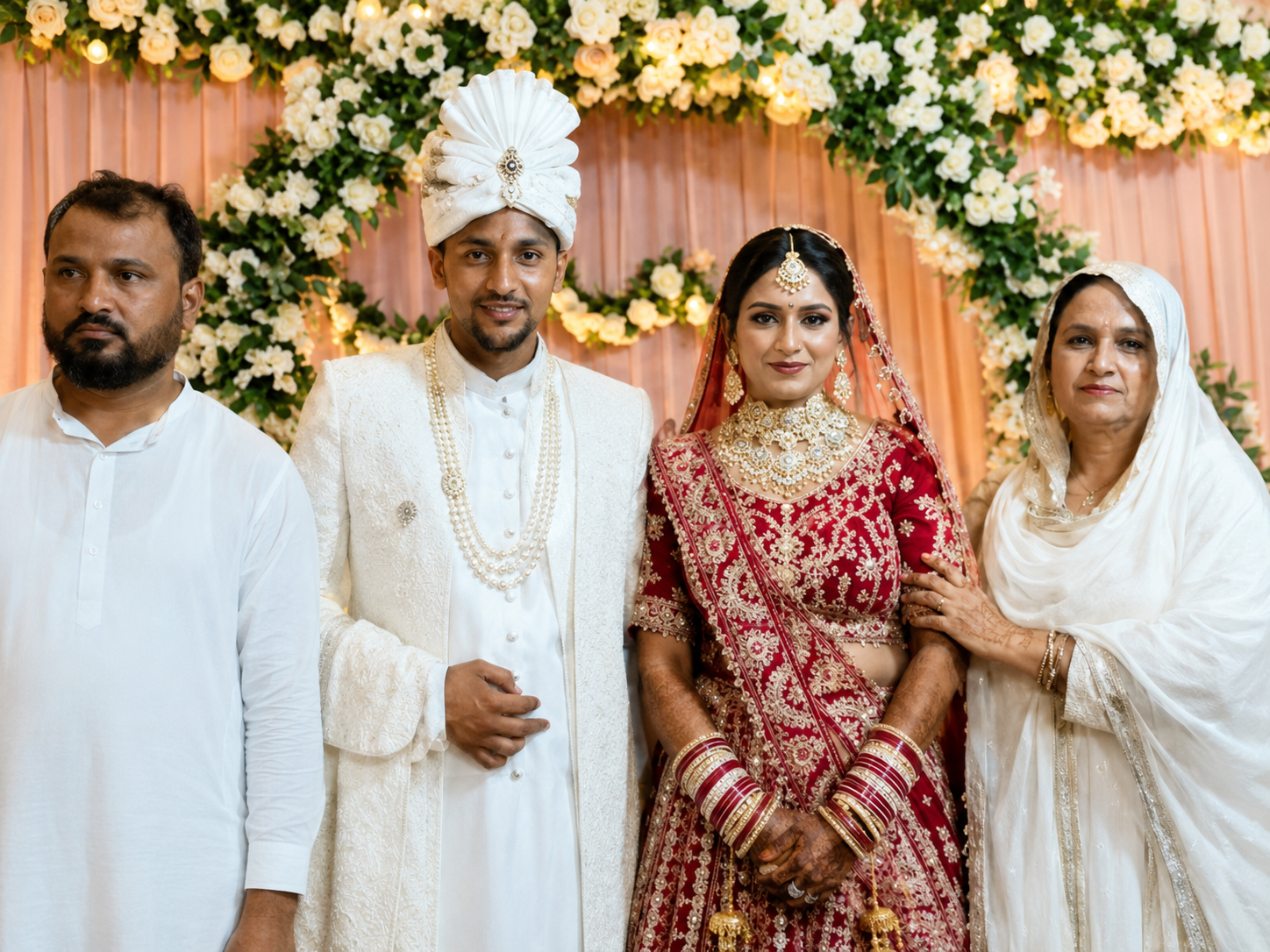 Bablu (From the left), Kamalkant and Deepanshi
One of the most sacred rituals in a Hindu wedding is kanyadaan, in which the bride is formally entrusted to her new family. Traditionally performed by parents or close guardians, it is a deeply emotional moment that symbolises love, blessings and responsibility.
Performing the ritual with complete respect for Hindu traditions, he fulfilled the role not as a symbolic gesture but as an elder brother who had long accepted that responsibility. Those present watched in silence as the ceremony unfolded. By the time the bride bid farewell to her childhood home, there were few dry eyes in the gathering.
Bablu, too, viewed the occasion simply through the lens of family. His only wish was that his sister should leave for her new home with the same dignity, happiness and blessings that every brother hopes for.
The story quickly spread beyond Budaun after videos of the ceremony appeared on social media. Thousands of viewers praised the gesture, seeing it as a powerful reminder that compassion often flourishes quietly, far from the noise of divisive debates.
Yet for the people of Ujhani, there was nothing extraordinary about neighbours becoming family. In many towns and villages across India, communities have long celebrated one another's festivals, shared moments of grief and joy, and stood together during life's most difficult times.
Bablu's decision to perform kanyadaan did not diminish either his own faith or Deepanshi's. Instead, it reflected a profound respect for both. By participating wholeheartedly in a Hindu ceremony while remaining rooted in his own identity, he demonstrated that honouring another person's traditions is one of the purest expressions of humanity.
READ MORE: Maharashtra: Ashadhi Wari pilgrimage begins with worship at dargah, sufi shrine
The wedding also serves as a reminder that family is not always defined by birth. Sometimes it is created through years of shared meals, mutual trust and unwavering support. A neighbour becomes a brother, a community becomes a family, and love quietly fills the spaces left by loss.

.jpg "Gujarat’s women entrepreneurs bring their craftsmanship to life during Navratri")