Malick Asghar Hashmi/New Delhi
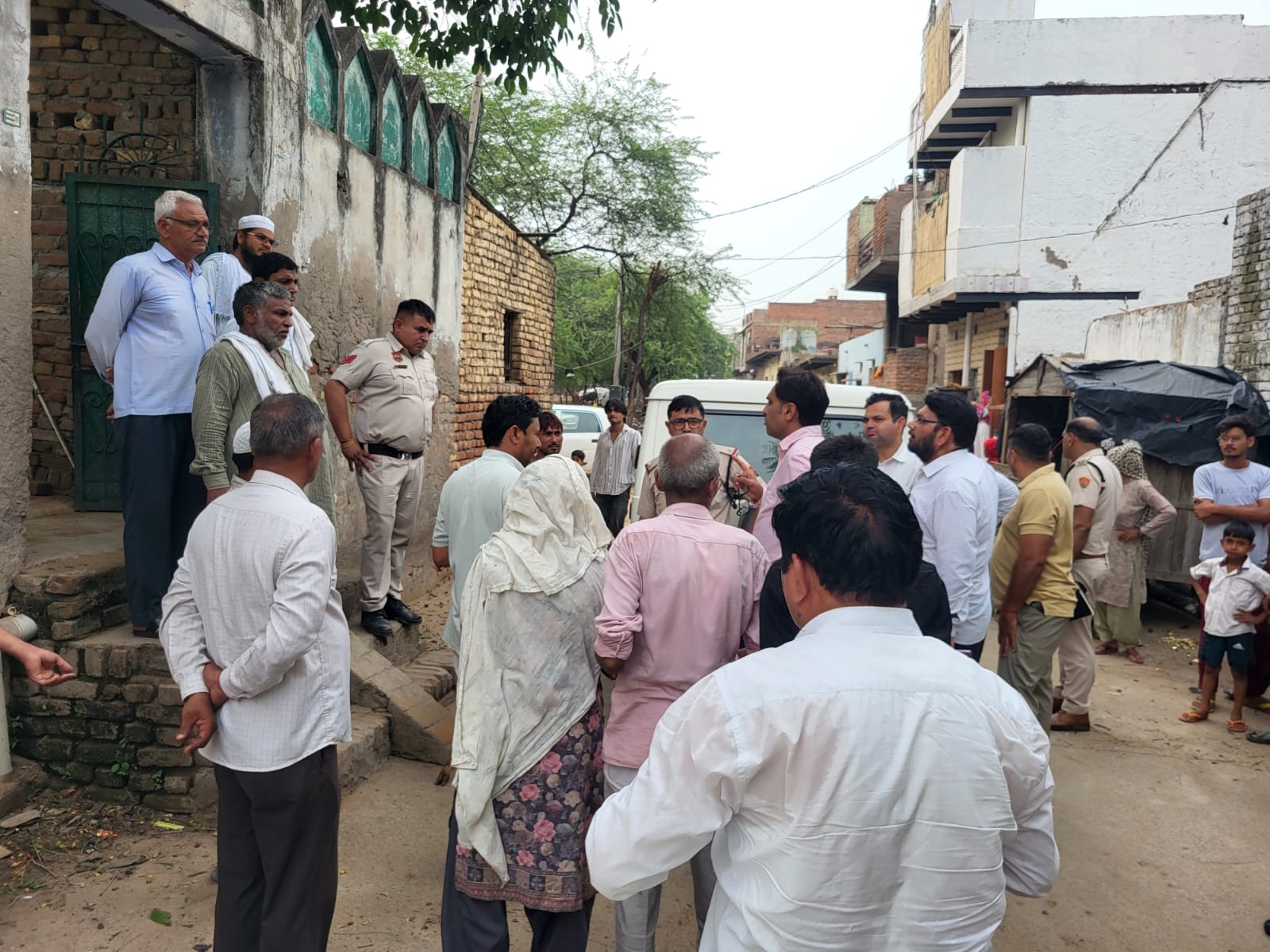
In a rare example of conflict prevention, residents of Sohna in Haryana's Gurugram district voluntarily demolished portions of religious and other structures built illegally on protected forest land after sustained dialogue with the administration.
The peaceful removal of the encroachments has emerged as a model for handling sensitive demolitions involving religious structures—issues that often trigger emotional reactions and, at times, law-and-order problems.
Government anti-encroachment drives frequently rely on bulldozers to clear illegal structures. When such drives involve places of worship, they can provoke strong public resistance and communal tensions. However, no such confrontation occurred in Sohna's ITI Colony, where authorities are reclaiming nearly 30 acres of protected forest land in the foothills of the Aravalli range.
For decades, illegal construction had taken place in the protected forest area in Ward No. 12 of Sohna. Besides numerous residential houses, a mosque, part of a church compound wall, and classrooms belonging to a local school had been built on the encroached land.
The Forest Department had planned an anti-encroachment drive, but officials were determined to avoid a repeat of the unrest witnessed during the demolition of a religious structure in Faridabad.

To oversee the operation, the administration appointed R.S. Bath, District Town Planner (Enforcement), popularly known as the "Bulldozer Man" for his strict enforcement of anti-encroachment laws, as the Duty Magistrate and Nodal Officer. Forest Range Officer Khajan Singh was also assigned to the operation.
Recognising the sensitive nature of the exercise, Bath chose dialogue over force.
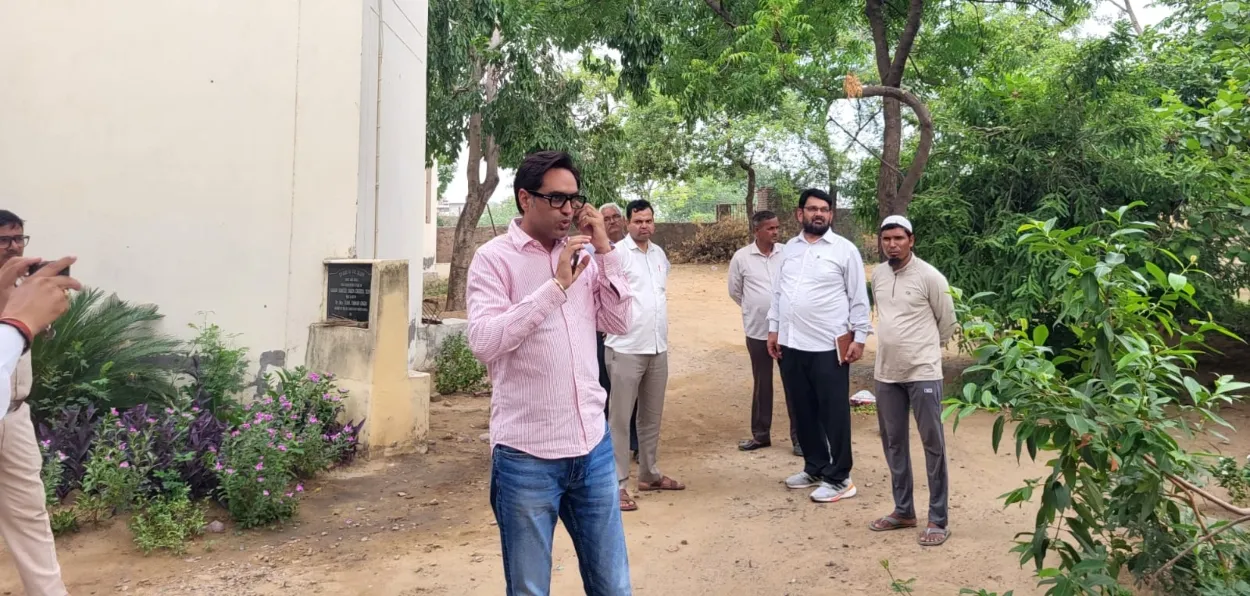
He understood that the issue was not merely about removing illegal structures but also about people's religious beliefs and sentiments. Instead of launching the operation with a heavy police presence, he personally visited the area while keeping police and Forest Department teams in the background.
Bath met the imam of the mosque, the pastor of the church, and the school management, initiating a series of discussions that continued through follow-up meetings and phone calls.
He assured them that the administration respected every religion and had no desire to use bulldozers on places of worship. At the same time, he made it clear that illegal construction on government or protected forest land could not be legally permitted. He appealed to community leaders and residents to cooperate by vacating the land voluntarily.
The strategy paid off.Following discussions among mosque committee members and local Muslim residents, the community concluded that Islam does not permit the construction of places of worship on land belonging to others or on illegally occupied property. Instead of protesting, they unanimously decided to dismantle the encroaching portion of the mosque themselves.
Javed Ahmed, a respected resident of Sohna, said the episode demonstrated that even the most sensitive disputes can be resolved when the administration and the public work together with mutual trust and understanding.
Speaking to Awaz-The Voice, Bath described the operation as perhaps the first instance in the country where people voluntarily removed illegal portions of religious structures following dialogue with the administration.
Residents echoed the sentiment, saying that when officials engage with the public sensitively and maintain continuous communication, potentially volatile situations can be resolved peacefully. Bath's approach, they believe, prevented what could have become a major dispute.
The Forest Department had issued seven-day notices to three major encroachers. Although the notices created anxiety after circulating widely on social media, sustained dialogue transformed apprehension into cooperation.
The second phase will target around 70 permanent houses and several commercial structures built on forest land in ITI Colony. It will also cover nearly 250 structures, including large houses and bungalows in Pahar Colony, a decades-old settlement built on Haryana Tourism Corporation land in Ward No. 13 of Sohna.
ALSO READ: Chhattisgarh Waqf Board turns into a Nikah approval authority
The Sohna experience has demonstrated that the rule of law can be enforced without creating bitterness. Through dialogue, mutual respect, and administrative sensitivity, a potentially contentious anti-encroachment drive has become a noteworthy example of social harmony and effective governance.



.webp "A Maulana with the ancient hand-written Quran")