Suleman Shaikh/Pune
Every year, before Sant Tukaram Maharaj's revered palanquin begins its journey to Pandharpur for the annual travel to the shrine of Bhagwan Vitthal (A form of Vishnu worshipped in Maharashtra and Karnataka), it makes an extraordinary first stop—not at another temple, but at the dargah of a Muslim Sufi saint.
The Ashadhi Wari, Maharashtra's iconic pilgrimage that brings together devotees across caste and religious lines, began this year on June 10. Thousands gathered in Dehu to bid farewell to Sant Tukaram Maharaj's palanquin as it set out on its annual journey to Pandharpur. As tradition dictates, the palanquin spends its first night at Inamdarwada in Dehu.
What follows has, for nearly four centuries, stood as a remarkable symbol of communal harmony.
As the palanquin leaves Dehu, it proceeds directly to the dargah of Hazrat Angadshah Baba, a Sufi saint who spent his final years in the town. The palanquin is placed in the meghdambari—a canopied pavilion facing the dargah that also serves as a venue for devotional singing.
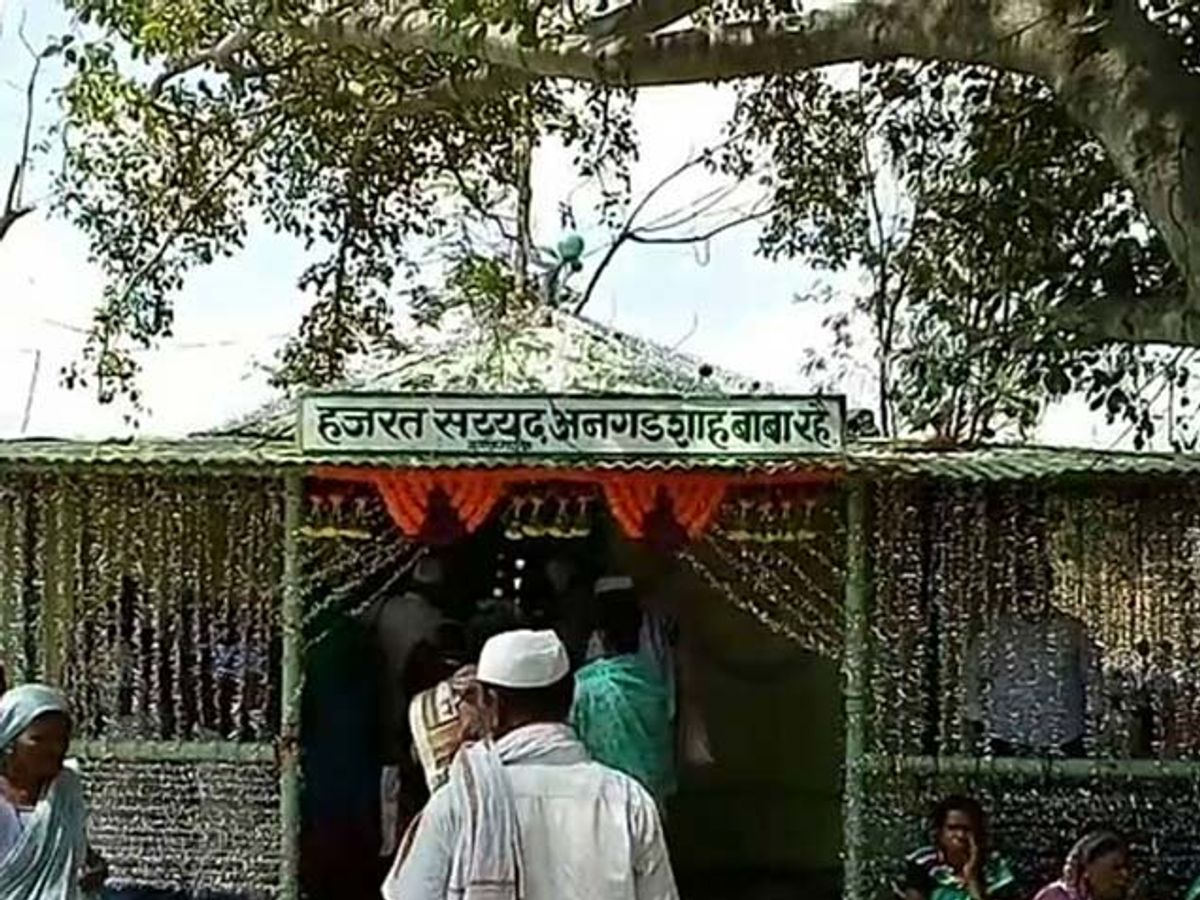 The shrine of Hazrat Syed Angadshah Baba
Warkaris gather there to sing abhangs before the saint's samadhi, while a ceremonial puja of the palanquin is performed. Only after paying homage at Angadshah Baba's resting place does the pilgrimage continue towards Pandharpur.
For the people of Dehu, this annual ritual represents a meeting of two saints—Sant Tukaram Maharaj and Angadshah Baba. Thousands of Hindus and Muslims gather every year to witness the ceremony.
The spirit of this tradition is reflected in Tukaram Maharaj's own compositions. Some of his abhangs invoke Allah directly with verses such as "Alla ek tu, nabi ek tu" ("You alone are Allah, You alone are the Prophet") and "Alla kare so hoy, baba kartar ka sirtaj" ("What Allah wills comes to pass; He is the crown of all creation"), expressing ideals of equality, universal devotion and communal brotherhood.
The Story of Angadshah Baba
Historical accounts suggest that Angadshah Baba shared close ties with the Warkari tradition. Even today, no animal sacrifice or meat offering is made during his Urs; devotees offer only sweets at his samadhi.
One of Tukaram Maharaj's biographers, Pandurang Balaji Kavade, recounts the meeting of the two saints in his book Santashreshtha Tukaram Maharaj.
Before meeting Tukaram, Angadshah travelled to Chinchwad to visit the renowned Ganpati devotee Morya Gosavi, also known as Chintamani Dev. Standing outside the saint's home, the Sufi fakir sought alms and requested that his bowl be filled to the brim. No matter how much grain was poured into it—even the household's entire stock—the bowl remained unfilled.
A journey of devotion. A tradition that unites millions.
— Maharashtra Tourism (@maha_tourism) July 10, 2026
The Pandharpur Wari is not just a pilgrimage but a living legacy of faith, equality and togetherness which has been carried forward for centuries. pic.twitter.com/Aalb9kEPoj
Recognising that the visitor possessed extraordinary spiritual powers, Chintamani Dev personally filled the bowl through his own spiritual strength. Angadshah instantly emptied it using his own powers. The exchange revealed each saint's spiritual stature, and Chintamani Dev welcomed the fakir with great honour.
By then, Angadshah had also heard of Tukaram Maharaj's growing fame. Curious, he travelled to Dehu to meet him.
When he sought alms at Tukaram's home, Jijabai, following her husband's lifelong instruction never to turn away a seeker, asked their young daughter Gangu to offer the visitor some flour. The child carried only a handful of flour in her palms and dropped it into the fakir's bowl. To Angadshah's amazement, the bowl overflowed.
Momentarily forgetting his own mystical powers, he asked the little girl, "Is your name Tukaram?"
वारी म्हणजे केवळ परंपरा नाही, तर सेवा, समता आणि भक्तीचा अखंड महोत्सव!
— Dr.Hulgesh Chalwadi (@DrHulgeshspeaks) July 9, 2026
संत श्रेष्ठ ज्ञानेश्वर महाराज पालखी सोहळ्यानिमित्त चलवादी शिक्षण संस्थेच्या वतीने पुण्यात लाखो वारकरी भाविकांचे मनापासून स्वागत करण्यात आले.#वारी #PandharpurWari pic.twitter.com/Nw5daMM3Zj
She smiled and replied, "Tukaram is my father. He must be singing bhajans somewhere."
Deeply moved, Angadshah sought out Tukaram Maharaj. The meeting blossomed into a lasting friendship. The Sufi saint eventually settled in Dehu, where he spent the remainder of his life and was buried. His dargah continues to stand there today.
How the Tradition Began
According to local tradition, Angadshah was profoundly impressed by Tukaram Maharaj's unwavering devotion to Lord Vitthal and his boundless generosity. The friendship between the two saints grew stronger with time.
Angadshah later made his home at Andheribaug in Dehu—the very place where Tukaram Maharaj's palanquin continues to halt every year before beginning its onward journey.
In a remarkable example of shared heritage, the dargah has been looked after by a Hindu family for generations. The Musudge family has served as its caretakers for three generations. Govind Musudge, who has managed the shrine since 2009 after his father and grandfather, says, "My family serves this dargah with complete devotion, and we will continue to do so."
The Gift of Land
Manik Maharaj More, a descendant of Sant Tukaram Maharaj, says the saint believed deeply in respecting every faith.
"People from every religion supported Tukaram Maharaj's bhakti movement," he says. "This dargah stands as a symbol of that spirit. Tukaram Maharaj transcended caste and religion throughout his life and inspired countless people. Angadshah Baba often accompanied him during his kirtans. Later, Tukaram Maharaj gifted him a portion of his land. That is why the first kirtan and aarti after the palanquin leaves Dehu are still held at the dargah."
.jpg)
Despite periodic communal tensions in different parts of the country, this centuries-old tradition has remained untouched.
"Saints rise above caste and religion," says Manik Maharaj. "Once a saint understands that the welfare of all humanity is the highest ideal, every barrier disappears. Society ultimately bows before such teachings."
It is traditions like these that have helped preserve Maharashtra's shared social and spiritual heritage. While divisions may emerge elsewhere, the annual meeting of Tukaram Maharaj's palanquin and Angadshah Baba's dargah continues to affirm a message of unity.
Suhel Attar, a regular devotee at the dargah, recalls that his grandfather, Abul Attar, was himself a devoted Warkari.
"He observed every Ekadashi fast and participated in the Wari every year," Suhel says. "Our faith in Angadshah Baba is as deep as our faith in Sant Tukaram Maharaj."
Inside the Dargah
At the heart of the shrine lies Angadshah Baba's grave, draped in a ceremonial cloth, with Quranic verses inscribed in Arabic nearby. The dargah remains adorned throughout the year with jasmine, roses and hibiscus flowers. An oil lamp burns continuously in a wall niche, while two peacock feathers and a crescent-and-star emblem add to the shrine's distinctive character.
ALSO READ:Chhattisgarh Waqf Board turns into a Nikah approval authority
The daily rituals are performed by senior residents Popat Birdawade and Govind Musudge. Angadshah Baba's Urs, observed each year on Akshaya Tritiya, draws large numbers of devotees from all faiths, reaffirming a tradition of shared devotion that has endured for nearly 400 years.

.jpg "Gujarat’s women entrepreneurs bring their craftsmanship to life during Navratri")